Introduction
Urinary discomfort, difficulty passing urine, recurrent urinary concerns, or questions about kidney stones often lead people to explore Ayurvedic formulations such as Gokshuradi Guggulu. In Ayurveda, this is a classical guggulu-based formulation traditionally used in the context of certain urinary and related conditions.
However, as an Ayurvedic doctor, I would like to clarify one important point at the beginning: Gokshuradi Guggulu should not be viewed simply as an Ayurvedic medicine for kidney stones. That description oversimplifies the formulation and does not explain how Ayurvedic practitioners traditionally assess its use.
Ayurveda does not generally select a formulation based only on the name of a modern disease. Factors such as the individual's symptoms, dosha involvement, digestive capacity (Agni), affected body channels (Srotas), constitution, and overall health may be considered when deciding whether a particular formulation is appropriate.
Gokshuradi Guggulu has a traditional association with Mutravaha Srotas, the Ayurvedic concept relating to the urinary pathways. The National AYUSH Mission's Essential Drugs List includes Gokshuradi Guggulu in connection with classical conditions such as Prameha, Mutrakricchra, Mutraghata, Ashmari, and Pradara, and lists a reference dosage of 500 mg–1 g.
In this detailed guide, we will look at Gokshuradi Guggulu beyond a simple list of benefits. We will explore its ingredients, the traditional Ayurvedic reasoning behind the combination, its relevance to urinary concerns and Ashmari, dosage considerations, precautions, possible side effects, and what modern evidence can—and cannot—tell us about this classical formulation.
What Is Gokshuradi Guggulu?
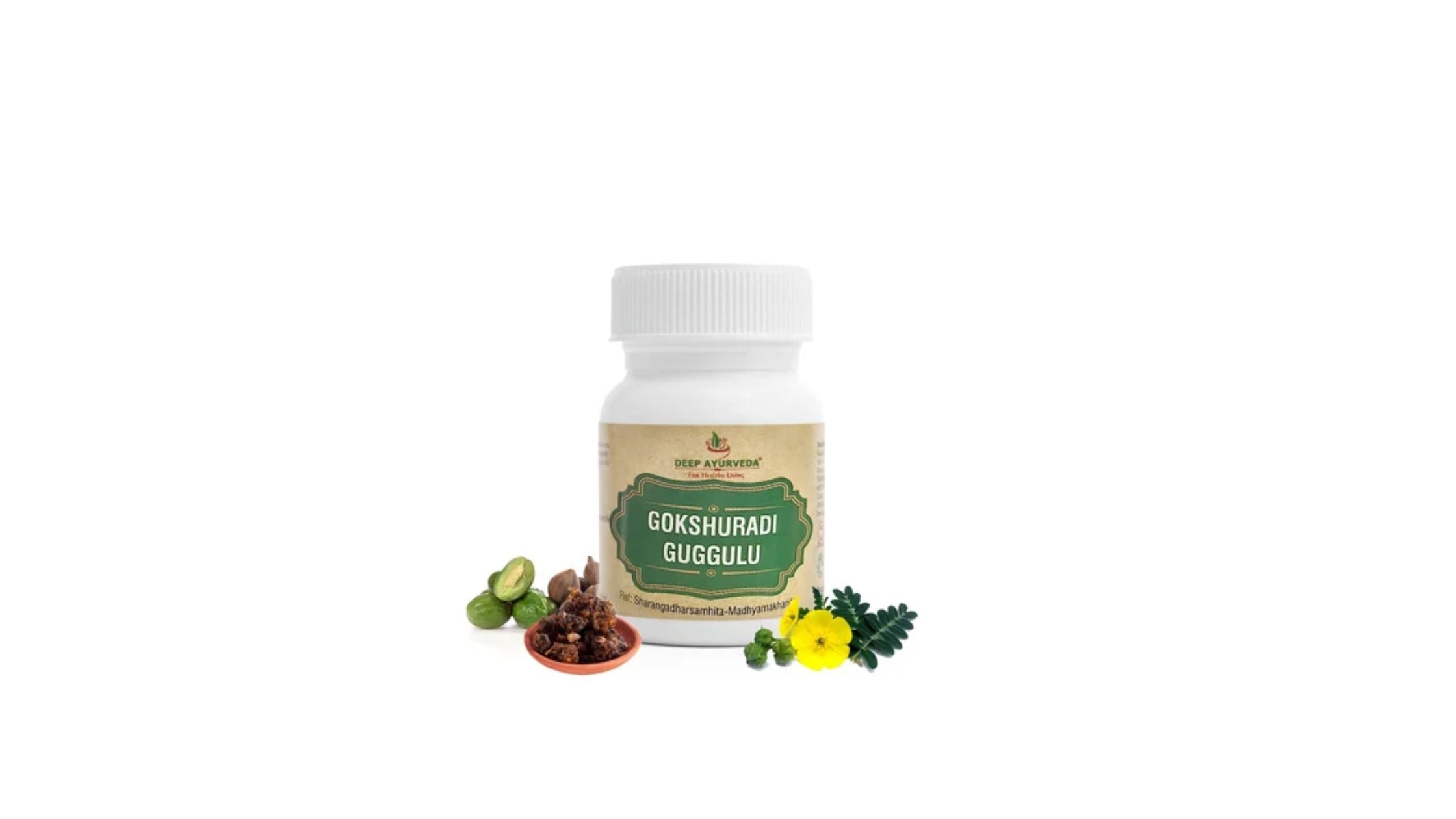
Gokshuradi Guggulu is a classical Ayurvedic guggulu-based formulation. Its name comes primarily from Gokshura and Guggulu, two important components of the formulation.
Classical Ayurvedic references describe this formulation in the context of urinary and related conditions. Today, Gokshuradi Guggulu is commonly available in tablet or Vati form. However, the exact composition, concentration, and tablet strength may vary between manufacturers, so it is important to check the label of the specific product being used.
From an Ayurvedic perspective, it is more useful to understand Gokshuradi Guggulu as a multi-ingredient formulation rather than as a single-herb remedy. The ingredients are traditionally combined to provide a broader therapeutic profile than one ingredient alone.
What Is the Ayurvedic Focus of Gokshuradi Guggulu?
The formulation has a strong traditional relationship with Mutravaha Srotas, which can be broadly understood as the pathways associated with urinary function.
In simple terms, its traditional applications include certain complaints and conditions related to urination and the urinary system.
Classical indications associated with the formulation include:
- Mutrakricchra – difficulty or discomfort associated with urination.
- Mutraghata – obstruction or retention of urine in the classical Ayurvedic context.
- Ashmari – urinary calculi or stones.
- Prameha – a broad classical category involving urinary and metabolic manifestations.
- Pradara – a classical term associated with certain abnormal discharge conditions.
These classical terms should not automatically be treated as exact equivalents of modern medical diagnoses. For example, Mutrakricchra should not automatically be interpreted as a modern urinary tract infection, and Prameha should not simply be reduced to the modern diagnosis of diabetes.
Understanding this distinction is important because traditional Ayurvedic indications and modern medical diagnoses are not always interchangeable.
Gokshuradi Guggulu Ingredients
Gokshuradi Guggulu is not a single-herb preparation. Commonly described formulations include Gokshura, Shuddha Guggulu, Shunthi, Pippali, Maricha, Haritaki, Bibhitaki, Amalaki, and Mustaka. However, commercially available preparations may differ in composition or proportion, so the product label should always be checked before use.
1. Gokshura (Tribulus terrestris)
Gokshura is one of the key ingredients of this formulation and has a strong traditional association with urinary health in Ayurveda.
Traditionally, Gokshura is used in formulations concerned with the Mutravaha Srotas. This helps explain why it occupies a central place in both the name and traditional application of Gokshuradi Guggulu.
2. Shuddha Guggulu
Guggulu is another important component of the formulation.
Properly purified Shuddha Guggulu is used in numerous classical Ayurvedic formulations. From an Ayurvedic perspective, guggulu-based formulations are selected according to their overall formulation properties and their intended relationship with particular doshas and Srotas.
3. Shunthi
Shunthi, or dried ginger, is traditionally used in Ayurveda in formulations associated with Agni and digestion.
In a multi-herbal formulation such as Gokshuradi Guggulu, its inclusion can be understood as part of the broader formulation design rather than as an isolated ingredient intended to provide one specific benefit.
4. Pippali
Pippali is traditionally recognised for its Deepana-Pachana properties, which relate broadly to supporting digestive and metabolic functions in Ayurvedic theory.
In classical formulation design, ingredients such as Pippali may contribute to the overall action of a combination rather than being included for a single isolated purpose.
5. Maricha
Maricha, commonly known as black pepper, is another traditional Ayurvedic ingredient frequently used in compound formulations.
Its classical properties are primarily associated with digestive and metabolic functions.
6. Haritaki
Haritaki is one of the best-known classical Ayurvedic herbs.
It is traditionally used for Anulomana and digestive support. Its inclusion in Gokshuradi Guggulu can be understood as part of the formulation's broader Ayurvedic design.
7. Bibhitaki
Bibhitaki is one of the three herbs traditionally combined to form Triphala.
In Ayurveda, it has traditionally been used in formulations associated with digestive health and Kapha-related imbalances.
8. Amalaki
Amalaki, another major component of Triphala, is widely recognised in Ayurveda for its traditional Rasayana applications and its association with Pitta-oriented formulations.
9. Mustaka
Mustaka, commonly identified as Cyperus rotundus, is a classical Ayurvedic herb traditionally used in digestive and dosha-oriented formulations.
Why Are These Ingredients Combined in Gokshuradi Guggulu?
This is one of the most important aspects to understand about the formulation.
Simply listing the ingredients and assigning one benefit to each does not explain why they were combined in the first place.
In Ayurveda, a classical formulation can be understood as a deliberately designed combination. In Gokshuradi Guggulu, Gokshura has a strong traditional urinary focus, while Guggulu forms a major part of the formulation. The Trikatu group—Shunthi, Pippali, and Maricha—and the Triphala group—Haritaki, Bibhitaki, and Amalaki—bring additional traditional digestive, metabolic, and dosha-oriented properties to the formulation.
Therefore, it is overly simplistic to interpret the formulation as:
Gokshura + Guggulu = kidney medicine.
A better Ayurvedic interpretation is that the formulation combines a urinary-focused component with other herbs traditionally selected to support the formulation's broader digestive, metabolic, and dosha-related profile.
This is one of the fascinating aspects of classical Ayurvedic formulations: the overall design of the combination can be more meaningful than looking at each herb in isolation.
Gokshuradi Guggulu Benefits and Uses
Gokshuradi Guggulu is traditionally associated with the urinary system, but its Ayurvedic applications are broader than simply calling it a kidney stone medicine. Classical Ayurvedic understanding considers the formulation in relation to Mutravaha Srotas, urinary function, Vata and Kapha involvement, and conditions described under terms such as Ashmari, Mutrakricchra, and Mutraghata.
From a practitioner’s perspective, the most important point is that the same urinary symptom can have different underlying causes. Therefore, the traditional benefits described below should be understood as Ayurvedic uses of the formulation, rather than as a guarantee that it will treat or cure a particular modern disease.
1. Traditionally Supports Healthy Urinary Function
One of the primary traditional applications of Gokshuradi Guggulu is supporting normal urinary function.
Gokshura, the principal herb in the formulation, has a long history of use in Ayurveda in preparations associated with the urinary system. The formulation is traditionally considered when there are complaints related to urine flow, discomfort during urination, or other urinary disturbances.
However, urinary symptoms should not automatically be self-treated. Persistent burning, pain, changes in urine, fever, or difficulty passing urine can have several underlying causes and may require medical evaluation.
2. Traditionally Used for Difficult or Uncomfortable Urination
Ayurveda describes Mutrakricchra as a condition involving difficulty or discomfort associated with urination.
Gokshuradi Guggulu is traditionally mentioned in connection with Mutrakricchra. Its formulation is therefore relevant to the Ayurvedic approach to certain urinary complaints.
It is important, however, not to equate Mutrakricchra directly with a single modern diagnosis such as a urinary tract infection. Similar symptoms may occur for different reasons, and identifying the underlying cause is important before choosing any treatment.
3. Traditional Ayurvedic Use in Ashmari
Ashmari is the classical Ayurvedic term commonly associated with urinary calculi or stones.
Gokshuradi Guggulu is traditionally used in the Ayurvedic management of Ashmari. This is one reason the formulation is frequently discussed in relation to kidney and urinary stones.
From a modern medical perspective, however, kidney stones vary considerably in their size, location, composition, and degree of obstruction. A formulation should therefore not be promoted as a universal solution for all types of kidney stones.
If a person has severe or persistent flank pain, blood in the urine, fever, chills, vomiting, or difficulty passing urine, timely medical assessment is important.
4. Traditionally Supports Healthy Urine Flow
Healthy urine flow is an important part of normal urinary function.
From an Ayurvedic perspective, disturbances in the movement of Vata within the urinary pathways can be considered when assessing certain urinary complaints. Gokshuradi Guggulu's traditional use in conditions such as Mutraghata and Mutrakricchra explains why it is sometimes included in Ayurvedic approaches focused on urinary flow.
But reduced urine output or inability to urinate can sometimes indicate a serious medical problem. Complete inability to pass urine should not be managed through self-medication.
5. Traditionally Used in Mutraghata
Mutraghata is a classical Ayurvedic term associated with obstruction or retention of urine.
Gokshuradi Guggulu is traditionally listed among formulations used in the context of Mutraghata. In Ayurvedic practice, understanding why the urinary flow is disturbed is more important than simply matching the symptom to a medicine.
For example, urinary retention may have different causes, including obstruction, prostate-related problems, neurological factors, medications, or other medical conditions. These situations require appropriate assessment.
Therefore, the traditional indication should be understood as part of an Ayurvedic framework—not as evidence that Gokshuradi Guggulu can independently resolve every cause of urinary retention.
6. Traditional Use in Prameha
Prameha is an important classical Ayurvedic disease category involving characteristic urinary and metabolic manifestations.
Gokshuradi Guggulu is traditionally mentioned in relation to Prameha. However, it would be inaccurate to simply translate Prameha as diabetes and then claim that Gokshuradi Guggulu treats diabetes.
Modern diabetes is a well-defined medical condition requiring appropriate diagnosis, monitoring, and management. Ayurvedic practitioners may consider broader factors such as Dosha, Agni, Meda, and lifestyle while assessing a person, but this does not replace necessary blood-glucose monitoring or conventional medical care.
7. Traditional Relevance to Vata-Related Urinary Complaints
Guggulu-based formulations have an important place in traditional Ayurvedic practice, particularly when Vata and Kapha considerations are relevant.
Because urinary movement is closely associated with Apana Vata, Ayurvedic assessment may consider the quality and direction of this movement when someone experiences difficulty, discomfort, or irregularity in urination.
The presence of Guggulu along with Gokshura and other herbs gives Gokshuradi Guggulu a broader formulation profile than Gokshura alone.
This is one reason it is useful to distinguish Gokshura as a single herb from Gokshuradi Guggulu as a complete classical formulation.
8. Traditionally Used in Certain Pradara-Related Conditions
Classical references also associate Gokshuradi Guggulu with Pradara, a term used in Ayurveda for certain types of abnormal genital or vaginal discharge.
Modern vaginal discharge can have many causes, including physiological changes, infections, hormonal factors, and other conditions. Therefore, persistent, foul-smelling, bloody, painful, or unusual discharge should be evaluated rather than automatically attributed to an Ayurvedic imbalance.
The classical indication provides historical context for the formulation; it should not be interpreted as proof that the formulation treats every modern cause of vaginal discharge.
Gokshuradi Guggulu for Kidney Stones: What Does Ayurveda Say?
This is perhaps the most common reason people search for Gokshuradi Guggulu online.
In Ayurveda, urinary stones are discussed under the concept of Ashmari. Gokshuradi Guggulu is traditionally associated with this condition, which explains its longstanding place in discussions of Ayurvedic urinary care.
The formulation's traditional use should, however, be understood within the larger Ayurvedic assessment of the individual.
A practitioner may consider factors such as:
- The nature and duration of symptoms
- Urinary function
- Digestive capacity (Agni)
- Dosha involvement
- Hydration and dietary habits
- Previous history of urinary stones
- Other medicines being taken
- The findings of relevant medical investigations
Can Gokshuradi Guggulu Dissolve Kidney Stones?
This question requires a careful answer.
Gokshuradi Guggulu has a traditional Ayurvedic association with Ashmari, but this should not be interpreted as proof that it can dissolve or eliminate every kidney stone.
The outcome of a kidney stone depends on factors such as its size, location, composition, and whether it is causing obstruction. Modern evaluation may be necessary to determine these factors.
Ayurvedic treatment should therefore not be used as a reason to delay medical assessment when symptoms are severe or concerning.
Gokshuradi Guggulu for Urinary Problems
Gokshuradi Guggulu's traditional urinary applications can be understood through several classical concepts.
Burning or Discomfort During Urination
Burning during urination can occur for different reasons. Ayurveda may assess such symptoms through the lens of Dosha and Srotas, but modern causes such as infection or stones should also be considered.
If burning persists, is accompanied by fever, pelvic or flank pain, blood in the urine, or other concerning symptoms, professional medical evaluation is advisable.
Difficulty Passing Urine
Difficulty initiating or maintaining urine flow can have many possible causes.
An Ayurvedic practitioner may assess the symptom within the framework of Mutrakricchra or Mutraghata, but it is important to rule out significant obstruction or other underlying medical conditions.
Frequent Urination
Frequent urination should not automatically be considered a condition that requires a urinary-support supplement. Increased frequency may be related to fluid intake, caffeine, infection, diabetes, certain medicines, pregnancy, prostate-related problems, or other causes.
For this reason, the cause of the symptom matters more than simply matching the symptom with a product.
What Makes Gokshuradi Guggulu Different from Gokshura Alone?
This is an important distinction that is often missed in online articles.
Gokshura is a single Ayurvedic herb, whereas Gokshuradi Guggulu is a multi-ingredient classical formulation.
Gokshura has a strong traditional association with urinary health, but Gokshuradi Guggulu combines Gokshura with Guggulu and several other herbs. Therefore, the traditional properties and intended applications of the complete formulation should not automatically be assumed to be identical to those of Gokshura alone.
In Ayurvedic practice, this distinction matters because formulation selection is based on the combined properties and therapeutic context, not simply on the presence of one familiar herb.
Important Safety Note
Gokshuradi Guggulu is a classical Ayurvedic formulation, but natural does not automatically mean appropriate for everyone.
People with persistent or severe urinary symptoms, suspected urinary obstruction, recurrent kidney stones, pregnancy, significant kidney or liver problems, or those taking several prescription medicines should seek professional guidance before using it.
Traditional Ayurvedic use should always be distinguished from proven treatment of a modern medical disease.
Gokshuradi Guggulu Dosage: How Much to Take, When to Take It & Anupana
One of the most common questions about Gokshuradi Guggulu is: How much should I take?
The answer is not always as simple as giving a fixed number of tablets. Gokshuradi Guggulu is available from different manufacturers, and the amount of the formulation contained in each tablet or tablet strength can differ. Therefore, tablet count should not automatically be treated as the same thing as the classical dosage of the formulation.
The National AYUSH Mission's Essential Drugs List gives a reference dosage of 500 mg–1 g for Gokshuradi Guggulu. However, the appropriate dose for an individual may depend on the formulation, strength, age, health status, symptoms, and the practitioner's assessment.
What Is the Classical Reference Dosage of Gokshuradi Guggulu?
The reference dosage listed for Gokshuradi Guggulu is 500 mg to 1 gram.
This information is useful as a classical/reference dosage range, but it should not be interpreted as an instruction for everyone to take the same amount.
For example, if two products contain different amounts of Gokshuradi Guggulu per tablet, the number of tablets required to reach a particular dose would naturally be different.
Always check the strength and dosage instructions on the specific product label.
For therapeutic use, particularly when treating a specific urinary complaint, the dosage should ideally be determined by a qualified Ayurvedic practitioner.
How Many Gokshuradi Guggulu Tablets Should You Take?
There is no universally correct tablet count that applies to every Gokshuradi Guggulu product.
The reason is simple: tablet strength varies.
A practitioner may consider:
- The amount of formulation present in each tablet
- The person's age
- Body constitution and overall health
- Nature and severity of symptoms
- Digestive capacity (Agni)
- Dosha involvement
- Other medicines or supplements being taken
- The intended duration of use
- Whether the formulation is being used for general support or a specific therapeutic purpose
Therefore, it is better to follow the dosage printed on the product you are using or the recommendation of your Ayurvedic doctor rather than copying a tablet count from another website.
When Should Gokshuradi Guggulu Be Taken?
The appropriate timing can vary according to the individual's condition, digestive capacity, formulation strength, and the advice of the prescribing practitioner.
Many Ayurvedic medicines are traditionally administered in relation to meals and with a specific Anupana or accompanying vehicle. The timing may therefore be selected according to the therapeutic purpose rather than following one universal schedule.
If your product label provides specific instructions, follow those directions unless your healthcare practitioner has advised otherwise.
Should Gokshuradi Guggulu Be Taken Before or After Food?
There is no need to assume that one timing is appropriate for everyone.
Some people may be advised to take an Ayurvedic formulation around meals, while others may receive a different schedule based on the condition being addressed.
If Gokshuradi Guggulu causes digestive discomfort when taken on an empty stomach, discuss the timing with your Ayurvedic practitioner rather than changing the dose yourself.
What Is the Best Anupana for Gokshuradi Guggulu?
In Ayurveda, Anupana refers to the substance used alongside a medicine to support its administration and, depending on the formulation and therapeutic context, its intended action.
The appropriate Anupana for Gokshuradi Guggulu should not be treated as a universal formula.
Water is commonly used as a practical vehicle for Ayurvedic tablets, but an Ayurvedic practitioner may select the accompanying liquid or dietary vehicle according to the individual's condition and therapeutic objective.
For this reason, it is better to follow the Anupana recommended on the product label or by your practitioner rather than experimenting with different vehicles based on online advice.
How Long Can You Take Gokshuradi Guggulu?
Another common mistake is assuming that because a formulation is Ayurvedic, it can automatically be taken indefinitely.
Duration of use should depend on the reason for taking it and the individual's response.
A short-term urinary complaint, recurrent symptoms, a history of stones, or a chronic condition may require very different approaches.
Long-term unsupervised use is particularly inappropriate when:
- Symptoms are persistent or worsening
- The underlying diagnosis is unclear
- Other medicines are being taken
- There is known kidney or liver disease
- Pregnancy is involved
- The person is using several Ayurvedic formulations simultaneously
If symptoms continue despite using an Ayurvedic formulation, the answer is not necessarily to keep increasing the dose or extending the duration. The underlying cause should be reassessed.
Can You Take Gokshuradi Guggulu Every Day?
Gokshuradi Guggulu may be used regularly in some Ayurvedic treatment plans, but daily use should be based on an appropriate recommendation rather than a general assumption that everyone can take it continuously.
The need for regular use depends on the individual's condition, formulation strength, dosage, and treatment objective.
If you are taking it for a specific urinary or kidney-related concern, it is especially important not to use it as a substitute for appropriate medical evaluation.
What If You Miss a Dose?
If you have been advised to take Gokshuradi Guggulu regularly and miss a dose, do not automatically double the next dose.
The safer approach is generally to follow the product instructions or your practitioner's advice.
Taking more than the recommended amount does not necessarily provide greater benefit and may increase the possibility of unwanted effects.
Can Children Take Gokshuradi Guggulu?
Children should not be given adult Ayurvedic formulations at an adult dose without professional guidance.
A child's age, weight, digestive capacity, health status, and the reason for use all matter when determining whether a particular formulation is appropriate.
Parents should therefore consult a qualified pediatrician or Ayurvedic practitioner rather than calculating a dose from an adult recommendation found online.
Gokshuradi Guggulu During Pregnancy and Breastfeeding
Pregnancy and breastfeeding require additional caution with herbal and Ayurvedic medicines.
The National AYUSH Mission's Essential Drugs List specifically includes a precaution regarding long-term use during pregnancy.
Therefore, Gokshuradi Guggulu should not be self-started during pregnancy.
If you are pregnant, planning pregnancy, or breastfeeding, discuss the complete ingredient list and intended use with your qualified healthcare professional before taking the formulation.
What If You Are Already Taking Other Medicines?
If you take prescription medicines or several supplements, tell your doctor or Ayurvedic practitioner before starting Gokshuradi Guggulu.
This is particularly important if you are being treated for:
- Diabetes
- High blood pressure
- Kidney disease
- Liver disease
- Cardiovascular conditions
- Urinary or prostate-related conditions
- Any chronic condition requiring regular medication
Rather than assuming that an Ayurvedic formulation will automatically be compatible with every medicine, it is better to review the complete medication and supplement list with a healthcare professional.
Gokshuradi Guggulu Side Effects, Precautions & Who Should Avoid It?
Gokshuradi Guggulu is a classical Ayurvedic formulation, but being a traditional medicine does not mean it is automatically suitable for everyone. The response can vary depending on the individual’s Prakriti, Agni, age, health condition, dosage, duration of use, and other medicines being taken.
The official Ayurvedic Essential Drugs List under the National AYUSH Mission lists Gokshuradi Guggulu with a reference dose of 500 mg–1 g and specifically notes a precaution regarding long-term use during pregnancy.
It is also important to understand that urinary symptoms may arise from very different causes. A person experiencing burning, reduced urine flow, flank pain or frequent urination should not assume that every symptom is simply due to an imbalance that can be managed with Gokshuradi Guggulu.
Possible Side Effects of Gokshuradi Guggulu
Most people may tolerate a properly selected Ayurvedic formulation when it is used appropriately, but some individuals can experience digestive or other unwanted effects.
Possible complaints may include:
- Stomach discomfort
- Nausea
- Heartburn or digestive irritation
- Loose stools or changes in bowel habits
- Abdominal discomfort
- Sensitivity or an allergic reaction in susceptible individuals
The likelihood of such effects can depend on the individual's tolerance, the formulation and strength used, dosage, duration and whether it is taken appropriately.
If a new or persistent symptom develops after starting Gokshuradi Guggulu, it is better to stop assuming that the symptom is normal and discuss it with an Ayurvedic practitioner or healthcare professional.
Is Gokshuradi Guggulu Safe for Long-Term Use?
Long-term use should not be decided simply because the formulation is traditionally used for urinary or metabolic concerns.
In Ayurveda, the duration of a formulation is generally selected according to the condition, Dosha involvement, Agni, response to treatment and the individual's overall health. Taking the same dose continuously without reassessment is therefore not a good approach.
This becomes particularly important when someone has:
- Recurrent kidney stones
- Persistent urinary obstruction or retention
- Reduced kidney function
- Liver disease
- Multiple chronic health conditions
- Long-term prescription medication use
- Symptoms that are worsening rather than improving
If the underlying problem has not been identified, continuing an Ayurvedic formulation indefinitely may delay appropriate evaluation.
Gokshuradi Guggulu During Pregnancy
Pregnancy is a situation where self-medication should be avoided.
The National AYUSH Mission's Essential Drugs List specifically mentions long-term use in pregnancy as a precaution for Gokshuradi Guggulu.
Therefore, pregnant women should not start Gokshuradi Guggulu independently for urinary symptoms, kidney stones or any other concern. Any Ayurvedic medicine during pregnancy should be selected with appropriate professional supervision.
Can Gokshuradi Guggulu Be Taken During Breastfeeding?
There is not enough high-quality evidence to assume that every Ayurvedic formulation is appropriate during breastfeeding.
If you are breastfeeding and considering Gokshuradi Guggulu, discuss the specific product, ingredients, dose and duration with a qualified healthcare professional or Ayurvedic practitioner rather than relying only on a general dosage recommendation.
Gokshuradi Guggulu for Children
Children should not simply be given the adult dose of Gokshuradi Guggulu.
Urinary symptoms in children require particular attention because the underlying cause may be different from that in adults. The appropriate formulation, dose and duration should therefore be determined by a qualified practitioner.
Who Should Be Careful With Gokshuradi Guggulu?
Extra caution is appropriate for people with significant medical conditions or those taking several medicines.
Professional guidance is particularly advisable if you have:
- Kidney disease or reduced kidney function
- A history of urinary obstruction or retention
- Recurrent urinary stones
- Liver disease
- Diabetes or metabolic disorders
- Cardiovascular conditions
- A complex prescription-medication regimen
- Pregnancy or breastfeeding
- A history of sensitivity to herbal medicines
This does not mean Gokshuradi Guggulu is necessarily unsuitable in every one of these situations. It means that the reason for use and the individual's complete health picture should be assessed first.
Can Gokshuradi Guggulu Interact With Other Medicines?
If you take prescription or over-the-counter medicines regularly, tell your doctor or Ayurvedic practitioner before starting Gokshuradi Guggulu.
This is especially important when medicines are being taken for diabetes, blood pressure, kidney disease, liver conditions, cardiovascular problems or urinary/prostate conditions.
Do not stop prescribed medicines simply because you have started an Ayurvedic formulation. The two treatment plans should be reviewed together when necessary.
When Should You Seek Medical Attention?
One of the most important safety points is knowing when urinary symptoms should not be managed through self-care alone.
Seek prompt medical evaluation if you experience:
- Severe or worsening pain in the side, back or lower abdomen
- Fever or chills along with urinary symptoms
- Inability to pass urine
- Significant blood in the urine
- Persistent vomiting
- Severe weakness or dehydration
- Sudden worsening of urinary obstruction
- Symptoms associated with a suspected kidney stone that are severe or persistent
These symptoms can sometimes indicate obstruction, infection or another condition requiring timely medical assessment. Gokshuradi Guggulu should not be used as a substitute for appropriate diagnosis and treatment.
Choose the Product Carefully
Quality also matters when purchasing Ayurvedic medicines.
Choose a product from a reputable manufacturer and check the ingredient list, dosage strength, batch information, manufacturing details and expiry date before use.
Another important point is that the strength of Gokshuradi Guggulu tablets can vary between manufacturers. Therefore, comparing products only by the number of tablets can be misleading. A practitioner or consumer should look at the actual formulation strength rather than assuming that two tablets means the same dose across every product.
Gokshuradi Guggulu vs Gokshura: What Is the Difference?
The names Gokshura and Gokshuradi Guggulu are often used interchangeably online, but they are not the same thing.
Gokshura is an individual Ayurvedic herb, while Gokshuradi Guggulu is a classical multi-ingredient formulation containing Gokshura along with Guggulu and other herbs.
Understanding this difference is important because the choice between a single herb and a compound formulation depends on the individual's symptoms, constitution and therapeutic requirement.
What Is Gokshura?
Gokshura, traditionally identified with Tribulus terrestris, is an important Ayurvedic herb associated particularly with the Mutravaha Srotas, or urinary system.
It is traditionally valued for its Mutrala and urinary-supportive properties and is commonly discussed in Ayurveda in relation to urinary discomfort, urine flow and certain urinary conditions.
Because it is a single herb, its therapeutic profile is comparatively straightforward. Gokshura is also available in different Ayurvedic preparations, including powders, capsules, decoctions and compound formulations.
What Is Gokshuradi Guggulu?
Gokshuradi Guggulu is a compound Ayurvedic formulation in which Gokshura is combined with Shuddha Guggulu and several other herbs.
Commonly described ingredients include:
- Gokshura
- Shuddha Guggulu
- Shunthi
- Pippali
- Maricha
- Haritaki
- Bibhitaki
- Amalaki
- Mustaka
The formulation therefore brings together herbs with different traditional Ayurvedic roles rather than relying on Gokshura alone.
The National AYUSH Mission's Essential Drugs List recognises Gokshuradi Guggulu as an Ayurvedic formulation and lists its traditional indications including Prameha, Mutrakricchra, Mutraghata, Ashmari and Pradara.
Gokshura vs Gokshuradi Guggulu: At a Glance
| Feature | Gokshura | Gokshuradi Guggulu |
|---|---|---|
| Type | Single herb | Multi-ingredient formulation |
| Main herbal component | Gokshura | Gokshura + Guggulu + other herbs |
| Traditional focus | Urinary support | Urinary and related classical indications |
| Form | Powder, capsule, decoction and other preparations | Usually Vati/tablet |
| Ayurvedic approach | Single-drug approach | Formulation-based approach |
| Dose | Depends on preparation | Depends on formulation strength |
| Selection | Based on individual requirement | Based on condition, formulation and individual assessment |
Which Is Better: Gokshura or Gokshuradi Guggulu?
There is no universal answer to which one is better.
A single herb may be appropriate when the therapeutic objective calls for Gokshura specifically. A compound formulation may be considered when the Ayurvedic assessment calls for the broader combination of ingredients traditionally present in Gokshuradi Guggulu.
This is one reason why simply searching for the strongest kidney medicine or urinary medicine is not an ideal way to select an Ayurvedic formulation.
Can Gokshura and Gokshuradi Guggulu Be Taken Together?
They should not automatically be combined simply because both are associated with urinary health.
Taking multiple products containing the same or overlapping ingredients can unnecessarily increase total intake and may make it difficult to understand which product is responsible for a benefit or unwanted effect.
If you are already taking Gokshura capsules, Gokshura powder or another urinary-supportive Ayurvedic formulation, consult an Ayurvedic practitioner before adding Gokshuradi Guggulu.
Gokshuradi Guggulu vs Other Ayurvedic Formulations
Gokshuradi Guggulu is not the only Ayurvedic formulation traditionally used in the context of urinary, kidney or metabolic concerns. Ayurveda has a wide range of formulations, and each is designed with a particular combination of herbs and therapeutic purpose.
This is why choosing an Ayurvedic medicine should not be based only on the phrase kidney support or urinary problem. Two formulations may both be marketed for urinary health while having very different compositions and traditional applications.
Gokshuradi Guggulu vs Chandraprabha Vati
Both formulations are frequently discussed in relation to urinary and metabolic health, but they are not identical formulations.
Gokshuradi Guggulu contains Gokshura, Shuddha Guggulu and other herbs and has traditional associations with conditions such as Mutrakricchra, Mutraghata and Ashmari.
Chandraprabha Vati is a much broader classical formulation containing a larger combination of herbs and mineral ingredients. Its traditional application extends beyond urinary complaints.
Therefore, the presence of a urinary symptom alone does not mean that either formulation is automatically appropriate.
Gokshuradi Guggulu vs Punarnava Guggulu
Punarnava Guggulu and Gokshuradi Guggulu are also different formulations despite both containing Guggulu.
Gokshuradi Guggulu has a strong traditional association with Mutravaha Srotas and urinary conditions, while Punarnava-based formulations are traditionally selected in contexts involving Shotha, fluid balance and related Dosha considerations.
The distinction is important because the same symptom may arise from different underlying patterns.
Gokshuradi Guggulu vs Varunadi Kwath
Varunadi Kwath is another Ayurvedic formulation that is commonly discussed in relation to urinary and calculi-related concerns.
However, a Kwath (decoction) and a Guggulu-based Vati/tablet are different dosage forms and have different ingredient combinations.
The choice between them should therefore depend on the Ayurvedic assessment rather than simply comparing which product has more ingredients or stronger marketing claims.
Gokshuradi Guggulu vs Gokshura Capsules
This comparison is particularly useful for people who are already using Gokshura as a single herb.
Gokshura capsules generally provide the benefits associated with the individual herb, whereas Gokshuradi Guggulu provides a combination of Gokshura, Guggulu and additional Ayurvedic herbs.
If the goal is simply to add Gokshura to a wellness routine, a single-herb preparation may be considered differently from a therapeutic compound formulation.
However, taking both together is not automatically necessary.
Why Ayurvedic Formulations Should Not Be Compared Like Modern Stronger vs Weaker Medicines
A common mistake is to assume that a formulation with more herbs must be stronger or more effective.
Ayurvedic formulation design does not work that way.
Different ingredients are combined according to their Rasa, Guna, Virya, Vipaka, Dosha effects and therapeutic purpose. The objective is not necessarily to create the strongest possible medicine, but to create a formulation appropriate for a particular therapeutic context.
This is also why the same Ayurvedic formulation may not be suitable for every person experiencing the same symptom.
Which Ayurvedic Formulation Is Right for You?
There is no single formulation that is best for everyone.
For example, someone with urinary discomfort may require a completely different approach from someone with a confirmed urinary stone. Similarly, frequent urination may have a different underlying cause from difficulty passing urine.
An Ayurvedic practitioner may consider:
- The nature and duration of symptoms
- Prakriti and current Dosha involvement
- Agni and digestion
- Mutravaha Srotas assessment
- Diet and fluid intake
- Previous history of urinary stones
- Age and general health
- Existing medical conditions
- Current medicines and supplements
- Relevant laboratory or imaging investigations
This personalised approach is more consistent with responsible Ayurvedic practice than selecting a product solely from an online list of top kidney medicines.
How Gokshuradi Guggulu Is Selected
One of the most important things to understand about Gokshuradi Guggulu is that Ayurveda does not traditionally select a formulation simply because a person has a particular symptom.
For example, burning urination is a symptom, not a complete diagnosis. Similarly, frequent urination, difficulty passing urine or pain in the urinary region can have several possible causes.
From an Ayurvedic perspective, the individual, the nature of the complaint and the underlying Dosha involvement all matter when selecting a formulation.
1. Understanding the Main Complaint
The first step is to understand exactly what the person is experiencing.
An Ayurvedic practitioner may ask:
- Is there burning while passing urine?
- Is urine flow reduced?
- Is there difficulty initiating urination?
- Is there frequent urination?
- Is there pain in the lower abdomen or back?
- Is there a history of urinary stones?
- Has there been blood in the urine?
- How long have the symptoms been present?
These details help distinguish a temporary complaint from a persistent condition requiring further evaluation.
2. Considering Dosha Involvement
Ayurveda considers the involvement of Vata, Pitta and Kapha when assessing urinary complaints.
For example, Vata-related patterns may be considered when there is difficulty, irregularity or obstruction in normal movement. Pitta-related patterns may be considered when heat and burning sensations are prominent, while Kapha involvement may be considered in patterns associated with heaviness, sluggishness or excessive accumulation.
However, these are broad Ayurvedic principles and should not be used as a substitute for diagnosis.
The same modern symptom can present differently in different individuals, which is one reason Ayurveda traditionally emphasises individual assessment.
3. Assessing Agni and Digestion
The formulation contains several ingredients traditionally associated with Deepana and Pachana, including Shunthi, Pippali and Maricha.
Therefore, digestive status can be an important consideration when deciding whether a formulation containing these ingredients is appropriate.
An Ayurvedic practitioner may consider:
- Appetite
- Digestion after meals
- Bloating or heaviness
- Bowel habits
- Tongue appearance
- Food tolerance
- Presence of Ama according to Ayurvedic assessment
This broader assessment helps avoid treating the urinary symptom in isolation.
4. Looking at the Mutravaha Srotas
In Ayurveda, the urinary system is discussed through the framework of Mutravaha Srotas.
Gokshuradi Guggulu is traditionally associated with this area of Ayurvedic practice, which is why it is frequently discussed in relation to urinary complaints.
However, the presence of a Mutravaha Srotas-related symptom does not automatically mean that Gokshuradi Guggulu is the appropriate choice.
The nature, severity and cause of the complaint still need to be considered.
5. Considering Kidney Stones Carefully
If a person has a confirmed or suspected kidney stone, additional information becomes important.
A practitioner may want to know:
- Whether the stone has been confirmed through imaging
- Its approximate size
- Its location
- Whether urine flow is obstructed
- Whether there is significant pain
- Whether fever or infection is present
- Whether stones have occurred repeatedly
This is particularly important because not every kidney stone behaves in the same way.
Gokshuradi Guggulu has a traditional Ayurvedic association with Ashmari, but this should not be interpreted as proof that the formulation can dissolve or remove every modern kidney stone.
6. Reviewing Current Medicines and Health Conditions
Before recommending any Ayurvedic formulation, it is sensible to consider the person's complete health profile.
This includes existing conditions and medicines being taken for:
- Diabetes
- Blood pressure
- Kidney function
- Liver health
- Cardiovascular conditions
- Urinary or prostate conditions
- Other chronic diseases
People taking multiple medicines should tell their healthcare professionals about all Ayurvedic products, supplements and medicines they use.
7. Dose and Duration Are Individualised
The official Ayurvedic Essential Drugs List gives a reference dose of 500 mg–1 g for Gokshuradi Guggulu.
But this does not mean every person should take the same number of tablets every day.
Tablet strength can differ between products, and the appropriate dose may also depend on the person's age, health status, reason for use and treatment plan.
Similarly, duration should not be decided simply by following a fixed number of weeks or months found online.
8. Knowing When Ayurvedic Self-Care Is Not Enough
A responsible Ayurvedic approach also includes knowing when further medical assessment is necessary.
Severe flank pain, inability to urinate, fever or chills with urinary symptoms, significant blood in urine, persistent vomiting or rapidly worsening symptoms should not be managed through self-medication alone.
In such situations, identifying and treating the underlying problem takes priority.
Why Individualisation Matters
Two people can have the same complaint but require completely different approaches.
For example, one person may experience urinary burning because of a temporary irritation, while another may have an infection or another medical condition. Similarly, difficulty passing urine may have different causes in different individuals.
Diet and Lifestyle Tips While Using Gokshuradi Guggulu
Ayurvedic management does not usually depend on medicine alone. When Gokshuradi Guggulu is selected for a urinary or related concern, diet, hydration, daily routine and the underlying cause can also influence the overall approach.
However, there is no single Gokshuradi Guggulu diet that is suitable for everyone. Dietary recommendations should be adapted to the person's condition, digestion, climate, activity level and medical requirements.
1. Maintain Appropriate Hydration
Adequate fluid intake is important for normal urinary function.
However, drinking an excessive amount of water is not necessarily better. Fluid requirements can vary depending on body size, activity, climate, kidney function and existing medical conditions.
People with diagnosed kidney or heart conditions should follow the fluid advice provided by their healthcare professional rather than forcing excessive water intake.
2. Do Not Ignore the Urge to Urinate
Regularly postponing urination for long periods is generally not a healthy habit.
Try to maintain a practical bathroom routine, particularly when travelling or during long working hours. At the same time, frequent urination should not simply be attributed to increased water intake if it is persistent or accompanied by other symptoms.
3. Pay Attention to Your Diet
A balanced diet can support overall urinary and metabolic health.
Prefer a varied diet containing appropriate amounts of:
- Fresh vegetables
- Seasonal fruits
- Whole grains
- Suitable sources of protein
- Adequate dietary fibre
- Healthy fats
Highly processed foods and excessive intake of foods high in salt or added sugar should generally be limited as part of a balanced lifestyle.
4. Kidney Stone Diet Should Be Individualised
If you have a history of kidney stones, avoid following generic online lists that tell everyone to completely eliminate the same foods.
The ideal dietary approach can depend on the type and composition of the stone, urinary chemistry, hydration status and other individual factors.
For recurrent stones, medical evaluation may help identify the reason for recurrence and guide more specific dietary recommendations.
5. Support Healthy Digestion
From an Ayurvedic perspective, Agni is an important part of overall health.
Because Gokshuradi Guggulu contains ingredients traditionally associated with Deepana and Pachana, maintaining sensible eating habits can complement an Ayurvedic treatment plan.
Simple habits may include:
- Eating meals at reasonably regular times
- Avoiding overeating
- Eating according to digestive capacity
- Limiting excessively heavy meals when digestion feels weak
- Choosing freshly prepared foods where practical
The objective is not to follow an unnecessarily restrictive diet, but to maintain a routine that suits your digestive capacity.
6. Reduce Excessive Salt and Highly Processed Foods
A diet consistently high in salt and heavily processed foods may be unfavourable for overall cardiovascular and metabolic health and can be particularly relevant for people with certain types of kidney stone risk.
Instead of focusing on a single superfood, build sustainable eating habits around minimally processed foods and an overall balanced diet.
7. Maintain Regular Physical Activity
A sedentary routine can negatively affect general metabolic health.
Regular movement appropriate to your age and health status—such as walking, stretching, yoga or other suitable physical activity—can be a useful part of a healthy daily routine.
Exercise should be adapted if you are experiencing acute pain, significant illness or a medical condition requiring activity restrictions.
8. Avoid Self-Medicating for Persistent Urinary Symptoms
Lifestyle changes can support general wellbeing, but they should not be used to postpone evaluation of persistent symptoms.
If urinary discomfort, reduced urine flow, recurrent stones, blood in urine or other symptoms continue despite lifestyle measures, the underlying cause should be investigated.
This is particularly important because symptoms involving the urinary system can have several different causes.
An Ayurvedic Perspective on Food and Medicine
Ayurveda traditionally considers Ahara (diet), Vihara (lifestyle), Agni and Dosha balance alongside medicines.
Therefore, taking Gokshuradi Guggulu while continuing habits that may aggravate the underlying problem may not provide the most sensible long-term approach.
For example, if someone repeatedly develops urinary problems because of inadequate fluid intake, an irregular routine or another identifiable lifestyle factor, addressing that factor may be just as important as selecting an appropriate formulation.
What Should You Avoid While Taking Gokshuradi Guggulu?
There is no universal list of foods that everyone must completely avoid while taking Gokshuradi Guggulu.
Instead, consider:
- Avoiding excessive alcohol where relevant to your health
- Limiting highly processed and excessively salty foods
- Avoiding overeating
- Maintaining appropriate hydration
- Following any specific dietary advice given for diagnosed kidney stones or other medical conditions
- Avoiding unnecessary combinations of multiple Ayurvedic or herbal products
If your practitioner has prescribed a specific Pathya-Apathya plan, that personalised advice should take priority over a generic internet diet list.
Practical Daily Routine
For someone using Gokshuradi Guggulu under professional guidance, a simple routine may include:
Morning:
Start the day with appropriate hydration and a balanced breakfast according to your digestive capacity.
During the day:
Maintain adequate fluid intake, avoid unnecessarily delaying urination and remain physically active when appropriate.
Meals:
Prefer balanced, minimally processed meals and avoid excessive overeating.
Evening:
Maintain a comfortable dinner routine and avoid very heavy meals close to bedtime if they disturb digestion or sleep.
Throughout the day:
Take Gokshuradi Guggulu only according to the product directions or the dose recommended by your Ayurvedic practitioner.
Gokshuradi Guggulu: What Does Modern Research Say?
Gokshuradi Guggulu has a long history of use within Ayurvedic practice, but it is important to distinguish traditional Ayurvedic indications from what has been established through modern clinical research.
Many online articles present Gokshuradi Guggulu as if its traditional uses automatically prove that it can treat every urinary or kidney-related condition. A more evidence-based approach is to look separately at the formulation's classical background, research on its individual ingredients and the limited clinical evidence available for the complete formulation.
Traditional Use and Modern Evidence Are Not the Same
Gokshuradi Guggulu is recognised in Ayurvedic references and the National AYUSH Mission's Essential Drugs List. Its traditional indications include Prameha, Mutrakricchra, Mutraghata, Ashmari and Pradara.
These classical indications provide an important historical and Ayurvedic context.
However, a traditional indication should not automatically be translated into a modern diagnosis.
For example:
- Ashmari is traditionally associated with urinary calculi, but this does not mean modern kidney stones of every size and location will respond in the same way.
- Mutrakricchra describes a classical pattern of difficult or uncomfortable urination, but it should not automatically be equated with every modern urinary tract infection.
- Mutraghata has a classical meaning related to impaired or obstructed urination, but modern urinary retention can have several different causes.
This distinction is particularly important when discussing Ayurvedic medicines for health conditions.
What About Research on Gokshura?
Gokshura is one of the key ingredients of Gokshuradi Guggulu and has been investigated in modern research for various biological and pharmacological properties.
However, evidence involving Gokshura as an individual herb cannot automatically be used as proof that the complete Gokshuradi Guggulu formulation produces the same clinical effects.
A whole formulation contains multiple ingredients, and its overall activity, safety and appropriate dosage need to be evaluated separately.
What About Guggulu?
Guggulu is another major component of the formulation and has been extensively discussed in Ayurvedic and pharmacological literature.
Modern research has investigated different Commiphora species and their constituents for several biological activities. However, findings from laboratory or animal studies should not be presented as proof that Gokshuradi Guggulu treats a particular disease in humans.
This distinction prevents a common problem in online Ayurvedic content: taking evidence from an isolated compound or laboratory experiment and presenting it as clinical evidence for the complete formulation.
Is There Strong Clinical Evidence for Kidney Stones?
At present, Gokshuradi Guggulu should not be described as a scientifically proven treatment that can dissolve or remove all kidney stones.
Kidney stone management depends on factors such as:
- Stone size
- Stone location
- Stone composition
- Degree of urinary obstruction
- Kidney function
- Presence or absence of infection
- Severity of symptoms
For this reason, a person with a confirmed kidney stone should not delay appropriate medical assessment simply because an Ayurvedic formulation is being considered.
Gokshuradi Guggulu may be considered within an appropriate Ayurvedic treatment plan according to traditional principles, but claims of guaranteed stone dissolution or elimination go beyond what can responsibly be concluded from the available evidence.
What About Urinary Tract Infections?
Burning urination and frequent urination are sometimes labelled as a UTI without proper evaluation.
This can be problematic because similar symptoms may occur with several conditions.
Gokshuradi Guggulu's traditional use in Mutrakricchra should therefore not be interpreted as proof that it can replace appropriate diagnosis or treatment of a bacterial urinary tract infection.
If urinary symptoms are accompanied by fever, chills, significant pain, vomiting or worsening illness, medical assessment becomes particularly important.
Why More Clinical Research Is Needed
For a formulation such as Gokshuradi Guggulu, useful modern research would ideally examine:
- Standardised formulation and ingredient quantities
- Quality and batch consistency
- Appropriate dosage
- Safety during short- and long-term use
- Specific urinary conditions
- Kidney stone size and outcomes
- Patient-reported symptoms
- Comparisons with appropriate standard care
- Possible interactions with commonly prescribed medicines
Well-designed human clinical studies are more informative for treatment decisions than laboratory studies alone.
How Should You Interpret Online Claims?
When reading about Gokshuradi Guggulu online, look carefully at the language being used.
There is a significant difference between:
Traditionally used in Ayurveda for Ashmari
and
Clinically proven to dissolve kidney stones.
The first describes traditional Ayurvedic use. The second is a modern clinical claim that requires appropriate human evidence.
Similarly, terms such as supports, traditionally used, and may be considered should not be interpreted as guarantees of treatment.
When Should You Consult a Doctor Before Taking Gokshuradi Guggulu?
Gokshuradi Guggulu is traditionally used in Ayurveda for several urinary and related conditions, but not every urinary complaint should be managed through self-medication.
The Ministry of AYUSH also maintains pharmacovigilance systems for Ayurveda and other traditional medicines because adverse reactions and safety concerns need to be monitored in real-world use.
Before starting Gokshuradi Guggulu, professional advice is particularly important when symptoms are persistent, severe, recurrent or associated with another medical condition.
Consult a Doctor If You Have Severe Urinary Pain
Mild, occasional urinary discomfort and severe urinary pain should not be treated as the same problem.
If you develop intense pain in the lower abdomen, side or back—particularly if it occurs suddenly or keeps getting worse—medical evaluation is advisable.
This becomes even more important when kidney stones are suspected.
Do Not Self-Treat If You Cannot Pass Urine
An inability to pass urine can indicate urinary retention or obstruction and should not be managed by simply increasing the dose of an Ayurvedic medicine.
If you are unable to urinate or your urine output suddenly becomes very low, seek prompt medical attention.
Seek Medical Attention for Fever or Chills
Urinary symptoms accompanied by fever or chills deserve particular attention.
A combination of urinary discomfort and systemic symptoms may indicate an infection or another condition requiring medical assessment. In such situations, relying solely on Gokshuradi Guggulu could delay appropriate care.
Blood in the Urine Should Be Evaluated
Blood in the urine can occur for different reasons, including urinary stones and other urinary tract conditions.
Although some people may associate blood in urine with a kidney stone, it should not automatically be assumed to have a single cause.
If you notice visible blood in your urine, consult a healthcare professional for appropriate evaluation.
Recurrent Kidney Stones Need More Than Temporary Relief
If you repeatedly develop kidney stones, simply taking the same formulation every time symptoms appear may not address the reason for recurrence.
A healthcare professional may recommend appropriate investigations to understand factors such as stone type, urinary abnormalities and other risk factors.
Gokshuradi Guggulu may be considered within an Ayurvedic treatment approach when appropriate, but recurrent stones deserve a broader strategy.
Consult a Professional If You Have Kidney Disease
People with diagnosed kidney disease should not independently start or increase the dose of any medicinal product without professional advice.
This is especially relevant when kidney function is reduced or when urinary obstruction is present.
The treatment approach should take into account the person's kidney function, existing medicines and overall clinical condition.
Pregnancy Requires Extra Caution
Pregnancy is another situation where self-medication should be avoided.
The National AYUSH Mission's Essential Drugs List specifically identifies long-term use during pregnancy as a precaution for Gokshuradi Guggulu.
If you are pregnant or planning pregnancy, discuss the formulation with an appropriately qualified healthcare professional before use.
Consult a Professional If You Take Several Medicines
People taking multiple prescription medicines should inform their doctor and Ayurvedic practitioner about all medicines, supplements and herbal products they use.
This is particularly important for individuals being treated for chronic conditions such as:
- Diabetes
- High blood pressure
- Kidney disease
- Liver disease
- Heart or cardiovascular conditions
- Urinary or prostate disorders
Do not stop or replace prescribed medication without discussing it with the prescribing clinician.
What If Symptoms Continue After Starting Gokshuradi Guggulu?
Persistent symptoms deserve reassessment.
If burning urination, difficulty passing urine, frequent urination, pain or other complaints continue despite taking Gokshuradi Guggulu, do not simply increase the dose yourself.
The symptom may require a different approach, or the underlying cause may need to be investigated.
Red-Flag Symptoms at a Glance
Seek prompt medical evaluation if you experience:
| Symptom | Why it matters |
|---|---|
| Inability to pass urine | May indicate significant urinary retention or obstruction |
| Severe flank or abdominal pain | May require evaluation for stones or another acute condition |
| Fever or chills with urinary symptoms | May indicate an infection or other illness |
| Visible blood in urine | Requires assessment of the underlying cause |
| Persistent vomiting | Can contribute to dehydration and may accompany acute urinary problems |
| Rapidly worsening symptoms | May indicate a condition requiring timely care |
Final Safety Reminder
Natural does not automatically mean risk-free. The Ministry of AYUSH's pharmacovigilance programme specifically emphasises monitoring adverse effects and notes that some reactions may only become apparent after wider or longer-term use.
Use Gokshuradi Guggulu according to the product's directions or a qualified practitioner's advice, and seek professional help whenever symptoms are severe, persistent or unusual.
The safest approach is not to ask only, Can I take Gokshuradi Guggulu? but also, Do I know what is causing my symptoms?
Final Takeaway: Is Gokshuradi Guggulu Right for You?
Gokshuradi Guggulu is a classical Ayurvedic formulation traditionally associated with urinary health and several Mutravaha Srotas-related conditions. Its formulation combines Gokshura, Guggulu and other herbs, giving it a broader therapeutic profile than Gokshura alone.
Its traditional association with Ashmari, Mutrakricchra, Mutraghata, Prameha and Pradara makes it an important formulation within Ayurvedic practice. However, these classical indications should not automatically be interpreted as proof that the formulation treats every modern kidney or urinary disorder.
The most important point is individualisation. Dosage, timing and duration should depend on the formulation strength, reason for use, age, health status, digestion, other medicines and professional assessment.
If you are considering Gokshuradi Guggulu for kidney stones, burning urination, difficulty passing urine or recurrent urinary problems, first consider whether the underlying cause has been properly identified. Severe pain, urinary retention, fever, blood in urine or worsening symptoms require appropriate medical evaluation rather than prolonged self-medication.
Frequently Asked Questions About Gokshuradi Guggulu
1. What is Gokshuradi Guggulu used for?
Gokshuradi Guggulu is a classical Ayurvedic formulation traditionally associated with Mutravaha Srotas, or the urinary system. The National AYUSH Mission lists traditional indications including Prameha, Mutrakricchra, Mutraghata, Ashmari and Pradara.
2. Is Gokshuradi Guggulu good for kidney stones?
Gokshuradi Guggulu has a traditional Ayurvedic association with Ashmari, the classical term for urinary calculi. However, it should not be claimed to dissolve or remove every kidney stone. Stone size, location, composition and possible obstruction need to be considered, and persistent or severe symptoms require medical evaluation.
3. Can Gokshuradi Guggulu help with burning urination?
It is traditionally used in Ayurveda in the context of Mutrakricchra, which includes difficult or uncomfortable urination. However, burning urination can have several causes, including infections and other urinary conditions. Persistent burning should therefore be properly evaluated rather than treated solely through self-medication.
4. What is the dosage of Gokshuradi Guggulu?
The National AYUSH Mission's Essential Drugs List gives a reference dose of 500 mg–1 g. However, the number of tablets depends on the strength and formulation of the particular product. Follow the manufacturer's directions or the dosage recommended by a qualified Ayurvedic practitioner.
5. Can I take Gokshuradi Guggulu every day?
It may be used regularly in some Ayurvedic treatment plans, but daily use does not mean it should be taken indefinitely without reassessment. The appropriate duration depends on the individual's condition, response, formulation strength and overall health.
6. Can Gokshuradi Guggulu be taken during pregnancy?
Pregnant women should avoid self-medication with Gokshuradi Guggulu. The National AYUSH Mission specifically lists long-term use during pregnancy as a precaution. Consult a qualified healthcare professional before using it during pregnancy.
7. Can Gokshuradi Guggulu be taken with other medicines?
Do not assume that an Ayurvedic formulation is automatically compatible with every medicine. If you regularly take prescription medicines—particularly for diabetes, blood pressure, cardiovascular, kidney or other chronic conditions—inform your doctor and Ayurvedic practitioner before starting Gokshuradi Guggulu.
8. What are the side effects of Gokshuradi Guggulu?
Some people may experience digestive discomfort such as nausea, stomach irritation, heartburn, bloating or changes in bowel habits. Individual tolerance can vary. If you develop a persistent or unusual reaction, discontinue self-use and seek professional advice.
9. Is Gokshuradi Guggulu the same as Gokshura?
No. Gokshura is a single Ayurvedic herb, traditionally identified with Tribulus terrestris. Gokshuradi Guggulu is a multi-ingredient formulation that contains Gokshura along with Guggulu and other herbs.
10. Can Gokshuradi Guggulu be taken with Gokshura capsules?
Not necessarily. Both products may contain Gokshura, so combining them can result in overlapping ingredients. If you are already using Gokshura capsules or another urinary-supportive formulation, consult an Ayurvedic practitioner before adding Gokshuradi Guggulu.
11. How long does Gokshuradi Guggulu take to show results?
There is no reliable universal timeframe. The response depends on the condition being addressed, individual constitution, severity and duration of symptoms, dosage and the overall treatment plan. It is better to assess progress rather than expecting a fixed number of days.
12. Can I take Gokshuradi Guggulu for a urinary problem without seeing a doctor?
Self-use may not be appropriate when the cause of the urinary problem is unknown. Severe pain, inability to urinate, fever or chills, visible blood in urine, persistent vomiting or rapidly worsening symptoms require prompt medical evaluation.