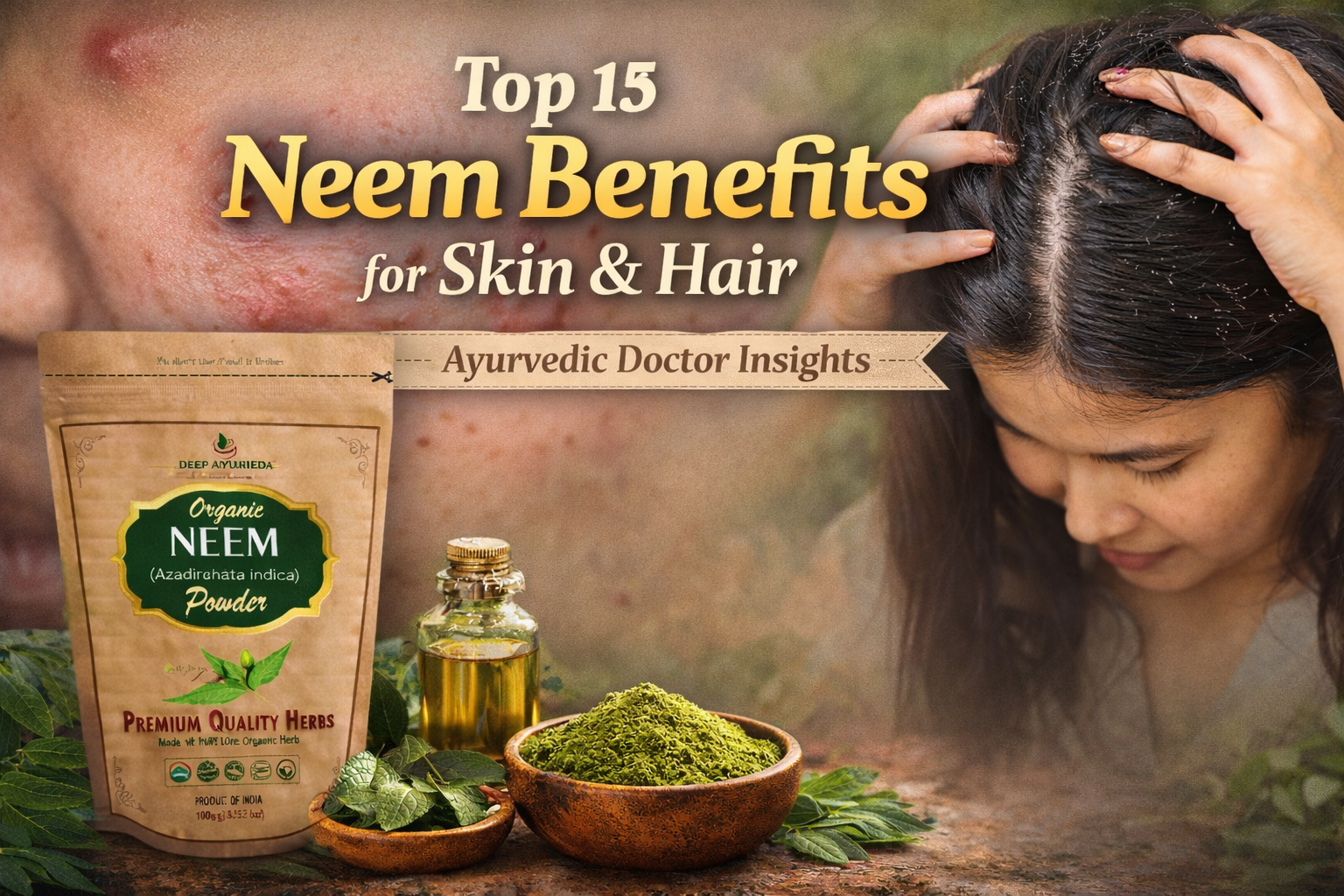
Neem, known as Azadirachta indica, holds a sacred and therapeutic place in Ayurveda. In classical Ayurvedic texts like Charaka Samhita and Sushruta Samhita, Neem (Nimba) is described as Tikta (bitter), Kashaya (astringent), Laghu (light), Ruksha (dry) and especially effective in balancing Pitta and Kapha dosha.
In my clinical practice, I see many patients—both in-clinic and online consultations—who struggle with chronic skin disorders, recurrent infections, dandruff, non-healing wounds, and metabolic toxicity. In many of these cases, Neem plays a central role in detoxification and purification when prescribed correctly according to Prakriti (body constitution).
Let’s explore the Top 15 Neem Benefits from a true Ayurvedic and clinical perspective.
Understanding Neem in Ayurveda

-
Rasa (Taste): Tikta (Bitter), Kashaya (Astringent)
-
Guna (Qualities): Laghu (Light), Ruksha (Dry)
-
Virya (Potency): Sheeta (Cooling)
-
Vipaka: Katu (Pungent post-digestive effect)
-
Dosha Action: Pacifies Pitta & Kapha
- Primary Karma: Blood purifier (Rakta Shodhak), Krimighna (anti-parasitic), Kandughna (anti-itch), Kushtaghna (skin disease pacifier)
Top 15 Neem Benefits for Health, Skin & Hair

1. Natural Blood Purifier (Rakta Shodhak)
In Ayurveda, most chronic skin issues originate from Rakta Dushti (impure blood). Neem helps cleanse toxins (Ama) from the bloodstream.
Clinical Insight:
Patients with acne, eczema, and recurrent boils often show improvement within 6–8 weeks when Neem is combined with proper diet and Panchakarma-based detox.
2. Supports Clear & Acne-Free Skin
Neem reduces inflammation and bacterial overgrowth. It is especially useful in:
- Acne vulgaris
- Pustular eruptions
- Hormonal breakouts
It works best when internal and external applications are combined.
3. Helpful in Eczema & Psoriasis
Neem reduces itching, redness, and scaling. In chronic psoriasis cases, I combine Neem with Rakta Shodhak herbs and dietary correction.
4. Powerful Antifungal & Antibacterial Action
Modern research supports Neem’s antimicrobial compounds like nimbidin and azadirachtin, which align with its Ayurvedic Krimighna property.
Useful in:
- Fungal infections
- Ringworm
- Athlete’s foot
5. Controls Excess Oil (Sebum Regulation)
Due to its astringent nature, Neem tightens pores and balances oil secretion.
Best for:
- Oily skin
- Open pores
- Summer acne flare-ups
6. Reduces Dandruff & Scalp Itching
Neem decoction washes are extremely effective in Kapha-type dandruff.
From practice:
Many patients with chronic dandruff who tried medicated shampoos for years experienced relief after 4–6 weeks of Neem-based scalp therapy.
7. Promotes Healthy Hair Growth
Neem improves scalp circulation and reduces follicular inflammation.
It is beneficial in:
- Hair fall due to infection
- Itchy scalp
- Seborrheic dermatitis
8. Supports Oral Health
Neem twigs (Datun) are traditionally used for:
- Gum infections
- Bleeding gums
- Bad breath
Its antibacterial properties support oral microbiome balance.
9. Helps Regulate Blood Sugar
Neem may support glucose metabolism by improving insulin sensitivity.
⚠️ Should always be taken under supervision in diabetic patients.
10. Boosts Immunity Naturally
Neem enhances the body's defense system by reducing toxic load and supporting liver detoxification.
11. Supports Liver Detoxification
Neem acts as a mild liver stimulant and helps clear Pitta-related toxicity.
12. Reduces Inflammation
Its cooling and anti-inflammatory action makes it beneficial in:
- Joint inflammation
- Skin redness
- Heat rashes
13. Useful in Wound Healing
Neem paste helps in:
- Minor wounds
- Insect bites
- Ulcers
Classical texts describe it as Vrana Ropana (wound healer).
14. Helpful in Recurrent Infections
For patients with repeated skin boils and infections, Neem reduces bacterial load and improves internal cleansing.
15. Supports Gut Health
Due to its bitter property, Neem stimulates digestive fire in Kapha-dominant individuals and helps reduce Ama accumulation.
How to Use Neem Safely (Ayurvedic Guidance)
Internal Forms:
-
Neem powder (Churna)
-
Neem capsules
- Neem decoction (Kwath)
External Forms:
- Neem oil
- Neem paste
- Neem water wash
⚠️ Avoid or use cautiously in:
- Pregnancy
- Very low body weight individuals
- Excess Vata conditions
- Severe debility
Always consult an Ayurvedic doctor before long-term use.
Modern Scientific Support
Research published in journals like:
- National Center for Biotechnology Information
- World Health Organization (traditional medicine documentation)
confirms Neem’s antimicrobial, anti-inflammatory, and immunomodulatory properties.
My Clinical Experience Insight
In my years of Ayurvedic clinical practice, I have observed:
- Chronic skin patients improve faster when Neem is combined with diet correction (avoiding dairy, refined sugar, and excess salt).
- External application alone is not enough for deep-rooted conditions.
- Customized dosage based on Dosha assessment gives long-term results.
Neem is powerful — but like every Ayurvedic herb, it must be prescribed with proper diagnosis.
Final Thoughts
Neem is not just a “skin herb.” It is a systemic purifier that works deeply on Rakta, Pitta, and Kapha imbalance.
However, Ayurveda never recommends one herb for everyone. The right dose, right duration, and right combination make the difference.
If you are struggling with chronic skin, hair, or metabolic issues, proper Ayurvedic consultation ensures safe and effective results.
Common Patient Queries
Can Neem be taken daily?
Yes, but dosage and duration depend on your Prakriti and condition. Long-term use without supervision may aggravate Vata.
Is Neem good for hormonal acne?
Yes, especially when acne is linked to Pitta imbalance and blood toxicity.
Does Neem reduce hair fall?
It helps when hair fall is caused by scalp infection or inflammation.
Can Neem damage the liver?
When used correctly in therapeutic doses, Neem supports liver detox. Excessive use may cause digestive dryness.
Best time to take Neem?
Usually morning on empty stomach in prescribed dosage.