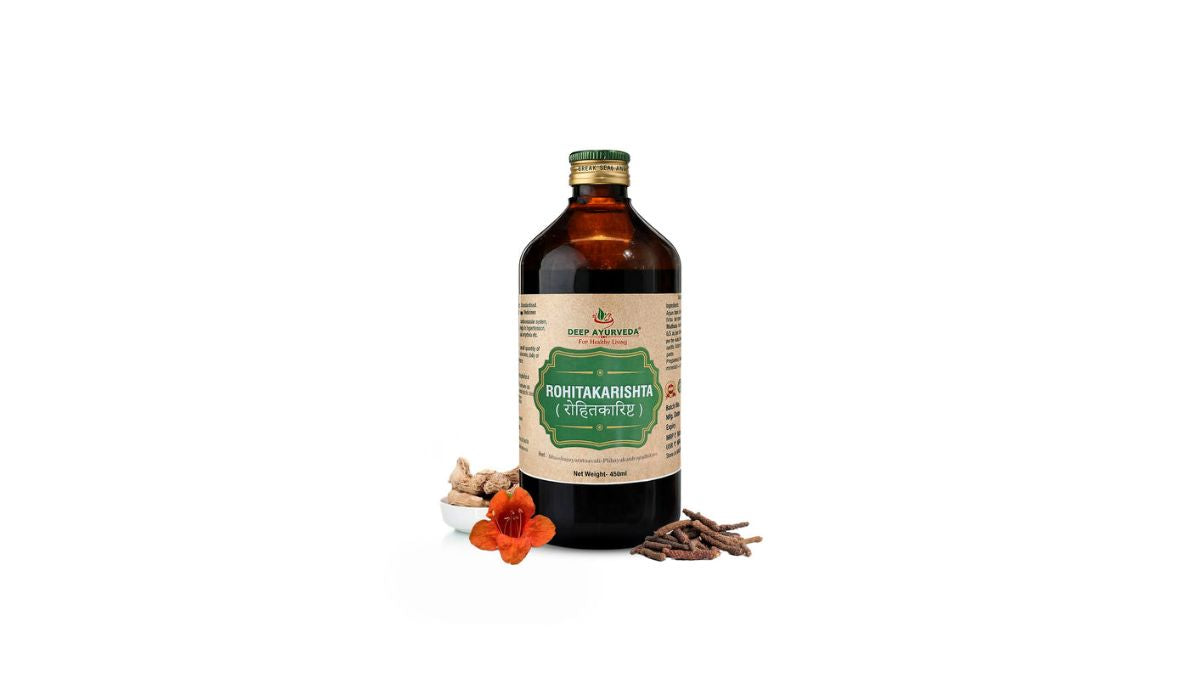
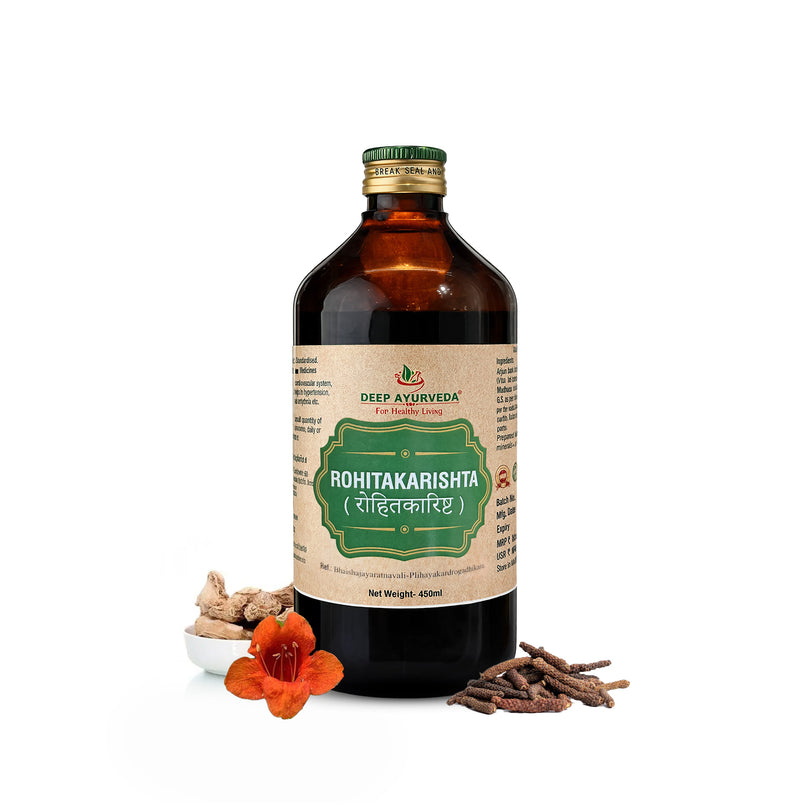
Deep Ayurveda Rohitakarishta
✅ Supports liver health ✅ Supports spleen health ✅ Aids digestion ✅ Supports healthy appetite ✅ Supports healthy bowel function
Introduction
Ayurveda describes health as a balance between the body, mind, and the three doshas—Vata, Pitta, and Kapha. To maintain this balance, classical Ayurvedic texts mention several time-tested herbal formulations, including Arishta and Asava, which are prepared through natural fermentation. These formulations are valued because the fermentation process helps preserve herbal constituents and supports better absorption.
Rohitakarishta is one such classical Ayurvedic formulation. It is traditionally prepared using Rohitaka (Tecomella undulata) along with a combination of other herbs. In Ayurveda, it has been used as part of holistic management approaches for supporting liver and spleen function, maintaining digestive health, and promoting overall metabolic balance. Its use is always based on an individual's constitution (Prakriti), current imbalance (Vikriti), and assessment by a qualified Ayurvedic physician.
Although Rohitakarishta has been used in Ayurvedic practice for generations, it should not be viewed as a substitute for diagnosis or treatment by a healthcare professional. People with persistent symptoms or underlying medical conditions should seek appropriate medical advice before using any herbal formulation.
In this comprehensive guide, we will explore:
- What is Rohitakarishta?
- Classical Ayurvedic references
- Ingredients and their traditional roles
- Potential benefits and traditional uses
- Dosage and how to take it
- Safety, precautions, and possible side effects
- Ayurvedic perspective on its action
- Frequently asked questions
Whether you are new to Ayurveda or looking to understand this traditional formulation in greater detail, this guide aims to provide balanced, practical, and evidence-aware information.
What is Rohitakarishta?
Rohitakarishta is a classical Ayurvedic fermented herbal formulation (Arishta) prepared according to traditional Ayurvedic pharmaceutics. It derives its name from its principal ingredient, Rohitaka (Tecomella undulata), a tree that has long been described in Ayurvedic literature for its traditional use in formulations intended to support liver, spleen, and digestive health.
Unlike herbal decoctions that are consumed shortly after preparation, Arishta formulations undergo a controlled natural fermentation process. During fermentation, naturally occurring microorganisms convert a portion of the sugars into a small amount of self-generated alcohol. This traditional process acts as a natural preservative and also helps extract and retain certain plant constituents.
From an Ayurvedic perspective, Rohitakarishta is selected by practitioners based on the individual's dosha imbalance, digestive strength (Agni), tissue status (Dhatu), and overall health profile. Rather than targeting a single symptom, Ayurveda focuses on restoring systemic balance through personalized care.
Today, Rohitakarishta remains one of the widely recognized classical formulations used in Ayurvedic practice, especially when an Ayurvedic physician determines it is appropriate for the individual's needs.
Classical Ayurvedic Reference
Rohitakarishta is described in traditional Ayurvedic literature as a fermented herbal preparation containing Rohitaka and other supportive herbs. Classical Ayurvedic formulations are designed according to specific preparation methods, proportions, and fermentation techniques that have been preserved through generations.
One of the distinctive features of classical Arishta preparations is that they are intended to work as multi-herb formulations, where each ingredient contributes complementary properties rather than acting in isolation. This reflects the Ayurvedic principle of combining herbs to support balance while considering the individual's constitution.
Modern manufacturers generally prepare Rohitakarishta by following classical references while applying standardized quality control and manufacturing practices.
What Makes Rohitakarishta Different from Other Arishta Formulations?
Many people assume that all Arishta preparations serve the same purpose. However, each formulation has a unique herbal composition and traditional Ayurvedic indication.
| Formulation | Traditional Focus |
|---|---|
| Rohitakarishta | Traditionally used to support liver, spleen, digestion, and metabolic balance |
| Punarnavadyarishta | Traditionally used in Ayurvedic care related to fluid balance and urinary health |
| Kumaryasava | Traditionally associated with digestive and women's health support |
| Abhayarishta | Traditionally used to support digestive regularity |
| Draksharishta | Traditionally used to support general vitality and digestive health |
Key Ingredients of Rohitakarishta
The exact composition may vary slightly depending on the manufacturer while remaining aligned with classical Ayurvedic references. The principal ingredients traditionally include:
1. Rohitaka (Tecomella undulata)
Rohitaka is the primary herb in this formulation and has traditionally been used in Ayurveda in formulations intended to support healthy liver and spleen function. It is valued for its traditional role in maintaining metabolic balance and supporting digestion.
2. Haritaki (Terminalia chebula)
Haritaki is one of Ayurveda's most respected herbs. It is traditionally used to support healthy digestion, bowel regularity, and overall digestive function.
3. Dhataki (Woodfordia fruticosa)
Dhataki flowers play an important role in the natural fermentation process of many classical Arishta preparations. They also contribute traditional Ayurvedic properties to the formulation.
4. Jaggery (Guda)
Jaggery provides the natural sugars required for controlled fermentation, resulting in the self-generated alcohol characteristic of classical Arishta preparations.
5. Water
Purified water is used during preparation to extract herbal constituents before fermentation begins.
Why is Rohitakarishta Naturally Fermented?
One aspect often overlooked is the significance of fermentation in Ayurvedic pharmaceutics.
Natural fermentation:
- Helps preserve herbal constituents.
- Supports extraction of certain phytochemicals.
- Produces a small amount of self-generated alcohol that acts as a natural preservative.
- Enhances shelf stability.
- Reflects traditional Ayurvedic manufacturing principles.
Importantly, the fermentation process in Arishta preparations differs from alcoholic beverages and serves a pharmaceutical purpose within classical Ayurvedic medicine.
Potential Benefits of Rohitakarishta in Ayurveda
Rohitakarishta has been used in Ayurveda for centuries as part of a holistic approach to health. Its traditional uses are based on Ayurvedic principles, where a physician selects a formulation according to an individual's Prakriti (body constitution), Vikriti (current imbalance), Agni (digestive fire), and overall health status.
It is important to understand that the following benefits describe traditional Ayurvedic uses. While some individual herbs have been studied in modern research, more high-quality clinical studies on Rohitakarishta as a complete formulation are needed. Therefore, it should be used under the guidance of a qualified Ayurvedic practitioner and not as a replacement for conventional medical care.
1. Traditionally Supports Healthy Liver Function
The liver plays a vital role in digestion, metabolism, and overall wellness. According to Ayurveda, proper liver function is closely linked with Pitta Dosha, healthy digestion (Agni), and balanced Rakta Dhatu (blood tissue).
Rohitakarishta is traditionally used in Ayurvedic practice to support healthy liver function and maintain normal metabolic processes. Its principal herb, Rohitaka (Tecomella undulata), has long been valued in classical texts for its role in formulations intended to support liver and spleen health.
2. Traditionally Supports Spleen Health
The spleen is also recognised in Ayurveda as an important organ involved in maintaining healthy blood tissue and overall vitality.
Classical Ayurvedic texts describe Rohitaka as an herb traditionally used in formulations intended to support spleen function.
Ayurvedic physicians may consider Rohitakarishta as part of an individualized management plan where maintaining healthy spleen function is one of the therapeutic goals.
3. Helps Maintain Healthy Digestion
Good digestion is considered the foundation of health in Ayurveda.
When digestion becomes weak (Mandagni), food may not be properly processed, leading to the accumulation of Ama (metabolic toxins according to Ayurveda). Over time, this imbalance can affect multiple body systems.
Rohitakarishta is traditionally used to support:
- Healthy digestion
- Better digestive efficiency
- Comfortable digestion after meals
- Balanced digestive fire (Agni)
4. Supports Healthy Metabolism
Ayurveda considers metabolism to be much more than calorie burning.
It includes:
- Proper digestion
- Efficient nutrient absorption
- Tissue nourishment
- Healthy elimination
- Balanced transformation of food into energy
Rohitakarishta is traditionally used as part of an Ayurvedic approach to maintaining these metabolic processes.
Maintaining a balanced metabolism also supports overall vitality and well-being.
5. Traditionally Supports Blood Tissue (Rakta Dhatu)
According to Ayurveda, Rakta Dhatu nourishes the body and supports healthy circulation and vitality.
An imbalance in Rakta Dhatu may affect overall wellness. Rohitakarishta is traditionally used in formulations intended to help maintain healthy blood tissue as part of broader Ayurvedic care.
This reflects Ayurveda's holistic philosophy of supporting tissue health rather than addressing isolated symptoms.
6. Supports Natural Detoxification Processes
The term "detox" is often misunderstood.
In Ayurveda, detoxification primarily refers to supporting the body's natural ability to process and eliminate metabolic waste through healthy digestion, balanced liver function, and proper elimination.
Rohitakarishta is traditionally included in Ayurvedic wellness plans aimed at supporting these natural physiological processes.
Lifestyle Tip
For better digestive and metabolic balance, Ayurveda also recommends:
- Eating freshly prepared meals
- Avoiding overeating
- Staying physically active
- Drinking adequate water
- Maintaining regular sleep patterns
Herbal formulations are intended to complement—not replace—these healthy habits.
7. Supports Healthy Appetite and Digestive Comfort
Poor appetite may sometimes be associated with reduced digestive fire (Agni) in Ayurveda.
When digestion improves, appetite often becomes more balanced naturally.
Rohitakarishta is traditionally used by Ayurvedic practitioners to support:
- Healthy appetite
- Efficient digestion
- Comfortable digestion after meals
- Overall digestive wellness
It should always be used according to professional guidance rather than self-prescribed for persistent digestive complaints.
8. Supports Overall Wellness Through Ayurvedic Balance
Unlike many products that focus on a single organ, Ayurveda emphasizes restoring harmony throughout the body.
Rohitakarishta is traditionally selected not simply for one health concern but because it may help support multiple interconnected systems, including digestion, metabolism, and tissue nourishment, when appropriate for the individual.
This holistic approach is one of the reasons classical Ayurvedic formulations continue to be valued today.
What Does Modern Research Say?
Modern scientific research on Rohitakarishta as a complete classical formulation is still limited. However, several of its individual herbal ingredients have been investigated for their phytochemical composition and biological activities in laboratory and preclinical studies.
These studies provide valuable insights into the herbs themselves, but they do not automatically confirm the same effects for the finished Rohitakarishta formulation in humans. More well-designed clinical trials are needed to better understand its efficacy and safety.
For this reason, Rohitakarishta should be viewed as a traditional Ayurvedic formulation whose use is guided by Ayurvedic principles and individualized assessment, rather than as a substitute for evidence-based medical treatment.
How Does Rohitakarishta Work According to Ayurveda?
One of the unique aspects of Ayurveda is that it focuses on understanding the root cause of an imbalance rather than only addressing its symptoms. Instead of selecting a formulation solely based on a disease name, an Ayurvedic physician evaluates the person's Prakriti (constitution), Vikriti (current imbalance), Agni (digestive strength), Ama (metabolic waste), Dhatus (body tissues), and Srotas (body channels).
Rohitakarishta is traditionally prescribed only when it aligns with this overall assessment.
Ayurvedic View of Its Action
According to Ayurvedic principles, Rohitakarishta may be selected to help:
- Support balanced Pitta associated with digestive and metabolic functions.
- Promote healthy Agni (digestive fire).
- Support proper nourishment of Rakta Dhatu (blood tissue).
- Maintain healthy function of the liver and spleen from an Ayurvedic perspective.
- Encourage proper digestion and elimination as part of overall wellness.
Rather than working on one organ alone, Ayurveda considers the interconnected relationship between digestion, metabolism, tissue nourishment, and overall balance.
Traditional Uses of Rohitakarishta
Rohitakarishta has traditionally been included in Ayurvedic practice as part of personalized treatment plans. It is important to remember that its use depends on an Ayurvedic physician's assessment and should not be self-prescribed for any medical condition.
Traditionally, it may be considered as part of an Ayurvedic approach to:
- Supporting healthy liver function.
- Supporting spleen health.
- Maintaining healthy digestion.
- Promoting balanced metabolism.
- Supporting healthy appetite.
- Assisting natural elimination through balanced digestive function.
- Supporting overall vitality as part of holistic Ayurvedic care.
Important: These are traditional Ayurvedic uses and should not be interpreted as proven medical indications.
Who May Benefit from Rohitakarishta?
An Ayurvedic physician may consider Rohitakarishta for individuals who, after a complete Ayurvedic assessment, require support for:
- Digestive strength (Agni).
- Balanced Pitta.
- Healthy liver and spleen function.
- General metabolic balance.
- Overall digestive wellness.
However, the decision depends on many factors, including:
- Age
- Body constitution (Prakriti)
- Current dosha imbalance (Vikriti)
- Existing health conditions
- Pregnancy or breastfeeding status
- Current medications
- Lifestyle and dietary habits
This individualized approach is one of the key differences between Ayurveda and a one-size-fits-all treatment model.
Dosage of Rohitakarishta
The appropriate dosage of Rohitakarishta depends on the individual's age, health status, digestive capacity, and the advice of a qualified Ayurvedic physician.
General Adult Dosage
The commonly recommended adult dosage is:
- 15–30 ml
- Mixed with an equal quantity of water
- Usually taken after meals
- One or two times daily, or as directed by an Ayurvedic practitioner.
Note: The dosage may vary depending on the product manufacturer and individual clinical requirements. Always follow the instructions provided on the product label or by your healthcare professional.
Best Time to Take Rohitakarishta
In many Ayurvedic practices, Rohitakarishta is commonly taken:
- After lunch
- After dinner
Taking it after meals may help improve tolerance and aligns with traditional recommendations for many fermented Ayurvedic formulations.
How to Take Rohitakarishta Correctly
For best results:
- Shake the bottle gently before use (if recommended by the manufacturer).
- Measure the prescribed quantity using a measuring cup.
- Dilute it with an equal amount of water unless otherwise directed.
- Consume it after meals.
- Follow the prescribed duration advised by your Ayurvedic physician.
Consistency, along with a balanced diet and healthy lifestyle, plays an important role in Ayurvedic care.
What Happens If You Miss a Dose?
If you miss a dose:
- Take it when you remember if it is not close to your next scheduled dose.
- If it is almost time for the next dose, skip the missed dose.
- Do not take a double dose to compensate for the missed one.
Can Rohitakarishta Be Taken Daily?
Whether Rohitakarishta should be taken daily depends on:
- Your individual health needs.
- The Ayurvedic diagnosis.
- The duration advised by your physician.
- Your response to the formulation.
Some people may use it for a limited period, while others may require a different duration under professional supervision. Avoid prolonged self-medication without consulting a qualified practitioner.
Who Should Avoid or Use Rohitakarishta with Caution?
Although Rohitakarishta is a classical Ayurvedic formulation, it may not be suitable for everyone.
Consult your healthcare provider before use if you:
- Are pregnant or planning pregnancy.
- Are breastfeeding.
- Have chronic liver, kidney, or heart disease.
- Have diabetes (some formulations contain jaggery and naturally occurring sugars).
- Are taking prescription medications.
- Are below the recommended age unless advised by a qualified practitioner.
- Have a known allergy to any ingredient in the formulation.
Because Arishta preparations undergo natural fermentation, they contain a small amount of self-generated alcohol, which should be considered in specific clinical situations.
Possible Side Effects of Rohitakarishta
When used according to the advice of a qualified Ayurvedic practitioner and within the recommended dosage, Rohitakarishta is generally well tolerated.
However, some individuals may experience:
- Mild digestive discomfort.
- Stomach irritation in sensitive individuals.
- Allergic reactions to specific herbal ingredients (rare).
Improper dosage or prolonged self-medication may increase the likelihood of unwanted effects.
If you experience persistent discomfort or signs of an allergic reaction, discontinue use and seek medical advice promptly.
Drug Interactions
Scientific information regarding interactions between Rohitakarishta and modern medicines is limited.
If you are taking:
- Medicines for diabetes.
- Blood pressure medications.
- Anticoagulants (blood thinners).
- Liver-related medications.
- Any long-term prescription medicines.
Consult your healthcare provider or an Ayurvedic physician before starting Rohitakarishta.
Diet and Lifestyle Tips to Support Ayurvedic Wellness
In Ayurveda, herbal formulations such as Rohitakarishta are considered one part of a comprehensive wellness plan. A balanced diet (Ahara), healthy lifestyle (Vihara), proper sleep, and stress management are equally important for maintaining digestive strength (Agni) and overall well-being.
The following recommendations are general Ayurvedic wellness tips and should be adapted to your individual constitution and health needs under the guidance of a qualified Ayurvedic practitioner.
Foods That Support Healthy Digestion
A balanced diet helps maintain digestive efficiency and supports the body's natural metabolic processes.
Include More Of
- Fresh seasonal fruits and vegetables
- Light, freshly prepared home-cooked meals
- Whole grains such as rice, barley, and millets
- Moong dal and easily digestible legumes
- Healthy fats in moderation, such as cow's ghee (when appropriate)
- Warm water throughout the day
- Moderate amounts of digestive spices like cumin, coriander, fennel, turmeric, and ginger
Limit or Avoid
- Deep-fried foods
- Highly processed and packaged foods
- Excess refined sugar
- Carbonated beverages
- Excess alcohol
- Heavy meals late at night
- Overeating
Ayurvedic Tip: Eating meals at regular times and avoiding frequent snacking may help maintain healthy digestive fire (Agni).
Lifestyle Practices That Complement Ayurveda
Simple daily habits can support digestive and metabolic balance.
Maintain Regular Meal Timings
Eating meals at consistent times may help support digestive efficiency.
Stay Physically Active
Regular walking, yoga, or moderate exercise can contribute to overall wellness.
Prioritize Quality Sleep
Ayurveda considers proper sleep (Nidra) one of the three pillars of health. Adults should aim for adequate, restful sleep according to their individual needs.
Manage Stress
Practices such as meditation, breathing exercises (Pranayama), and mindfulness may help support emotional well-being and overall balance.
Stay Hydrated
Adequate water intake supports normal physiological functions. Warm water is often preferred in Ayurveda, especially after meals.
Common Mistakes People Make While Taking Rohitakarishta
Many individuals begin Ayurvedic formulations without understanding the importance of personalized care. Avoid these common mistakes:
1. Self-Medicating Without Professional Advice
Choosing a formulation based only on internet information or recommendations from friends may not be appropriate for your individual constitution or health condition.
2. Ignoring Diet and Lifestyle
No herbal formulation can compensate for consistently unhealthy eating habits, inadequate sleep, or a sedentary lifestyle.
3. Expecting Immediate Results
Ayurveda focuses on restoring balance gradually. Depending on the individual and the therapeutic goal, improvements may take time.
4. Taking Incorrect Dosages
Using larger amounts than recommended does not improve results and may increase the risk of unwanted effects.
5. Combining Multiple Herbal Products Without Guidance
Using several Ayurvedic formulations simultaneously without professional advice may not always be appropriate.
Rohitakarishta vs Other Classical Ayurvedic Formulations
Many readers wonder whether Rohitakarishta is better than other well-known Arishta or Asava preparations. In Ayurveda, there is no universally "best" formulation. The choice depends on the individual's constitution, imbalance, and clinical assessment.
Rohitakarishta vs Punarnavadyarishta
| Feature | Rohitakarishta | Punarnavadyarishta |
|---|---|---|
| Classical Category | Arishta | Arishta |
| Primary Traditional Focus | Liver, spleen, digestion, metabolic balance | Fluid balance, urinary wellness, kidney support in Ayurveda |
| Main Herb | Rohitaka (Tecomella undulata) | Punarnava (Boerhavia diffusa) |
| Selection Basis | Individual Ayurvedic assessment | Individual Ayurvedic assessment |
Rohitakarishta vs Kumaryasava
| Feature | Rohitakarishta | Kumaryasava |
|---|---|---|
| Traditional Focus | Liver and spleen support | Digestive wellness and women's health in Ayurveda |
| Principal Herb | Rohitaka | Kumari (Aloe vera) |
| Fermented Preparation | Yes | Yes |
Readers interested in understanding how different classical formulations are selected can explore your Kumaryasava article.
Rohitakarishta vs Abhayarishta
| Rohitakarishta | Abhayarishta |
|---|---|
| Traditionally selected for liver, spleen, and digestive support | Traditionally used to support digestive regularity and bowel health |
| Contains Rohitaka | Contains Haritaki as the principal herb |
This comparison helps readers understand that Ayurvedic formulations are chosen based on individual needs rather than popularity.
Conclusion
Rohitakarishta is a classical Ayurvedic fermented formulation traditionally used to support liver and spleen health, healthy digestion, and metabolic balance. Like all Ayurvedic medicines, it should be selected based on an individual's body constitution, health condition, and the guidance of a qualified Ayurvedic physician. When combined with a balanced diet, healthy lifestyle, and personalized Ayurvedic care, Rohitakarishta can be a valuable part of a holistic wellness journey.
Frequently Asked Questions
1. What is Rohitakarishta used for in Ayurveda?
Rohitakarishta is traditionally used in Ayurveda as part of individualized wellness plans to support healthy liver and spleen function, digestion, and metabolic balance. Its use depends on an Ayurvedic physician's assessment.
2. Can Rohitakarishta be taken every day?
The duration and frequency depend on your health status and the advice of a qualified Ayurvedic practitioner. It should not be taken long term without professional guidance.
3. When is the best time to take Rohitakarishta?
It is commonly taken after meals, diluted with an equal quantity of water, or as directed by an Ayurvedic physician.
4. Does Rohitakarishta contain alcohol?
Yes. Like other classical Arishta preparations, it contains a small amount of self-generated alcohol produced naturally during fermentation. This process acts as a natural preservative and differs from the manufacture of alcoholic beverages.
5. Can people with diabetes take Rohitakarishta?
Some formulations contain jaggery or naturally occurring sugars used during fermentation. Individuals with diabetes should consult their healthcare provider before use.
6. Is Rohitakarishta safe during pregnancy?
Pregnant or breastfeeding women should use Rohitakarishta only under the guidance of a qualified healthcare professional or Ayurvedic physician.
7. Can Rohitakarishta be taken with modern medicines?
Scientific evidence regarding interactions is limited. If you are taking prescription medicines, consult your doctor or Ayurvedic practitioner before starting Rohitakarishta.
8. How long does it take to show results?
The response varies depending on the individual's constitution, health status, lifestyle, and adherence to the recommended Ayurvedic plan. Ayurveda emphasizes gradual restoration of balance rather than immediate effects.