
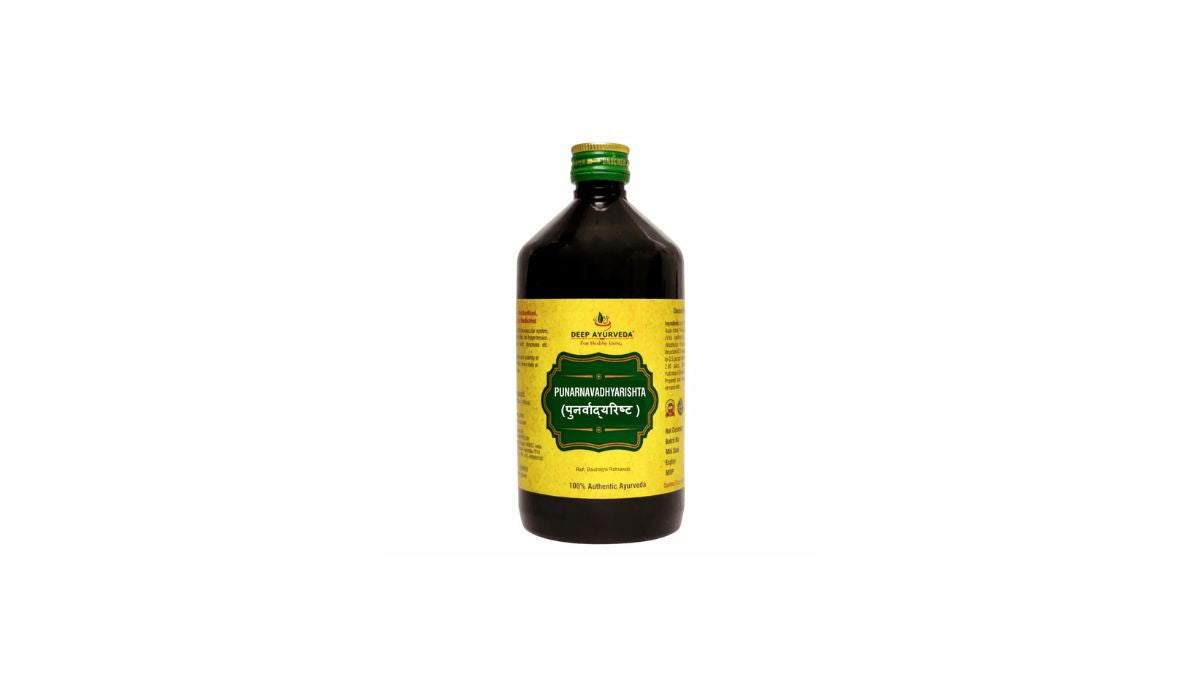
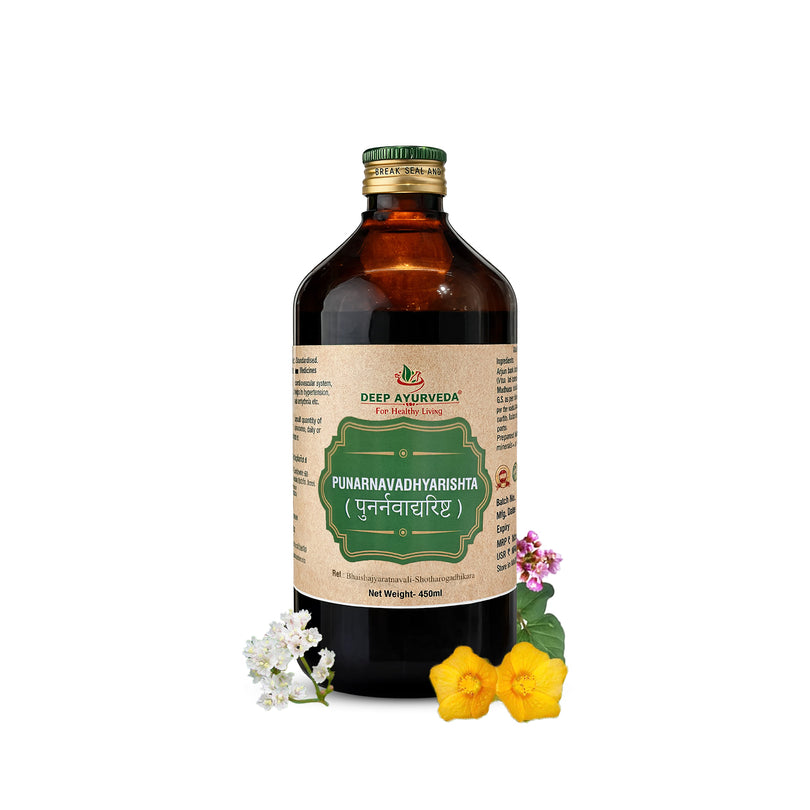
Deep Ayurveda Punarnavadyarishta
✅ Supports Kidney Health ✅ Promotes Healthy Urination ✅ Helps Reduce Water Retention ✅ Supports Liver Function ✅ Supports Joint and Muscle Comfort ✅ Helps Maintain Healthy Blood Circulation
Punarnavadyarishta is a classical Ayurvedic fermented herbal formulation (Arishta) traditionally used to support healthy fluid balance, urinary function, liver health, digestion, and overall metabolism. It contains Punarnava (Boerhavia diffusa) as the primary herb, along with several other Ayurvedic ingredients that work together to help balance Kapha and Vata dosha, promote healthy urinary flow (Mutrala action), and reduce the accumulation of Ama (metabolic toxins). When used under the guidance of a qualified Ayurvedic physician, Punarnavadyarishta may be beneficial as part of a holistic approach to managing conditions associated with fluid retention, sluggish metabolism, and impaired urinary health.
Important: Punarnavadyarishta is a traditional Ayurvedic medicine. It should not be considered a substitute for medical treatment of kidney, liver, or heart diseases. Always consult a qualified healthcare professional before using it, especially if you are pregnant, breastfeeding, taking prescription medicines, or have a chronic medical condition.
Introduction
Ayurveda has long emphasized that good health begins with balanced digestion, efficient metabolism, proper elimination of waste, and healthy circulation of body fluids. When these natural processes become disturbed, the body may experience symptoms such as swelling (Shotha), poor urinary function, heaviness, fatigue, digestive discomfort, and water retention.
Among the many classical Ayurvedic formulations described for supporting these functions, Punarnavadyarishta has earned a special place due to its unique combination of herbs and its fermented preparation method. Unlike single-herb remedies, this formulation combines the therapeutic properties of Punarnava with several complementary herbs that work synergistically to support multiple body systems rather than focusing on just one organ.
The name "Punarnava" itself means "the one that renews the body." In Ayurveda, this herb is traditionally valued for its ability to support natural fluid balance, promote healthy urinary function, and help maintain overall vitality. When prepared as an Arishta, the herbs undergo a natural fermentation process that enhances the extraction and preservation of their beneficial constituents, making the formulation easy to absorb and traditionally suitable for long-term use under professional guidance.
Today, Punarnavadyarishta is commonly recommended by Ayurvedic practitioners as part of a personalized treatment plan for conditions involving fluid imbalance, urinary concerns, sluggish digestion, and metabolic disturbances. However, its benefits extend beyond these traditional uses. Its carefully selected herbal ingredients also contribute to maintaining healthy liver function, supporting digestive fire (Agni), and promoting overall wellness.
In this comprehensive guide, you'll learn:
- What Punarnavadyarishta is and how it works according to Ayurveda
- Its key ingredients and their individual roles
- Evidence-informed health benefits
- Traditional Ayurvedic uses
- Dosage, best time to take it, and duration of use
- Possible side effects and precautions
- Who may benefit from this formulation
Whether you're exploring Ayurvedic remedies for the first time or seeking reliable information before using Punarnavadyarishta, this guide aims to provide balanced, trustworthy, and practical insights based on classical Ayurvedic principles and current health knowledge.
Quick Facts About Punarnavadyarishta
| Feature | Details |
|---|---|
| Classical Formulation | Punarnavadyarishta |
| Dosage Form | Fermented Ayurvedic liquid (Arishta) |
| Primary Herb | Punarnava (Boerhavia diffusa) |
| Ayurvedic Actions | Mutrala (supports healthy urinary flow), Shothahara (helps reduce swelling), Deepana (supports digestive fire), Pachana (supports digestion of Ama) |
| Dosha Action | Helps balance Kapha and Vata; supports proper Pitta metabolism when used appropriately |
| Main Traditional Uses | Fluid retention, urinary wellness, digestive support, liver support, metabolic balance |
| Best Time to Take | Usually after meals with an equal quantity of water, or as directed by an Ayurvedic physician |
| Suitable For | Adults under professional guidance |
| Not Recommended Without Medical Advice | Pregnancy, breastfeeding, children, severe kidney disease, severe liver disease, or those taking multiple prescription medicines |
What is Punarnavadyarishta?
Punarnavadyarishta is a classical Ayurvedic fermented herbal formulation prepared using Punarnava (Boerhavia diffusa) as the principal ingredient along with several medicinal herbs, jaggery or sugar, and naturally occurring fermenting agents. It belongs to a category of Ayurvedic medicines known as Arishta, which are self-generated herbal fermentations traditionally valued for their stability, ease of absorption, and long shelf life.
Unlike herbal decoctions that are consumed fresh, Arishta preparations undergo a controlled natural fermentation process. During this process, beneficial phytochemicals from the herbs are extracted into the liquid while a small amount of naturally occurring alcohol is produced. This self-generated alcohol is not added separately; it forms naturally during fermentation and helps preserve the formulation while improving the extraction of active plant constituents.
The formulation is traditionally described in Ayurvedic texts and is primarily indicated for conditions involving:
- Shotha (swelling or edema)
- Mutravaha Srotas disorders (urinary system imbalances)
- Mandagni (weak digestive fire)
- Ama accumulation (improperly digested metabolic waste)
- Kapha-related fluid retention
From an Ayurvedic perspective, many health concerns begin when digestion weakens, metabolism slows, and excess fluids accumulate within the body's channels (Srotas). Punarnavadyarishta is designed to address these root imbalances by supporting digestion, encouraging healthy elimination, and promoting proper movement of body fluids.
Rather than targeting a single symptom, the formulation works holistically to restore internal balance, which is one of the fundamental principles of Ayurveda.
Classical Ayurvedic Perspective
One aspect often overlooked in modern discussions is that Ayurveda does not view swelling, urinary discomfort, or sluggish metabolism as isolated problems. Instead, these conditions are understood through the interconnected functioning of Agni (digestive fire), Ama (metabolic waste), Doshas, Dhatus (body tissues), and Srotas (body channels).
According to Ayurvedic philosophy:
- Healthy digestion maintains balanced tissue nourishment.
- Efficient metabolism prevents the accumulation of Ama.
- Properly functioning Srotas allow nutrients and body fluids to circulate freely.
- Balanced Doshas maintain physiological harmony.
When digestion becomes weak (Mandagni), food is not fully transformed into healthy nourishment. This results in the formation of Ama, a sticky metabolic by-product that can obstruct the body's channels. Over time, these blockages may contribute to fluid accumulation, heaviness, poor circulation, reduced urinary flow, and various metabolic disturbances.
Punarnavadyarishta is traditionally formulated to help:
- Rekindle digestive fire (Deepana)
- Improve metabolic processing (Pachana)
- Promote healthy urinary elimination (Mutrala)
- Support fluid balance (Shothahara)
- Maintain healthy liver and digestive function
- Restore normal movement within the body's channels (Srotoshodhana)
Instead of merely relieving symptoms, Ayurveda seeks to correct the underlying imbalance contributing to these conditions.
How Does Punarnavadyarishta Work?
Most articles simply mention that Punarnavadyarishta is good for the kidneys or reduces swelling. However, understanding how it works provides a much deeper appreciation of its role in Ayurvedic care.
Think of the body as a city with thousands of interconnected waterways. These waterways represent the Srotas, which transport nutrients, fluids, and waste throughout the body. When these channels remain open and healthy, every organ receives proper nourishment and waste is efficiently eliminated.
However, when digestion weakens and Ama accumulates, these channels begin to function less efficiently. Fluid movement slows, metabolism becomes sluggish, and symptoms such as swelling, heaviness, reduced urinary flow, and fatigue may appear.
Punarnavadyarishta is traditionally used to support the body through several interconnected mechanisms:
1. Supports Healthy Digestive Fire (Agni)
A healthy Agni is considered the foundation of wellness in Ayurveda. By supporting digestion and metabolism, the formulation helps the body process nutrients more efficiently and reduces the tendency for Ama formation.
2. Assists in the Elimination of Excess Fluid
Punarnava, the principal herb, is traditionally recognized for its Mutrala (diuretic) action. This helps maintain healthy urinary flow and supports the body's natural regulation of fluid balance.
3. Supports Healthy Liver Function
Several herbs in the formulation are traditionally valued for maintaining liver health and supporting normal metabolic processes. Since the liver plays an essential role in nutrient transformation and detoxification, its proper function contributes to overall wellness.
4. Helps Maintain Healthy Circulation Through the Srotas
Rather than acting on one organ alone, Punarnavadyarishta is believed to support the proper functioning of multiple body channels involved in nutrition, waste elimination, and fluid transport.
5. Promotes Dosha Balance
The formulation primarily helps balance Kapha by reducing excess heaviness and fluid accumulation while also supporting Vata through improved circulation and elimination. This balanced approach reflects Ayurveda's emphasis on restoring harmony rather than simply addressing isolated symptoms.
Why This Formulation Is Different from Single-Herb Remedies
Many herbal products rely on just one ingredient. Punarnavadyarishta, however, combines multiple herbs in a carefully balanced formulation where each ingredient complements the others.
This synergistic approach aims to:
- Support digestion before addressing fluid imbalance.
- Promote healthy urinary function while maintaining overall metabolic health.
- Balance Doshas rather than focusing on a single symptom.
- Provide comprehensive support to multiple body systems through one classical formulation.
This holistic philosophy is one of the defining strengths of classical Ayurveda and helps explain why formulations like Punarnavadyarishta have remained in use for generations.
Complete Ingredients of Punarnavadyarishta
Punarnavadyarishta is not effective because of a single herb alone. Its therapeutic value lies in the synergistic combination of multiple Ayurvedic herbs, each selected for a specific purpose—supporting digestion (Agni), promoting healthy urinary function (Mutravaha Srotas), maintaining fluid balance, nourishing tissues (Dhatus), and helping the body eliminate excess Ama. This multi-herb approach is one of the reasons classical Ayurvedic formulations continue to be widely used in clinical practice.
Why Ingredients Matter in Ayurveda
One common misconception is that the main herb alone determines the effectiveness of an Ayurvedic medicine. In reality, Ayurveda follows a principle called Yogavahi and Yoga Kalpana, where carefully selected herbs work together to produce a balanced therapeutic effect.
Instead of relying on one herb in a high dose, classical formulations combine herbs that:
- Enhance each other's action.
- Reduce the possibility of unwanted effects.
- Support multiple organs simultaneously.
- Improve digestion and absorption.
- Balance different Doshas instead of targeting only one symptom.
This holistic formulation strategy is what makes Punarnavadyarishta unique compared to many modern single-herb supplements.
Major Ingredients in Punarnavadyarishta
1. Punarnava (Boerhavia diffusa)
Punarnava is considered the primary ingredient of Punarnavadyarishta and plays a central role in determining the therapeutic direction of this classical Ayurvedic formulation. The name Punarnava comes from Sanskrit words meaning "one that renews or rejuvenates the body."
In Ayurveda, this herb is traditionally valued for supporting healthy fluid metabolism, proper elimination, digestive strength, and maintaining balance in the body's internal systems.
Ayurvedic Properties of Punarnava
Rasa (Taste): Tikta (Bitter), Kashaya (Astringent)
The bitter and astringent tastes of Punarnava are traditionally associated with balancing excess Kapha and supporting proper metabolic activity in the body.
Guna (Qualities): Laghu (Light), Ruksha (Dry)
These qualities help counter excessive heaviness and moisture accumulation, which are traditionally associated with sluggish metabolism and fluid imbalance.
Virya (Potency): Ushna (Hot)
The warming potency of Punarnava supports digestive fire (Agni) and helps maintain proper metabolic transformation.
Vipaka (Post-digestive Effect): Madhura (Sweet)
The sweet post-digestive effect helps provide a balancing influence after digestion and supports overall tissue nourishment.
Ayurvedic Actions of Punarnava
Mutrala (Supports healthy urinary function)
Punarnava is traditionally recognized for its ability to support normal urinary flow and maintain healthy regulation of body fluids.
Shothahara (Helps manage swelling)
In Ayurveda, Punarnava is commonly used in formulations designed to support healthy fluid balance and reduce conditions associated with excess accumulation.
Deepana (Supports digestive fire)
It helps promote healthy Agni, which is considered essential for proper digestion and prevention of Ama formation.
Rasayana (Supports overall vitality)
Punarnava is considered a rejuvenating herb that helps maintain strength, nourishment, and overall wellness.
Why Punarnava Is the Principal Herb in Punarnavadyarishta
The significance of Punarnava goes beyond its traditional use for urinary wellness. According to Ayurvedic principles, the health of the body depends on balanced digestion, proper elimination, and free movement of fluids through the body's channels (Srotas).
Punarnava is traditionally believed to support:
Healthy kidney function
It is commonly used in Ayurveda to support the body's natural filtration and elimination processes related to urinary health.
Liver health and metabolism
Punarnava is traditionally included in formulations that support healthy liver function and metabolic activities.
Proper fluid metabolism
It helps maintain the body's natural balance of fluids by supporting healthy elimination pathways.
Digestive efficiency
By supporting Agni, Punarnava helps maintain better digestion and nutrient processing.
Healthy circulation
It supports the normal movement of nutrients and fluids throughout the body.
Modern Scientific Perspective of Punarnava
Modern scientific research has explored Punarnava for various biological activities, including its diuretic, antioxidant, anti-inflammatory, and hepatoprotective properties.
Some experimental studies suggest that compounds present in Boerhaavia diffusa may support these activities. However, many available studies are based on laboratory and animal research, and more high-quality human clinical trials are required to establish definitive therapeutic effects.
2. Guduchi (Tinospora cordifolia)
Guduchi, also known as Giloy, is one of Ayurveda's most respected Rasayana herbs. It is traditionally used to support immunity, metabolism, digestion, and overall vitality.
In Punarnavadyarishta, Guduchi works as a supportive herb that complements the actions of Punarnava by maintaining metabolic balance and supporting the body's natural defense mechanisms.
Ayurvedic Actions of Guduchi
Rasayana
Guduchi is considered a rejuvenating herb that helps maintain strength, vitality, and overall wellness.
Tridosha Balancing
It is traditionally described as an herb that helps maintain balance among Vata, Pitta, and Kapha Doshas.
Deepana
Guduchi supports healthy digestive fire, helping the body process food and nutrients efficiently.
Pachana
It helps support the digestion and management of Ama, which Ayurveda considers a factor behind metabolic imbalance.
Why Guduchi Is Included in Punarnavadyarishta
Guduchi provides additional support to the formulation by helping maintain healthy metabolism and improving the body's ability to utilize nutrients effectively.
In Punarnavadyarishta, Guduchi traditionally helps:
Support liver function
Guduchi is commonly included in Ayurvedic formulations aimed at maintaining healthy liver metabolism.
Support Ama management
It helps improve digestive processing, which is important for reducing the accumulation of undigested metabolic waste.
Maintain metabolic balance
Guduchi supports the body's natural processes involved in digestion and transformation.
Promote overall vitality
Its Rasayana properties make it valuable for maintaining general health and resilience.
Modern Scientific Perspective of Guduchi
Guduchi has been studied for its antioxidant, immunomodulatory, and anti-inflammatory properties. Research suggests that certain compounds present in Tinospora cordifolia may contribute to these activities.
However, Guduchi should be used thoughtfully, especially by individuals with autoimmune conditions or those taking immune-modulating medications. Consultation with a healthcare professional is recommended in such situations.
3. Haritaki (Terminalia chebula)
Haritaki is one of the most important herbs in Ayurveda and is considered a key component of many traditional formulations. It is valued for supporting digestion, elimination, and maintaining balance of Vata Dosha.
Ayurvedic Actions of Haritaki
Supports healthy bowel function
Haritaki is traditionally used to maintain regular elimination and support digestive wellness.
Improves digestion
It helps maintain proper Agni, allowing better processing of food and nutrients.
Supports natural elimination
Healthy elimination is considered essential in Ayurveda to prevent accumulation of Ama.
Balances Vata Dosha
Haritaki is especially valued for its ability to maintain Vata balance, which is associated with proper movement and elimination.
Role of Haritaki in Punarnavadyarishta
In Ayurveda, digestion and elimination are closely connected with overall health. If waste products are not properly eliminated, Ama formation may occur, affecting metabolic balance.
Haritaki supports the formulation by:
- Maintaining regular bowel movements and healthy digestion.
- Supporting efficient nutrient absorption.
- Complementing the cleansing and balancing actions of other herbs.
- Helping maintain proper functioning of the digestive system.
4. Bibhitaki (Terminalia bellirica)
Bibhitaki is traditionally associated with balancing Kapha Dosha and supporting metabolic health. It is one of the three fruits included in the famous Ayurvedic combination Triphala.
Benefits of Bibhitaki
Supports respiratory wellness
Bibhitaki is traditionally used in Ayurveda to maintain healthy respiratory function.
Promotes digestive health
It supports proper digestion and helps maintain metabolic balance.
Supports healthy lipid metabolism
Traditional use suggests its role in maintaining balanced fat metabolism.
Maintains tissue health
It supports overall nourishment and healthy functioning of body tissues.
Its presence in Punarnavadyarishta helps address Kapha-related sluggishness and supports the formulation beyond only urinary wellness.
5. Amalaki (Emblica officinalis)
Amalaki, also known as Indian Gooseberry (Amla), is considered one of Ayurveda's most important Rasayana herbs. It is valued for its nourishing, rejuvenating, and balancing properties.
Why Amalaki Is Important
Amalaki traditionally supports:
Digestive health
It helps maintain healthy digestion while providing a balancing effect on Agni.
Liver function
It is commonly used in Ayurvedic formulations that support natural metabolic processes.
Tissue nourishment
Amalaki helps maintain healthy Dhatu formation and overall nourishment.
Healthy ageing
Its Rasayana properties make it valuable for maintaining vitality.
Natural antioxidant defense
Modern studies have explored its antioxidant potential due to naturally occurring compounds.
Unlike many warming herbs, Amalaki has a cooling nature that helps maintain balance within the overall formulation.
6. Dry Ginger (Shunthi)
Dry Ginger, known as Shunthi in Ayurveda, is an important digestive-supporting herb used in many classical formulations. It is especially valued for its ability to strengthen Agni (digestive fire) and support proper metabolism.
In Punarnavadyarishta, Shunthi plays a supportive role by helping the body process the formulation effectively and maintaining healthy digestive function.
Ayurvedic Properties of Shunthi
Rasa (Taste): Katu (Pungent)
The pungent taste of dry ginger is traditionally associated with stimulating digestion and balancing excess Kapha.
Guna (Qualities): Laghu (Light), Snigdha (Slightly Unctuous)
These properties support digestion while maintaining balance in the body.
Virya (Potency): Ushna (Hot)
Its warming nature helps stimulate digestive activity and supports healthy circulation.
Vipaka (Post-digestive Effect): Madhura (Sweet)
This provides a balancing influence after digestion.
Ayurvedic Benefits of Shunthi
Supports digestive fire (Agni)
Shunthi helps maintain healthy digestion, which Ayurveda considers the foundation of proper metabolism and overall health.
Helps manage Ama formation
By supporting digestion, it assists the body in processing food properly and reducing the accumulation of undigested metabolic waste.
Supports circulation
Its warming nature traditionally helps maintain healthy movement of nutrients and fluids throughout the body.
Balances Kapha and Vata Dosha
Shunthi is especially valued for reducing excess Kapha qualities like heaviness and sluggishness while supporting balanced Vata function.
Role of Shunthi in Punarnavadyarishta
A common principle in Ayurveda is that herbs work best when the digestive system can properly process and utilize them.
Shunthi supports Punarnavadyarishta by:
- Improving digestive capacity and herbal absorption.
- Supporting metabolism alongside Punarnava.
- Helping maintain balance in formulations containing cooling and nourishing herbs.
- Enhancing the overall digestive action of the formulation.
7. Black Pepper (Maricha)
Black Pepper, known as Maricha, is a traditional Ayurvedic spice valued not only for taste but also for its therapeutic properties.
Although used in a small quantity, Maricha has an important role in improving the overall effectiveness of herbal combinations.
Ayurvedic Actions of Maricha
Deepana (Supports digestive fire)
Maricha stimulates digestion and helps maintain efficient metabolism.
Pachana (Supports Ama digestion)
It assists the digestive process and supports the removal of metabolic waste.
Kapha Balancing
Its pungent and warming nature helps balance excess Kapha qualities.
Supports circulation
It helps maintain proper movement of nutrients and fluids within the body.
Role of Maricha in Punarnavadyarishta
Maricha works as a supportive herb by:
- Helping improve digestion and utilization of other herbs.
- Supporting the bioavailability of herbal compounds.
- Balancing the heavier qualities of certain ingredients.
- Enhancing the overall metabolic action of the formulation.
Modern Scientific Perspective
Black pepper contains piperine, a naturally occurring compound that has been studied for its influence on the absorption and bioavailability of certain substances.
However, the effect of piperine can vary depending on the substance involved, and individual health conditions should always be considered before using concentrated herbal products.
8. Long Pepper (Pippali)
Pippali, also known as Long Pepper (Piper longum), is considered a highly valuable herb in classical Ayurveda. It is traditionally used to support digestion, metabolism, respiratory health, and rejuvenation.
It is also one of the three ingredients of Trikatu, along with Shunthi (Dry Ginger) and Maricha (Black Pepper).
Ayurvedic Actions of Pippali
Deepana (Supports Agni)
Pippali helps maintain healthy digestive strength and supports proper transformation of food.
Pachana (Supports digestion of Ama)
It assists the body in processing undigested metabolic residues.
Rasayana (Rejuvenating action)
Traditionally, Pippali is valued for supporting vitality when used appropriately.
Enhances absorption
It helps improve the body's ability to utilize herbal ingredients.
Role of Pippali in Punarnavadyarishta
Pippali complements other herbs in the formulation by:
- Supporting digestion before herbal nutrients are absorbed.
- Enhancing the metabolic activity of the formulation.
- Maintaining balance between different herbs.
- Supporting overall digestive and respiratory wellness.
9. Vidanga (Embelia ribes)
Vidanga is a classical Ayurvedic herb traditionally used for supporting digestive health and maintaining intestinal balance.
Although it is not the primary ingredient of Punarnavadyarishta, it contributes by supporting healthy metabolism and digestion.
Ayurvedic Benefits of Vidanga
Supports digestive health
Vidanga helps maintain proper digestive function and supports Agni.
Maintains intestinal balance
It is traditionally valued for supporting a healthy internal environment of the digestive system.
Helps manage Ama
By supporting digestion, Vidanga contributes to reducing metabolic imbalance associated with improper digestion.
Promotes healthy metabolism
It supports efficient transformation and utilization of nutrients.
Role of Vidanga in Punarnavadyarishta
Vidanga supports the formulation by:
- Strengthening digestive actions of other herbs.
- Supporting healthy elimination.
- Complementing the cleansing and metabolic properties of Punarnava.
- Maintaining overall digestive balance.
10. Dhataki Flowers (Woodfordia fruticosa)
Dhataki flowers are one of the most important yet often overlooked ingredients in classical Arishta formulations.
Unlike regular herbal decoctions, Arishta preparations require a natural fermentation process, and Dhataki plays a significant role in this traditional method.
Why Dhataki Is Special in Arishta Preparation
Dhataki flowers naturally contain microorganisms that help initiate and support the fermentation process.
During fermentation:
- Herbal compounds are extracted into the liquid medium.
- The formulation develops its characteristic properties.
- Natural preservation occurs due to fermentation.
- A small amount of self-generated alcohol is produced.
This naturally occurring alcohol is not separately added; it develops as a result of fermentation and helps improve the stability of the preparation.
Role of Dhataki in Punarnavadyarishta
Dhataki helps:
Support natural fermentation
It acts as a traditional fermentation starter in Arishta preparations.
Improve extraction of herbal compounds
Fermentation helps release various plant constituents into the liquid formulation.
Maintain formulation stability
It contributes to the longer shelf life of the classical preparation.
Preserve traditional preparation methods
Its presence allows the formulation to remain consistent with classical Ayurvedic practices.
Health Benefits of Punarnavadyarishta
Punarnavadyarishta has been used in Ayurvedic practice for generations due to its multi-dimensional approach toward maintaining overall health balance. Unlike many modern formulations that are generally designed to focus on one specific concern, Ayurveda considers health as an interconnected system involving digestion, metabolism, circulation, elimination, tissue nourishment, and the balance of Doshas.
The benefits discussed below are based on classical Ayurvedic understanding and available scientific research on individual herbs used in the formulation. Punarnavadyarishta should always be taken according to an individual's health condition and under the guidance of a qualified Ayurvedic practitioner, especially for people with chronic health concerns or those taking regular medications.
1. Supports Healthy Fluid Balance and Helps Manage Swelling
One of the most recognized traditional uses of Punarnavadyarishta is maintaining the body's natural fluid balance and supporting conditions associated with swelling.
In Ayurveda, excessive fluid accumulation is described under Shotha (swelling), which may occur due to Dosha imbalance, weakened digestive fire (Mandagni), or improper movement of fluids through the body's channels (Srotas).
The presence of Punarnava (Boerhavia diffusa) gives this formulation its traditional Shothahara (supporting normal fluid balance) properties.
How Punarnavadyarishta May Help:
Supports natural fluid regulation: Helps the body maintain a healthy balance between fluid retention and elimination processes.
Promotes healthy urinary elimination: Traditionally used to encourage proper urine flow, which plays an important role in maintaining fluid balance.
Helps reduce heaviness associated with fluid imbalance: Ayurveda considers excess Kapha and fluid accumulation as factors that may contribute to a feeling of heaviness and discomfort.
Supports normal metabolic activity: By improving digestion and metabolism, it helps maintain the body's natural ability to process and eliminate waste materials.
According to Ayurveda, Punarnava helps balance aggravated Kapha Dosha, which is associated with heaviness, stagnation, and excessive fluid accumulation. By supporting proper movement of fluids through the body's channels, it helps restore balance naturally.
2. Supports Urinary System Wellness
Punarnavadyarishta is traditionally considered beneficial for maintaining healthy urinary system function.
Ayurveda describes the urinary pathway as Mutravaha Srotas, one of the important channels responsible for removing excess fluids and metabolic waste from the body.
The formulation is traditionally known for its Mutrala action, which refers to supporting healthy urine formation and elimination.
How It Supports Urinary Wellness:
Maintains healthy urine flow: Traditionally used to support the body's natural urinary elimination process.
Helps regulate fluid movement: Supports proper circulation and movement of fluids throughout the body.
Supports elimination of metabolic waste: Ayurveda emphasizes efficient elimination as an important part of maintaining internal balance.
Complements digestive health: Since Ayurveda connects urinary wellness with metabolism and Agni, improving digestion is considered an important supporting factor.
Punarnavadyarishta is traditionally used when urinary imbalance is associated with factors such as weak digestion, Kapha imbalance, and improper fluid metabolism.
Important:
Punarnavadyarishta should not be considered a replacement for medical treatment of urinary infections, kidney disorders, or other diagnosed medical conditions. Professional guidance is recommended for therapeutic use.
3. Supports Kidney Health and Natural Filtration Processes
The kidneys play an essential role in maintaining fluid balance, electrolyte regulation, and elimination of metabolic waste.
Although Ayurveda explains body functions through concepts different from modern physiology, it recognizes the importance of proper fluid metabolism and efficient elimination through Mutravaha Srotas.
Punarnavadyarishta is traditionally used to support:
Healthy urinary function: Helps maintain normal urinary activity as part of overall wellness.
Proper fluid movement: Supports the body's natural mechanisms involved in maintaining fluid balance.
Healthy elimination pathways: Encourages efficient removal of unwanted metabolic by-products.
Balanced metabolism: Supports digestion and metabolic processes that influence overall body function.
The herb Punarnava has been studied for its diuretic and antioxidant properties. However, more high-quality human clinical studies are required to establish specific therapeutic effects.
4. Helps Support Healthy Liver Function
The liver plays a vital role in digestion, metabolism, nutrient transformation, and maintaining overall physiological balance.
According to Ayurveda, the Yakrit (liver) is closely connected with metabolic transformation and the formation of healthy tissues (Dhatus).
Punarnavadyarishta contains herbs traditionally valued for supporting liver function, including:
- Punarnava
- Guduchi
- Amalaki
These herbs are traditionally associated with:
Supporting healthy metabolism: Helps maintain efficient processing and transformation of nutrients.
Maintaining antioxidant balance: Supports the body's natural defense mechanisms against oxidative stress.
Promoting proper digestion: Helps maintain healthy Agni, which is considered essential for liver and metabolic function.
Supporting tissue nourishment: Ayurveda believes properly functioning metabolism contributes to healthier tissue formation.
5. Improves Digestive Strength (Agni Support)
Ayurveda considers Agni (digestive fire) as one of the most important foundations of health.
When Agni becomes weak, Ayurveda believes that digestion and metabolism become inefficient, which may contribute to Ama formation and reduced energy levels.
Signs associated with weak digestion may include:
- Feeling heavy after meals.
- Reduced appetite.
- Slow digestion.
- Low metabolic activity.
Punarnavadyarishta contains digestive-supporting herbs such as:
- Shunthi (Dry Ginger)
- Pippali
- Maricha
- Haritaki
These ingredients traditionally help:
Improve digestive strength: Supports proper digestion and assimilation of nutrients.
Enhance metabolic activity: Helps maintain healthy transformation of food into energy and nourishment.
Reduce digestive heaviness: Supports comfortable digestion after meals.
Maintain healthy appetite: Traditionally used to encourage balanced digestive function.
6. Helps Reduce Ama Accumulation
In Ayurveda, Ama refers to improperly processed metabolic residue that develops when digestion is not functioning optimally.
Ama is considered an important factor because it may interfere with the normal functioning of body channels (Srotas) and affect overall balance.
Punarnavadyarishta supports Ama management through:
Deepana action: Helps strengthen digestive fire and improve metabolic capacity.
Pachana action: Supports the body's natural process of breaking down and processing unwanted metabolic residues.
Improved elimination: Supports healthy removal pathways through proper digestion and urinary function.
This is why Ayurvedic practitioners often focus on improving digestion before addressing many health concerns.
7. Supports Healthy Metabolism
Balanced metabolism is essential for maintaining energy, digestion, tissue formation, and elimination.
The combination of Punarnava, Guduchi, Triphala ingredients, and digestive herbs helps support:
Efficient nutrient metabolism: Helps the body process nutrients effectively.
Healthy digestive function: Supports proper transformation of food into nourishment.
Maintained energy levels: Balanced metabolism contributes to better vitality and daily functioning.
Proper tissue nourishment: Ayurveda connects healthy metabolism with stronger and better-nourished tissues.
From an Ayurvedic perspective, healthy metabolism depends on balanced Agni and unobstructed Srotas.
8. Supports Healthy Weight Management
Punarnavadyarishta is sometimes included in Ayurvedic wellness programs where sluggish digestion, excess heaviness, and fluid imbalance are present.
However, it should not be considered a direct weight-loss medicine.
Its traditional role is to support:
Healthy digestion: Helps maintain efficient digestive processes.
Balanced metabolism: Supports the body's natural metabolic activities.
Healthy fluid balance: Helps maintain normal fluid regulation.
Reduction of excessive heaviness: Traditionally associated with balancing Kapha-related sluggishness.
Sustainable weight management requires a combination of proper diet, physical activity, quality sleep, and healthy lifestyle habits.
9. Supports Overall Energy and Vitality
According to Ayurveda, when digestion, elimination, and metabolism function properly, the body naturally experiences improved strength and vitality.
Punarnavadyarishta contains Rasayana-supportive herbs such as:
- Guduchi
- Amalaki
These herbs traditionally help maintain:
Physical strength: Supports overall body nourishment.
Tissue health: Helps maintain proper nourishment of body tissues.
General wellness: Supports overall balance and vitality.
10. Supports Healthy Circulation
Proper circulation is important for transporting nutrients and removing metabolic waste from the body.
Ayurveda explains this through the concept of healthy Srotas and proper movement of bodily substances.
Punarnavadyarishta traditionally supports:
Balanced movement of fluids: Helps maintain normal circulation of body fluids.
Healthy metabolic transport: Supports movement of nutrients throughout the body.
Reduced stagnation: Traditionally associated with balancing Kapha-related heaviness and sluggishness.
11. Supports Digestive Comfort and Appetite
Weak digestion may commonly be associated with:
- Loss of appetite.
- Feeling heavy after meals.
- Gas and bloating.
- Slow digestion.
Digestive herbs present in Punarnavadyarishta traditionally help support:
Better digestive strength: Helps maintain efficient digestion.
Balanced appetite: Supports normal hunger patterns.
Comfortable digestion: Helps reduce feelings of digestive heaviness.
12. Supports Healthy Blood and Tissue Nourishment
Ayurveda explains that properly digested food nourishes different body tissues (Dhatus) in a sequential process.
By supporting digestion and metabolism, Punarnavadyarishta indirectly contributes to maintaining healthy tissue nourishment.
This reflects the Ayurvedic approach of improving internal balance and root causes rather than focusing only on temporary symptom management.
Punarnavadyarishta Dosage, How to Take, Side Effects & Safety Precautions
Punarnavadyarishta dosage depends on an individual's age, health condition, digestive strength (Agni), and the reason for using the formulation. Traditionally, it is consumed after meals by mixing it with an equal quantity of water. However, the suitable dose and duration may vary from person to person, so personalized guidance from an Ayurvedic physician is recommended. Although generally considered safe when used properly, certain precautions are important for pregnant women, breastfeeding mothers, children, elderly individuals, and people taking prescription medicines.
How to Take Punarnavadyarishta?
Punarnavadyarishta is a classical liquid Ayurvedic formulation that is traditionally consumed after meals. Due to its fermented liquid form, it is generally considered easy to consume and may be suitable for individuals who find heavier herbal formulations difficult to digest.
In Ayurveda, the method of taking medicine is considered equally important as the medicine itself. The timing, dosage, and Anupana (vehicle used along with medicine) can influence how effectively the formulation works according to an individual's body type and health condition.
General Method of Consumption
Traditionally, Punarnavadyarishta is taken in the following way:
Take the recommended quantity of Punarnavadyarishta: The dosage should be measured properly according to the product instructions or advice given by an Ayurvedic practitioner.
Mix it with an equal quantity of water: Adding water helps dilute the formulation and makes it more comfortable for digestion and consumption.
Consume after meals or as advised: Taking it after food is the commonly followed practice, but the timing may change depending on individual health requirements.
If the recommended quantity is 15 ml Punarnavadyarishta, it may traditionally be mixed with approximately 15 ml water before consumption.
Note: The ideal dosage may differ depending on age, digestive capacity, body strength, health condition, and the purpose of use. Always follow the instructions mentioned on the product label or the guidance of a qualified Ayurvedic doctor.
Punarnavadyarishta Dosage: How Much Should You Take?
Ayurveda does not follow a fixed dosage approach for every individual. The concept of Yukti (personalized treatment planning) explains that the right medicine, right dose, and right duration should be selected according to the person's unique health condition.
The dosage may depend on several factors:
Age of the person: Younger individuals and elderly people may require different dosage considerations due to differences in metabolism and body strength.
Body strength (Bala): A person's overall strength, immunity, and ability to tolerate medicines are considered before deciding the appropriate quantity.
Digestive capacity (Agni): Ayurveda gives importance to digestion because proper Agni helps the body process and utilize herbal formulations effectively.
Health condition: The dosage may vary depending on whether it is being used for general wellness, digestion support, fluid balance, or other traditional Ayurvedic purposes.
Other medicines being used: Individuals taking prescription medicines may require professional guidance before combining treatments.
Duration of use: The required dose may depend on whether the formulation is being used for short-term support or as part of a longer Ayurvedic protocol.
Common Adult Dosage (General Guidance)
For many commercially available Punarnavadyarishta preparations, the commonly suggested adult dosage is:
15–30 ml mixed with an equal quantity of water, usually after meals, or as directed by an Ayurvedic physician.
However, this should be considered general guidance only. The most suitable dosage depends on individual health factors and should not replace personalized medical advice.
Best Time to Take Punarnavadyarishta
In Ayurveda, the timing of medicine (Aushadha Sevana Kala) is selected according to the action of the formulation and the individual's digestive condition.
Traditionally, Punarnavadyarishta is taken:
After Meals
Taking Punarnavadyarishta after food may help:
Support comfortable digestion: Consuming it after meals may make the formulation easier to tolerate for many individuals.
Reduce chances of digestive discomfort: Food can provide a supportive base for fermented herbal preparations in sensitive individuals.
Allow gradual absorption: Taking it after meals may support steady utilization of herbal compounds by the body.
However, in specific health conditions, an Ayurvedic practitioner may recommend different timing based on the individual's requirements.
Can Punarnavadyarishta Be Taken Daily?
Punarnavadyarishta may be included in certain Ayurvedic wellness routines, but daily use should always depend on individual needs and health status.
Factors that should be considered before regular use include:
Individual health requirements: The reason for taking the formulation plays an important role in deciding whether regular use is suitable.
Body response: Every person may respond differently depending on digestion, metabolism, and overall health.
Duration of use: Continuous use should ideally be reviewed periodically instead of being continued without evaluation.
A common misconception is that every herbal medicine can be taken permanently because it is natural. Ayurveda emphasizes proper medicine selection, correct dosage, suitable duration, and individual suitability (Yukti).
How Long Can Punarnavadyarishta Be Taken?
The duration of Punarnavadyarishta use depends on the person's health goals, symptoms, and response to the formulation.
Some individuals may use it as part of:
Short-term digestive support: When the focus is on supporting digestion and metabolism for a limited period.
Seasonal wellness routines: Some Ayurvedic practices include certain formulations during specific seasons according to individual needs.
Longer Ayurvedic protocols: Extended use should be followed under the supervision of an experienced Ayurvedic practitioner.
Factors that influence duration include:
Severity and nature of the concern: Different health conditions may require different approaches and timelines.
Improvement response: The body's response helps determine whether continuation is appropriate.
Diet and lifestyle habits: Supportive food and lifestyle practices influence overall results.
Overall health condition: Existing medical conditions should always be considered.
Punarnavadyarishta Side Effects: Is It Safe?
Punarnavadyarishta is a classical Ayurvedic formulation traditionally considered safe when taken in the correct dosage and according to individual suitability.
However, like any herbal preparation, some people may experience sensitivity, especially if the dosage is unsuitable or if the formulation does not match their body requirements.
Possible side effects may include:
1. Digestive Discomfort
Some individuals may experience mild digestive changes, especially during the initial days of use.
Possible symptoms may include:
Mild acidity or stomach discomfort: Some sensitive individuals may feel gastric irritation after consuming fermented formulations.
Gas or bloating: Changes in digestion may occur depending on individual tolerance.
Loose stools: In some cases, unsuitable dosage may affect bowel patterns.
If symptoms persist, consultation with an Ayurvedic physician is recommended.
2. Sensitivity to Ingredients
Although herbal formulations are generally well tolerated, individual sensitivity to certain herbs may occur.
Possible reactions include:
Allergic response: Some individuals may experience sensitivity to specific herbal ingredients.
Skin irritation: Rare cases of skin-related reactions may occur in sensitive people.
Digestive intolerance: Certain individuals may not tolerate specific herbs or formulations.
If any unusual reaction occurs, discontinue use and seek professional advice.
3. Blood Sugar Considerations
Traditional Arishta preparations involve fermentation and may contain naturally occurring sugars from ingredients used during preparation.
People with:
Diabetes: Individuals managing blood sugar levels should consult a healthcare professional before use.
Insulin resistance: Extra care may be required depending on dietary and medication requirements.
Blood sugar management concerns: Product composition and individual health status should be considered.
Does Punarnavadyarishta Contain Alcohol?
This is one of the most searched questions related to Ayurvedic Arishta formulations.
Yes, classical Arishta preparations contain a small amount of self-generated alcohol, which develops naturally during the fermentation process.
Important points to understand:
Alcohol is not added separately: It is naturally produced during fermentation due to the action of microorganisms.
It helps extract herbal compounds: The naturally formed alcohol supports the extraction of certain plant constituents.
It contributes to preservation: Fermentation helps improve the stability and shelf life of the formulation.
The exact amount may vary depending on preparation methods and manufacturing standards.
Individuals who completely avoid alcohol for personal, medical, or religious reasons should consult a healthcare professional before using any Arishta formulation.
Precautions Before Taking Punarnavadyarishta
Although Punarnavadyarishta is a traditional herbal formulation, certain individuals should take additional precautions before using it.
1. Pregnancy
Pregnant women should avoid self-medication with Punarnavadyarishta without professional guidance.
During pregnancy, medicine selection should consider:
Stage of pregnancy: Requirements may differ during different phases of pregnancy.
Individual health condition: Personal medical history plays an important role.
Safety considerations: Any herbal formulation should be evaluated carefully during pregnancy.
Always consult a qualified healthcare professional.
2. Breastfeeding
Breastfeeding mothers should seek professional advice before taking Punarnavadyarishta.
The suitability may depend on:
- Mother's health condition.
- Infant's age.
- Specific herbal ingredients.
- Duration of use.
3. Children
Children have different metabolic and digestive capacities compared to adults.
Punarnavadyarishta should only be given under guidance considering:
Age: Younger children may require special evaluation.
Weight: Dosage is often influenced by body weight.
Health condition: The reason for use should be properly assessed.
Suitable dosage: Children's dosage should never be assumed from adult recommendations.
4. Elderly Individuals
Older adults may require additional caution because they may have:
Reduced digestive capacity: Digestion and metabolism may naturally become slower with age.
Multiple medications: Combining several medicines requires professional evaluation.
Chronic health conditions: Existing conditions may influence suitability.
5. People With Kidney or Liver Disorders
Individuals with diagnosed conditions such as:
- Chronic kidney disease.
- Severe liver disorders.
- Heart-related fluid retention.
should avoid self-treatment and seek proper medical guidance.
These conditions require careful evaluation rather than relying only on traditional formulations.
Punarnavadyarishta and Diabetes: Is It Safe?
People with diabetes often ask whether Punarnavadyarishta can be taken safely.
Since traditional Arishta preparations involve fermentation and may contain naturally occurring sugars, diabetic individuals should take precautions.
Before using Punarnavadyarishta, consider:
- Current blood sugar control.
- Ongoing diabetes medicines.
- Overall health condition.
- Product composition.
A healthcare professional can help determine whether it is suitable according to individual requirements.
Punarnavadyarishta With Other Medicines
If you are taking prescription medicines, especially for:
- Blood pressure management.
- Diabetes control.
- Kidney-related conditions.
- Heart conditions.
- Diuretic medicines (water tablets).
consult your healthcare provider before combining treatments.
Although herbs are natural, they can still influence body functions and may not always be suitable with every medication combination.
Signs That You Should Stop Taking Punarnavadyarishta
Stop using Punarnavadyarishta and seek medical advice if you experience:
Severe digestive discomfort: Persistent stomach-related problems should not be ignored.
Allergic reactions: Any unusual skin or allergic response requires attention.
Unexpected swelling: New or worsening swelling should be medically evaluated.
Persistent symptoms: Lack of improvement or worsening symptoms require professional assessment.
Any unusual health changes: The formulation should be reviewed if your condition changes.
How to Store Punarnavadyarishta Properly?
Proper storage helps maintain the quality and stability of the formulation.
Follow these storage practices:
Store in a cool and dry place: Avoid excessive heat and humidity.
Keep away from direct sunlight: Light exposure may affect product quality over time.
Close the bottle properly after use: This prevents contamination and maintains freshness.
Protect from moisture: Keep the container in a suitable environment.
Check expiry date before consumption: Always verify product safety before use.
A slight change in taste, colour, or natural sediment may occur in fermented herbal preparations due to their traditional composition.
Ayurvedic Doctor's Safety Advice
A common misunderstanding is that "natural means completely risk-free." Ayurveda has always emphasized proper assessment before recommending any medicine.
The effectiveness of Punarnavadyarishta depends on:
- Selecting the right formulation according to individual needs.
- Using the appropriate dosage.
- Following the suitable duration.
- Maintaining supportive diet and lifestyle habits.
A formulation that suits one person may not be equally suitable for another. The strength of Ayurveda lies in personalized healthcare rather than a one-size-fits-all approach.
Punarnavadyarishta vs Punarnava Mandur: Which One Is Better?
Many people searching for Ayurvedic support come across both Punarnavadyarishta and Punarnava Mandur and wonder which one is more suitable.
Although both formulations contain Punarnava (Boerhavia diffusa), they are not the same medicine. Ayurveda designs formulations according to specific therapeutic goals, ingredient combinations, and preparation methods.
Choosing between them depends on:
- Individual health condition.
- Dosha imbalance.
- Digestive strength.
- Symptoms.
- Physician recommendation.
Let's understand the difference.
Comparison Table: Punarnavadyarishta vs Punarnava Mandur
| Feature | Punarnavadyarishta | Punarnava Mandur |
|---|---|---|
| Form | Liquid fermented preparation (Arishta) | Herbal-mineral tablet/powder preparation |
| Main Ingredient | Punarnava | Punarnava + Mandura Bhasma (processed iron preparation) |
| Primary Focus | Fluid balance, urinary wellness, digestion support | Blood and metabolic support |
| Ayurvedic Action | Mutrala, Shothahara, Deepana, Pachana | Rakta support, Deepana, Pachana |
| Dosha Influence | Mainly supports Kapha-Vata balance | Supports Kapha-Pitta related imbalances |
| Common Traditional Use | Swelling, fluid imbalance, urinary support | Weakness associated with low iron status, metabolic imbalance |
| Dosage Form | Liquid | Tablet/powder |
| Digestion Requirement | Generally easier to consume | Requires proper digestion and suitability |
When Is Punarnavadyarishta Traditionally Preferred?
Punarnavadyarishta is a classical fermented Ayurvedic formulation (Arishta) that is traditionally prescribed after assessing an individual's Prakriti (body constitution), Vikriti (current imbalance), digestive strength (Agni), and overall health status. Rather than treating a single symptom, Ayurvedic physicians use this formulation to support multiple physiological functions that contribute to overall balance and well-being.
It may be considered when the primary therapeutic goal includes:
Supporting healthy fluid regulation: Punarnavadyarishta is traditionally used to help maintain the body's natural fluid balance and support normal elimination of excess fluids through healthy urinary function.
Maintaining urinary wellness: The formulation contains herbs that are traditionally valued for supporting the Mutravaha Srotas (urinary system) and promoting healthy urine flow as part of normal physiological function.
Improving digestive strength: Weak digestion is considered the root of many health concerns in Ayurveda. The digestive herbs in Punarnavadyarishta help support Agni (digestive fire), which plays an important role in proper metabolism and nutrient utilization.
Managing heaviness associated with Kapha imbalance: Ayurveda associates excess Kapha with heaviness, sluggishness, and fluid accumulation. This formulation is traditionally used to help restore balance when these features are present.
Supporting healthy metabolism: By combining digestive, urinary-supporting, and Rasayana herbs, Punarnavadyarishta is traditionally used to promote balanced metabolism and support the body's natural detoxification processes.
Its liquid fermented dosage form is another distinguishing feature. Compared to powders or tablets, Arishta preparations are traditionally considered easy to consume and are designed to improve the extraction and preservation of herbal constituents through natural fermentation.
When Is Punarnava Mandur Traditionally Preferred?
Although both formulations contain Punarnava (Boerhavia diffusa), Punarnava Mandur is a different classical Ayurvedic medicine with a distinct therapeutic purpose. It contains Mandura Bhasma (purified and processed iron) along with several herbs, making it suitable for different clinical situations than Punarnavadyarishta.
Traditionally, Punarnava Mandur may be considered when the therapeutic objective includes:
Supporting Rakta Dhatu (blood tissue): The formulation is traditionally used in Ayurveda to help nourish Rakta Dhatu and support healthy blood formation as part of a physician-guided treatment plan.
Managing digestive weakness associated with metabolic imbalance: Along with supporting blood health, Punarnava Mandur contains herbs that help improve digestion and metabolism, especially when poor Agni contributes to nutritional imbalance.
Supporting individuals with weakness related to nutritional deficiencies: It is traditionally used to improve overall strength and vitality in appropriate individuals after careful Ayurvedic assessment.
Because Punarnava Mandur contains Mandura Bhasma, it should only be taken under the supervision of a qualified Ayurvedic physician. Self-medication with iron-containing formulations may not be suitable for everyone, particularly people with certain medical conditions or those already taking iron supplements.
Which One Should You Choose?
One of the most common questions people ask is whether Punarnavadyarishta or Punarnava Mandur is the better option. The answer is that there is no universally superior formulation. In Ayurveda, medicine is selected according to the individual rather than the disease alone.
Before recommending either formulation, an Ayurvedic physician carefully evaluates several important factors, including:
Your health objective: Whether the focus is supporting urinary wellness, maintaining healthy fluid balance, improving digestion, or addressing another specific concern determines the choice of formulation.
Your body constitution (Prakriti): Every person has a unique constitutional balance of Vata, Pitta, and Kapha. The medicine should complement this natural constitution rather than disturb it.
Your current imbalance (Vikriti): Ayurveda places great importance on identifying the present Dosha imbalance before selecting any medicine, ensuring the treatment addresses the underlying cause instead of only the symptoms.
Your digestive capacity (Agni): Since digestion influences the absorption and effectiveness of Ayurvedic medicines, Agni is always assessed before beginning treatment.
Existing medical conditions and medications: Chronic diseases, ongoing treatments, and individual health history are carefully considered to ensure that the chosen formulation is both appropriate and safe.
For this reason, it is always advisable to consult a qualified Ayurvedic physician rather than selecting a formulation based solely on internet searches or product descriptions.
Scientific Research & Evidence on Punarnavadyarishta Ingredients
Punarnavadyarishta has been used in Ayurvedic practice for centuries, but modern scientific research on the complete classical formulation is still limited. Most available studies focus on the individual herbs used in the formulation rather than the finished product itself.
When evaluating Ayurvedic medicines, it is important to understand that different types of scientific evidence provide different levels of confidence. A laboratory study does not carry the same weight as a well-designed human clinical trial.
Current evidence on Punarnavadyarishta ingredients comes from several sources, including:
Traditional Ayurvedic literature: Classical Ayurvedic texts describe the formulation's therapeutic properties based on centuries of clinical observation and traditional practice.
Laboratory (in vitro) studies: These studies investigate how specific plant compounds behave under controlled laboratory conditions and help researchers understand possible biological mechanisms.
Animal studies: Experimental research in animals provides valuable preliminary information, but the results cannot always be directly applied to human health.
Human clinical studies: Clinical trials offer the strongest evidence, although high-quality studies evaluating the complete Punarnavadyarishta formulation remain limited.
For this reason, modern evidence should be interpreted alongside classical Ayurvedic knowledge rather than replacing it.
Punarnava (Boerhavia diffusa) Research Insights
Among all the herbs present in Punarnavadyarishta, Punarnava (Boerhavia diffusa) has received the greatest scientific attention. Researchers have investigated several of its traditional properties to better understand its potential health-supporting effects.
Current research has explored the following areas:
Diuretic Properties
Several experimental studies suggest that Punarnava may support normal urine production, which is consistent with its traditional Ayurvedic classification as a Mutrala (urinary-supporting) herb. However, these findings should not be interpreted as proof that it treats kidney or urinary diseases.
Anti-inflammatory Potential
Laboratory and animal studies have investigated the plant's naturally occurring compounds for their potential influence on inflammatory pathways. While the early findings are encouraging, more well-designed human clinical trials are needed.
Antioxidant Activity
Punarnava contains several phytochemicals with antioxidant properties, which may help protect cells from oxidative stress as part of a healthy lifestyle. These findings are primarily based on experimental research.
Liver Support Potential
Some preclinical studies have explored the hepatoprotective (liver-supporting) potential of Punarnava extracts. Although the results are promising, larger human studies are required before drawing definitive clinical conclusions.
Important Scientific Note
While discussing herbal medicines, it is essential to distinguish between traditional use and scientifically established therapeutic evidence.
At present, much of the available evidence on Punarnava comes from:
Laboratory research, which helps identify biologically active compounds and possible mechanisms of action.
Animal studies, which provide useful preliminary data but cannot fully predict human outcomes.
Early or small-scale clinical studies, which suggest potential benefits but require further confirmation through larger, high-quality trials.
Therefore, the most accurate conclusion is:
Traditional Ayurvedic use, supported by preliminary scientific research, suggests that Punarnava may provide several health-supporting benefits. However, additional well-designed human clinical studies are required to establish its effectiveness for specific medical conditions.
This balanced presentation aligns with Google's Health Content Guidelines, E-E-A-T principles, and responsible medical communication.
Guduchi (Tinospora cordifolia) Research Insights
Guduchi is one of Ayurveda's most respected Rasayana (rejuvenating) herbs and has been the subject of numerous scientific investigations.
Current research has explored:
Its antioxidant properties, which may help support the body's natural defense against oxidative stress.
Its immunomodulatory activity, suggesting that Guduchi may help maintain healthy immune function under normal physiological conditions.
Its anti-inflammatory potential, which continues to be investigated through laboratory and clinical research.
Although these findings are encouraging, Guduchi should always be used appropriately because individual health conditions and medications can influence its suitability.
Amalaki (Emblica officinalis) Research Insights
Amalaki is widely regarded in Ayurveda as one of the finest Rasayana herbs due to its nourishing and rejuvenating qualities.
Research has primarily focused on:
Its naturally occurring vitamin C and polyphenols, which contribute to its antioxidant activity.
Its role in supporting digestive health, making it an important herb in many classical Ayurvedic formulations.
Its ability to promote general wellness and healthy ageing, which aligns with its traditional Ayurvedic use as a Rasayana herb.
Ginger, Black Pepper & Pippali Research Insights
The classical Ayurvedic combination of Shunthi (Dry Ginger), Maricha (Black Pepper), and Pippali (Long Pepper) is known as Trikatu and is widely used to enhance digestion and improve the effectiveness of herbal formulations.
Modern research has explored this combination for several potential benefits:
Supporting healthy digestion by stimulating digestive secretions and promoting efficient metabolism.
Enhancing the bioavailability of certain herbal compounds, particularly through naturally occurring constituents such as piperine found in black pepper.
Supporting normal metabolic function, making Trikatu a valuable component in many traditional Ayurvedic formulations.
How to Choose a Good Quality Punarnavadyarishta?
The quality of an Ayurvedic medicine depends not only on its ingredients but also on how it is manufactured, processed, and stored. Since several brands offer Punarnavadyarishta, choosing a reliable product requires careful attention to quality standards.
Before purchasing, consider the following factors:
1. Check Authentic Manufacturing Standards
Choose products manufactured by companies that follow recognized Ayurvedic quality standards and maintain strict quality control throughout the production process.
Look for manufacturers that follow Good Manufacturing Practices (GMP) and comply with applicable Ayurvedic regulatory requirements.
Ensure the company performs quality testing for raw materials and finished products, helping maintain consistency, purity, and safety.
Prefer brands that source herbs responsibly and identify ingredients accurately, as the quality of raw materials directly influences the final formulation.
2. Look at Ingredient Transparency
A trustworthy Ayurvedic brand should clearly disclose the composition of its formulation so that consumers know exactly what they are purchasing.
The complete list of ingredients should be mentioned on the label, allowing users to verify the formulation before use.
Botanical names should ideally be provided alongside common names, helping ensure the correct medicinal plants have been used.
Batch number, manufacturing date, expiry date, and manufacturer details should be clearly printed, reflecting transparency and traceability.
3. Avoid Products Making Unrealistic Claims
Responsible Ayurvedic companies do not promise miracle cures or guaranteed results.
Be cautious of products claiming:
"Guaranteed kidney cure", as no responsible healthcare system can guarantee outcomes for complex diseases.
"Permanent disease removal", because health conditions vary from person to person and require individualized care.
"Works instantly", since classical Ayurvedic formulations are intended to support the body's natural healing processes rather than provide immediate symptomatic relief.
4. Check Fermentation Quality
Since Punarnavadyarishta is an Arishta formulation, proper fermentation is essential for maintaining its traditional characteristics.
Look for products that demonstrate:
Preparation according to classical Ayurvedic methods, ensuring the formulation remains true to traditional principles.
Proper storage and packaging, which help preserve the stability and quality of the fermented preparation.
A consistent colour, aroma, and taste, which often indicate careful manufacturing and quality control.
5. Choose According to Your Individual Health Needs
The most suitable Punarnavadyarishta is not necessarily the one with the biggest advertisement or the lowest price. The right choice should always be based on your individual health requirements and professional guidance.
Before making a decision, consider:
Whether the formulation matches your specific health concern and wellness goals, rather than purchasing it simply because it is popular.
The overall quality, authenticity, and reputation of the manufacturer, as these factors often influence product consistency.
The advice of a qualified Ayurvedic physician, who can recommend the most appropriate formulation after evaluating your Prakriti, Vikriti, and overall health.
Final Thoughts
Punarnavadyarishta represents the holistic approach of Ayurveda, where herbs are combined to support digestion, metabolism, elimination, and overall balance. Its primary ingredient, Punarnava, along with supportive herbs, makes it a traditionally valued formulation for maintaining healthy fluid balance and urinary wellness.
However, Ayurveda emphasizes that the right medicine should always be selected according to an individual's unique body constitution and health condition. A balanced diet, healthy lifestyle, and professional guidance play an equally important role in achieving long-term wellness.
Frequently Asked Questions
1. What is Punarnavadyarishta used for?
Punarnavadyarishta is a classical Ayurvedic formulation traditionally used to support healthy urinary function, fluid balance, digestion, and overall metabolic health.
2. What are the benefits of Punarnavadyarishta?
It is traditionally known to support urinary wellness, help maintain healthy fluid balance, improve digestion, and promote liver and metabolic health.
3. How should I take Punarnavadyarishta?
Adults generally take 15–30 ml after meals with an equal quantity of water, or as advised by an Ayurvedic physician.
4. Does Punarnavadyarishta have any side effects?
When taken as directed, it is generally well tolerated. However, some individuals may experience mild digestive discomfort or ingredient sensitivity.
5. Can diabetic patients take Punarnavadyarishta?
People with diabetes should consult their healthcare provider before use, as traditional Arishta preparations may contain naturally occurring sugars from the fermentation process.
6. Can Punarnavadyarishta be taken daily?
Yes, it may be taken daily if recommended by an Ayurvedic practitioner, but the dosage and duration should be based on individual health needs.
7. Does Punarnavadyarishta contain alcohol?
Yes, it contains a small amount of naturally self-generated alcohol formed during the traditional fermentation process, which helps preserve the formulation.