
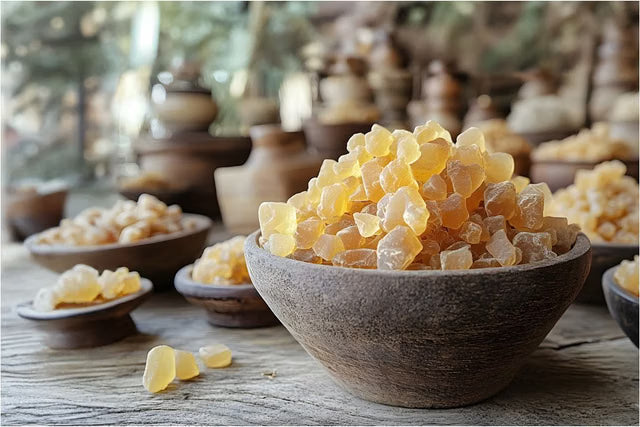
Shallaki Powder is an Ayurvedic herbal supplement made from the resin of Boswellia serrata. It is traditionally used to support joint health, mobility, and a healthy inflammatory response. Research suggests that boswellic acids, the primary active compounds in Shallaki, may help maintain joint comfort and physical function.
Introduction
Joint discomfort, stiffness, and reduced mobility have become increasingly common concerns in today's fast-paced world. Whether caused by aging, physically demanding work, prolonged sitting, or an active lifestyle, maintaining healthy joints is essential for overall quality of life.
Ayurveda, India's traditional system of wellness, has long relied on various herbs to support musculoskeletal health. Among these, Shallaki stands out as one of the most respected herbs for supporting joint comfort, mobility, and physical function.
Derived from the resin of the Boswellia serrata tree, Shallaki Powder has been used in Ayurvedic traditions for centuries. Today, it is gaining worldwide recognition as modern researchers continue to study its bioactive compounds and their potential role in supporting a healthy inflammatory response.
In this comprehensive guide, you'll learn:
- What Shallaki Powder is
- Its traditional Ayurvedic uses
- Research-backed health benefits
- Recommended dosage and usage
- Potential side effects and precautions
- How to choose a high-quality Shallaki product
- What modern science says about its effectiveness
Whether you're exploring Ayurvedic herbs for the first time or looking to better understand Boswellia serrata, this guide provides an evidence-informed overview to help you make informed decisions.
What Is Shallaki Powder?

Shallaki Powder is a traditional Ayurvedic herbal preparation made from the purified resin of the Boswellia serrata tree, commonly known as Indian Frankincense. In Ayurveda, Shallaki has been traditionally valued for supporting joint function, mobility, and overall musculoskeletal wellness. Today, it is widely used as a herbal supplement and is being studied for its potential role in maintaining a healthy inflammatory response.
Traditionally Used to Support Joint Comfort
Shallaki has long been used in Ayurvedic practices to help maintain joint comfort and ease of movement. It is commonly included in formulations designed to support individuals experiencing age-related stiffness or physical strain from daily activities.
Helps Maintain Mobility and Flexibility
Healthy mobility is essential for performing everyday tasks comfortably. Shallaki is traditionally used to support flexibility and physical movement, making it a popular herb among older adults and physically active individuals.
Supports Physical Recovery
Following intense physical activity or prolonged periods of exertion, the body requires adequate recovery. Shallaki is often used as part of wellness routines aimed at supporting post-exercise recovery and maintaining physical comfort.
Promotes a Healthy Inflammatory Response
Inflammation is a natural biological process that helps the body respond to stress and injury. Research has focused on the boswellic acids found in Shallaki, which may help support the body's normal inflammatory balance when combined with a healthy lifestyle.
Supports Musculoskeletal Wellness
The musculoskeletal system includes bones, joints, muscles, ligaments, and connective tissues that work together to support movement. Traditionally, Shallaki has been used to help maintain the overall health and function of these structures.
The herb contains naturally occurring compounds known as boswellic acids, which are considered its primary bioactive constituents. These compounds have attracted scientific interest due to their potential role in supporting joint health, mobility, and connective tissue function. This growing body of research is one reason Shallaki continues to gain attention among both Ayurvedic practitioners and modern health researchers.
History of Shallaki in Ayurveda

The use of Shallaki can be traced back hundreds of years in Ayurvedic medicine, where it has traditionally been valued as a herb that supports comfortable movement and physical well-being. Ancient Ayurvedic practitioners frequently included Shallaki in herbal formulations designed to help individuals maintain an active lifestyle and healthy joint function.
Traditionally, Shallaki was used to support joint flexibility and ease age-related stiffness that could affect daily activities. Its reputation as a mobility-supporting herb made it a common ingredient in formulations intended for people experiencing discomfort associated with physical exertion and aging.
Ayurvedic texts also describe Shallaki as a herb that helps maintain musculoskeletal wellness. For this reason, it was often included in traditional preparations aimed at supporting the health of bones, joints, and surrounding connective tissues.
In addition to its role in joint care, Shallaki was traditionally used to promote physical recovery after strenuous activity. Ayurvedic practitioners believed it could help the body restore balance and maintain comfort following periods of increased physical stress.
Shallaki was also regarded as a rejuvenating herb that contributed to overall vitality and long-term wellness. Its broad traditional applications helped establish it as one of the most respected botanical ingredients in Ayurvedic practice.
According to Ayurvedic principles, Shallaki is primarily associated with balancing Vata dosha. Since Vata governs movement, flexibility, and nervous system functions, maintaining its balance is considered important for healthy joints and unrestricted mobility.
To enhance its benefits, Shallaki was often combined with other well-known Ayurvedic herbs. For example, Guggul was traditionally paired with Shallaki in formulations focused on joint and mobility support, while Ashwagandha was added to promote strength, recovery, and resilience.
Similarly, Turmeric was included for its complementary wellness properties, and herbs such as Rasna and Nirgundi were traditionally used alongside Shallaki in formulations intended to support musculoskeletal comfort and flexibility.
This combination-based approach remains an important part of Ayurvedic herbal practice today, with many modern formulations continuing to incorporate Shallaki alongside other complementary herbs to provide broader wellness support.
What Makes Shallaki Unique?
Many herbs are traditionally used for physical wellness, but Shallaki possesses several characteristics that distinguish it from other Ayurvedic botanicals.
Rich Source of Boswellic Acids
What makes Shallaki particularly interesting from a scientific perspective is its naturally occurring group of compounds known as boswellic acids. These bioactive constituents are found primarily in the resin of the Boswellia serrata tree and are believed to contribute to many of the herb's traditionally recognized properties.
Among the various boswellic acids identified in Shallaki, researchers have paid special attention to Acetyl-11-keto-beta-boswellic acid (AKBA), which is often considered one of the most extensively studied compounds in Boswellia. Other important constituents include beta-boswellic acid and acetyl-beta-boswellic acid, both of which have also been investigated for their potential biological activities.
Over the past few decades, these naturally occurring compounds have become the subject of numerous laboratory and clinical studies, helping scientists better understand why Shallaki has been valued in traditional Ayurvedic practices for centuries.
Traditional Wisdom Meets Modern Research
One of Shallaki's most distinctive qualities is the growing alignment between traditional Ayurvedic knowledge and modern scientific investigation. Long before the development of contemporary research methods, Ayurvedic practitioners used Shallaki to support joint comfort, mobility, and overall musculoskeletal wellness.
Today, researchers are exploring many of these same traditional applications through clinical studies and laboratory research. While modern science continues to evaluate the extent of its benefits, the increasing body of research has contributed to renewed interest in Shallaki among healthcare professionals, researchers, and individuals seeking evidence-informed wellness options.
A Herb Focused on Mobility and Active Living
Unlike many Ayurvedic herbs that are primarily associated with stress management, digestion, or immunity, Shallaki is most commonly recognized for its traditional connection to movement and physical function. This unique focus has made it one of the most widely used Ayurvedic botanicals for individuals looking to maintain an active lifestyle, support healthy joints, and promote long-term mobility as they age.
Traditional Wisdom Meets Modern Research
One of Shallaki's most compelling qualities is the convergence between traditional Ayurvedic use and modern scientific exploration.
While Ayurveda has valued Shallaki for centuries for supporting mobility and physical comfort, modern researchers are investigating many of these same applications through contemporary scientific methods.
This overlap between traditional knowledge and emerging evidence has contributed significantly to Shallaki's growing popularity worldwide.
How Shallaki Powder Works in the Body
One question frequently asked by health-conscious consumers is:
What actually happens inside the body after taking Shallaki Powder?
Understanding the mechanism behind Shallaki helps explain why it has become one of the most researched Ayurvedic herbs for joint and mobility support.
Step 1: Absorption of Bioactive Compounds
After consumption, the body begins digesting and absorbing various compounds present within the Shallaki resin.
Among these compounds, boswellic acids receive the most scientific attention.
These naturally occurring molecules interact with several biological pathways involved in maintaining normal physiological balance.
Step 2: Support for a Healthy Inflammatory Response
Inflammation is a natural process that helps the body respond to physical stress and injury.
However, when inflammatory activity becomes prolonged or excessive, it may contribute to discomfort and reduced mobility.
Research suggests that boswellic acids may help support the body's natural inflammatory balance by influencing specific biochemical pathways involved in inflammatory signaling. This mechanism is one reason Shallaki has attracted attention in joint health research.
Step 3: Supporting Joint Function
Healthy joints depend on several structures working together to ensure smooth movement and flexibility. Cartilage acts as a protective cushion between bones, while synovial fluid helps lubricate the joints and reduce friction during movement. Ligaments provide stability by connecting bones to one another, and tendons help transfer force from muscles to bones, allowing efficient movement. Surrounding muscles also play an important role in supporting joint function and maintaining balance.
Researchers are investigating whether the bioactive compounds found in Shallaki may help support the normal function of these joint-related structures. Although research is ongoing, current evidence suggests that Boswellia serrata may contribute to joint comfort and mobility, particularly in individuals looking to maintain an active lifestyle as they age.
Step 4: Antioxidant Activity
Physical activity, environmental stressors, and normal aging processes can contribute to oxidative stress. Oxidative stress occurs when free radicals exceed the body's antioxidant defenses.
Emerging research suggests Shallaki contains compounds that may contribute to antioxidant activity, helping support overall cellular wellness.
Step 5: Mobility and Physical Performance Support
Many people start using Shallaki Powder when they begin to notice mild stiffness or reduced flexibility in daily life. This is especially common in different lifestyle situations.
Some individuals experience this after regular exercise, when muscles and joints feel slightly tight or overworked. Others notice it after sitting for long hours, especially during desk-based work or travel.
In physically demanding occupations, the body may feel consistent strain on joints and connective tissues over time. Similarly, with age-related changes, natural wear and tear can gradually affect mobility and ease of movement.
By supporting a balanced inflammatory response and healthy joint function, Shallaki may help maintain comfort and mobility as part of a daily wellness routine.
Research-Backed Shallaki Powder Benefits
Shallaki Powder (Boswellia serrata) is most widely studied for its potential role in supporting joint health and a healthy inflammatory response. While traditional Ayurveda describes broad wellness benefits, modern research mainly focuses on its effects on mobility, inflammation pathways, and physical comfort.
Below are the most relevant, evidence-informed benefits explained in a clear, practical way.
1. May Support Joint Health and Mobility
Joint discomfort and stiffness are among the most common reasons people explore Shallaki Powder.
Healthy joints depend on the smooth functioning of cartilage, synovial fluid, and surrounding connective tissues. Over time, factors like aging, repetitive movement, or physical strain may affect joint comfort and flexibility.
Research on Boswellia serrata suggests that its active compounds, especially boswellic acids, may help support joint function by contributing to a balanced inflammatory response within the body.
This is why Shallaki is commonly used in traditional Ayurvedic formulations aimed at maintaining mobility and flexibility.
2. May Help Maintain a Healthy Inflammatory Response
Inflammation is a natural biological process that helps the body respond to stress and tissue changes. However, long-term or excessive inflammatory activity may contribute to discomfort and reduced physical function.
Boswellic acids found in Shallaki have been studied for their role in influencing certain enzymes involved in inflammatory signaling pathways.
Rather than blocking inflammation completely, Shallaki is believed to help support a balanced inflammatory response, which is essential for normal joint and tissue function.
3. May Support Exercise Recovery and Physical Stress Response
People with active lifestyles often experience temporary muscle stiffness or joint discomfort after physical activity.
Shallaki Powder is traditionally used in Ayurveda to support recovery after exertion.
Modern interest in Boswellia suggests that its compounds may help the body manage physical stress responses, making it relevant for:
- Athletes
- Gym-goers
- Physically active individuals
- People with demanding jobs
This makes it a popular herbal option for recovery-focused wellness routines.
4. May Support Healthy Cartilage Function
Cartilage plays a critical role in cushioning joints and enabling smooth movement.
Age-related wear and tear, along with mechanical stress, may affect cartilage health over time.
Research is ongoing, but early studies suggest that boswellic acids may help support the environment in which cartilage cells function, particularly by influencing inflammatory mediators that affect joint tissues.
This potential role is one reason Shallaki is often included in Ayurvedic joint support formulations.
5. May Support Respiratory Wellness
In Ayurveda, Shallaki has traditionally been used not only for joints but also for respiratory comfort.
Modern research is exploring this traditional use further, particularly in relation to airway comfort and inflammatory balance in respiratory pathways.
While evidence is still emerging, Shallaki continues to be studied for its broader role in supporting respiratory wellness alongside joint health.
6. May Support Digestive Comfort
Some traditional Ayurvedic formulations include Shallaki for digestive balance.
This use is based on the herb’s potential role in maintaining a healthy inflammatory response in the gut environment.
Although research in this area is still developing, early findings suggest that Boswellia may play a supportive role in gastrointestinal comfort and function.
7. Antioxidant Support for Cellular Health
Oxidative stress occurs when free radicals exceed the body's natural antioxidant defenses. Over time, this may affect overall cellular function.
Shallaki contains naturally occurring compounds that may contribute to antioxidant activity, helping support the body’s natural defense systems.
This antioxidant potential adds another layer to its traditional use in long-term wellness support.
Who May Benefit Most From Shallaki Powder?
Shallaki Powder is generally considered more suitable for people who experience occasional joint stiffness and want natural support for mobility in daily life.
It may also be helpful for individuals who are noticing reduced flexibility with age and want to maintain comfortable movement.
People who lead physically active lifestyles, such as regular exercisers or gym-goers, may use it to support post-activity recovery and joint comfort.
Those involved in repetitive physical work, like standing for long hours or manual labor, may also find it supportive for everyday joint strain.
It is often chosen by individuals looking for Ayurvedic herbal support to maintain overall joint comfort and ease of movement.
Who May Not Experience the Same Benefits?
Shallaki Powder may not be suitable for everyone, especially those who are pregnant or breastfeeding, unless advised by a qualified healthcare professional.
People with known allergies or sensitivity to Boswellia species should avoid its use or proceed only under medical guidance.
Individuals already taking anti-inflammatory or blood-thinning medications should use caution due to possible interactions.
Those with existing medical conditions are advised to consult a healthcare professional before starting any herbal supplement.
Important Note on Expectations
Shallaki Powder is not typically a fast-acting solution, and its effects are usually observed with consistent use over time rather than immediate results.
Individual response may vary depending on dosage, product quality, daily lifestyle habits, and overall health condition.
Recommended Dosage of Shallaki Powder
There is no single fixed dosage for Shallaki Powder, but in Ayurveda it is commonly used in small, controlled amounts depending on individual needs and body type.
General Adult Dosage
Most adults typically use around 1 to 3 grams of Shallaki Powder daily, which can be taken once or split into two doses for better tolerance.
Beginners
If you are using it for the first time, it is better to start with 1 gram per day so your body can adjust gradually.
Maintenance Use
For long-term wellness support, many people continue with 1 to 2 grams daily as part of their routine.
Best Ways to Take Shallaki Powder
Shallaki Powder has a naturally bitter and resin-like taste, so it is usually mixed with other ingredients to make it easier to consume.
With Warm Water
Mixing Shallaki with lukewarm water is the simplest method and is often preferred after meals for better digestion.
With Honey
Honey helps reduce bitterness and is traditionally used in Ayurveda to make herbal powders more palatable.
With Ghee or Milk
In classical Ayurvedic practice, Shallaki is sometimes taken with ghee or milk, which may also support smoother digestion.
Best Time to Take Shallaki Powder
Timing is flexible, but choosing a consistent routine helps better results over time.
Morning Use
Many people prefer taking it in the morning because it may support daily movement and activity.
After Meals
Taking it after food is often recommended for those with sensitive digestion, as it feels gentler on the stomach.
Consistency Matters Most
In Ayurveda, regular daily use is considered more important than the exact timing of intake.
How Long Does Shallaki Take to Work?
Shallaki Powder works gradually, so it is not something that shows immediate results.
First Few Weeks
Within 2–4 weeks, some people may start noticing mild improvements in comfort and movement.
Mid-Term Use
Around 6–8 weeks of consistent use may bring more noticeable support in stiffness and mobility.
Long-Term Use
After 8–12 weeks, effects tend to stabilize when combined with a healthy lifestyle and proper dosage.
What Affects Results
Results depend on factors like lifestyle, diet, severity of discomfort, and quality of the product being used.
Shallaki Powder Side Effects
Shallaki is generally well tolerated, but like any herbal supplement, mild reactions may occur in some people.
Some individuals may experience slight stomach discomfort, especially when taken on an empty stomach.
In rare cases, people may feel mild nausea or digestive changes that usually settle once dosage is adjusted.
A small number of users may notice temporary changes in bowel movement such as loose stools or constipation.
Very rarely, a mild acidic feeling in the stomach may occur, which is usually temporary.
Who Should Avoid Shallaki Powder?
Certain groups should be more careful before using Shallaki and should consult a healthcare professional first.
During pregnancy and breastfeeding, safety data is limited, so medical guidance is important before use.
People who are already taking medications such as blood thinners, anti-inflammatory drugs, or immune-related medicines should be cautious.
Those with chronic health conditions like liver, kidney, or autoimmune disorders should only use it under professional supervision.
Drug Interactions and Precautions
Shallaki may influence how certain medicines work in the body, so combining it with drugs should be done carefully.
It may interact with pain-relief medicines like NSAIDs, which are commonly used for inflammation.
It can also affect blood-thinning medications, so monitoring and medical advice are important in such cases.
If you are already using other herbal supplements for inflammation, it is better to avoid self-mixing without guidance.
How to Choose a High-Quality Shallaki Powder
The effectiveness of Shallaki depends heavily on its purity and sourcing quality.
Always choose a product that clearly mentions Boswellia serrata as the botanical source.
If possible, go for standardized extracts that mention boswellic acid content for consistency.
Make sure the product is tested for heavy metals and does not contain unnecessary fillers or additives.
It is also safer to choose products manufactured in GMP-certified facilities with third-party quality testing.
Common Mistakes People Make
One common mistake is expecting instant results, but Shallaki works gradually over time with consistent use.
Another issue is irregular usage, which reduces its effectiveness and delays results.
Low-quality or adulterated products can also lead to weak or inconsistent benefits.
Lastly, ignoring lifestyle factors like diet, posture, and physical activity can limit the overall effectiveness of the herb.
Shallaki Powder vs Boswellia Extract (Which One Is Better?)
Both Shallaki Powder and Boswellia Extract come from the same plant (Boswellia serrata), but they differ significantly in potency, processing, and standardization.
Key Differences
| Feature | Shallaki Powder | Boswellia Extract |
|---|---|---|
| Processing | Raw dried resin powder | Concentrated extract |
| Boswellic Acid Content | Natural, variable | Standardized & higher |
| Potency | Moderate | High |
| Traditional Use | Yes (Ayurvedic) | Modern supplement form |
| Absorption | Slower | Faster |
| Cost | Lower | Higher |
Which One Should You Choose?
Choose Shallaki Powder if you prefer traditional Ayurvedic herbs that are closer to their natural form and less processed, especially when your goal is general daily wellness support.
Choose Boswellia Extract if you are looking for a more concentrated form that provides higher potency and standardized levels of active compounds like boswellic acids, particularly when more targeted joint support is required.
Is Shallaki Powder Worth It?
Based on both traditional Ayurvedic usage and current scientific research, Shallaki Powder (Boswellia serrata) is widely recognized as a supportive herbal option for maintaining joint comfort, mobility, and a balanced inflammatory response in the body.
However, its effectiveness should be understood in a realistic context. It typically works gradually over time rather than providing immediate results, and individual responses may vary depending on lifestyle, dosage, and overall health condition.
The quality and purity of the product also play a significant role in how well it performs, which is why sourcing from a trusted manufacturer is important.
Shallaki is not intended to replace medical treatment, but it may be considered as a supportive addition to a long-term wellness routine focused on joint health and mobility maintenance.
Final Conclusion
Shallaki Powder (Boswellia serrata) is a time-tested Ayurvedic herb that continues to gain scientific attention for its potential role in supporting joint health, mobility, and inflammatory balance.
Frequently Asked Questions
1. What is Shallaki Powder used for?
Shallaki Powder is traditionally used in Ayurveda to support joint comfort, mobility, and healthy inflammatory balance in the body.
2. Can Shallaki Powder be taken daily?
Yes, Shallaki Powder is commonly used daily in small amounts for long-term wellness support. However, consistency and correct dosage are important.
3. How long does Shallaki take to work?
Most people may notice gradual effects within 2–8 weeks depending on lifestyle, dosage, and body condition.
4. Is Shallaki safe for long-term use?
Shallaki is generally considered safe when used appropriately, but long-term use should be guided by a healthcare professional.
5. Can Shallaki Powder be taken with turmeric?
Yes, Shallaki is often combined with turmeric in Ayurvedic formulations for enhanced joint support benefits.
6. Does Shallaki have side effects?
Mild digestive discomfort may occur in some individuals, but serious side effects are rare when used properly.
7. Who should avoid Shallaki Powder?
Pregnant women, breastfeeding mothers, and individuals on certain medications should consult a healthcare professional before use.
Medical Disclaimer
This article is for educational purposes only and should not be considered medical advice. Always consult a qualified healthcare professional before starting any herbal supplement, especially if you are pregnant, breastfeeding, taking medication, or managing a medical condition.