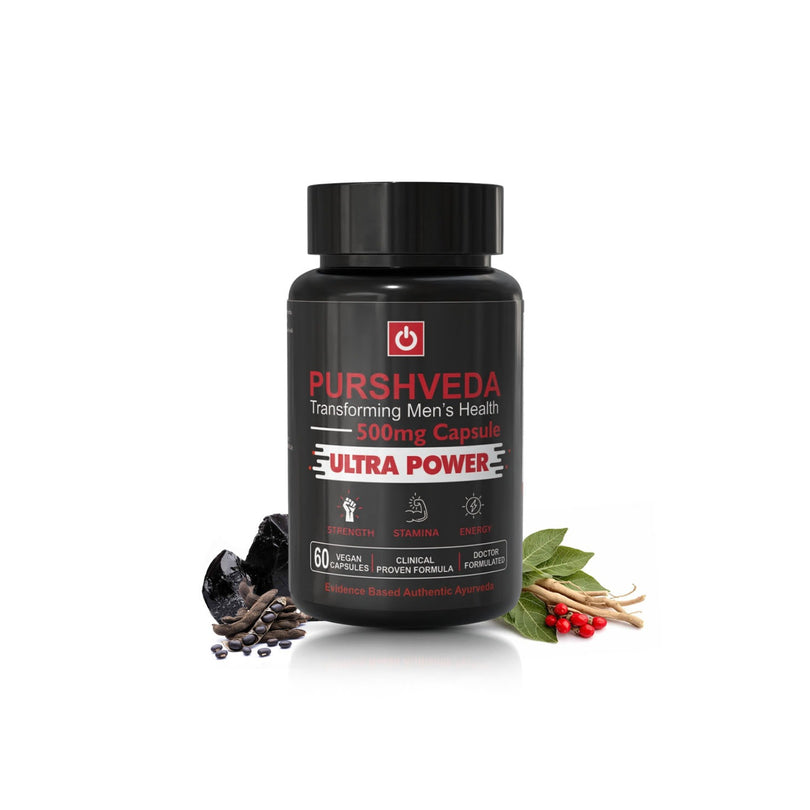
Purshveda Capsule for Men
✅ Supports Male Vitality ✅ Promotes Energy & Endurance ✅ Supports Reproductive Wellness Helps ✅ Manage Everyday Stress ✅ Supports Healthy Stamina
Introduction
Maintaining good health is about much more than simply treating symptoms. In Ayurveda, true wellness comes from preserving balance in the body's doshas, nourishing the dhatus (body tissues), supporting healthy digestion (Agni), and maintaining Ojas—the vital essence associated with resilience and overall well-being.
Modern lifestyles often include long working hours, irregular eating habits, inadequate sleep, psychological stress, and reduced physical activity. Over time, these factors may contribute to fatigue, reduced vitality, decreased physical endurance, and a general feeling of low energy. Ayurveda addresses these concerns through a combination of personalised diet, healthy daily routines (Dinacharya), exercise, stress management, and carefully selected herbal formulations.
One such formulation is Purshveda Capsule, an Ayurvedic herbal supplement developed using multiple traditional herbs that have long been valued in Ayurveda for supporting overall men's wellness, strength, stamina, and vitality. According to the manufacturer's product information, the formulation includes herbs such as Ashwagandha, Shatavari, Gokshura, Kaunch Beej, Shilajit, Safed Musli, Vidarikand, Talimkhana, Ginseng, and Javitri.
However, understanding an Ayurvedic formulation involves much more than simply reading its ingredient list. As Ayurvedic doctors, we evaluate a formulation based on its traditional properties, the synergy between herbs, individual body constitution (Prakriti), current health status, digestive capacity (Agni), and overall lifestyle.
In this comprehensive guide, you'll learn:
- What Purshveda Capsule is
- How Ayurveda views men's health and vitality
- Key ingredients and their traditional roles
- Potential benefits
- How it may work according to Ayurvedic principles
- Recommended dosage and precautions
- Safety considerations
- Commonly asked questions
- Practical lifestyle advice to support long-term wellness
Whether you're exploring Ayurvedic wellness for the first time or looking to understand Purshveda Capsule in greater depth, this guide aims to provide balanced, informative, and evidence-aware insights to help you make informed decisions in consultation with a qualified healthcare professional.
Quick Facts About Purshveda Capsule
| Feature | Details |
|---|---|
| Product Type | Ayurvedic herbal capsule |
| Category | Multi-herb wellness formulation |
| Primary Purpose | Supports men's vitality, strength, stamina, and overall wellness* |
| Ayurvedic Approach | Rasayana (rejuvenative) support through traditional herbs |
| Key Herbs | Ashwagandha, Shatavari, Gokshura, Kaunch Beej, Shilajit, Safed Musli, Vidarikand, Talimkhana, Ginseng, and Javitri* |
| Suitable For | Adults seeking herbal wellness support (subject to professional advice) |
| Dosage | Follow the label instructions or the advice of a qualified Ayurvedic practitioner |
| Lifestyle Support | Best combined with balanced nutrition, regular exercise, adequate sleep, and stress management |
Note: Herbal supplements are intended to support general wellness and should not be considered a replacement for medical treatment. Individual suitability and response can vary.
What is Purshveda Capsule?
When it comes to maintaining long-term health, Ayurveda focuses on strengthening the body's natural balance rather than simply addressing isolated symptoms. According to this traditional system of medicine, vitality is supported through healthy digestion (Agni), balanced Doshas, well-nourished Dhatus (body tissues), and strong Ojas—the essence associated with resilience and overall well-being.
Purshveda Capsule is an Ayurvedic multi-herbal formulation designed to support men's overall wellness. It combines several herbs that have traditionally been used in Ayurveda to nourish the body, promote strength, support stamina, and contribute to general vitality. The formulation includes herbs such as Ashwagandha, Shatavari, Gokshura, Kaunch Beej, Shilajit, Safed Musli, Vidarikand, Talimkhana, Ginseng, and Javitri, each selected for its traditional properties and complementary role within the blend.
Unlike formulations that rely on a single herb, Purshveda Capsule uses a combination of botanicals with the intention of providing broader support. In Ayurveda, such combinations are often preferred because herbs can work together synergistically, helping to balance one another and address multiple aspects of health at the same time.
As Ayurvedic doctors, we do not evaluate a formulation based only on its ingredient list. We also consider:
- The quality and authenticity of the herbs.
- The balance of the formulation.
- The individual's Prakriti (natural constitution).
- The current Dosha imbalance.
- Digestive strength (Agni).
- Daily routine, sleep, diet, and stress levels.
This personalized approach is one of the defining features of Ayurveda and explains why the same formulation may be recommended differently for different individuals.
It is also important to understand that Purshveda Capsule is not a substitute for a balanced lifestyle. Ayurvedic herbs are generally intended to complement healthy habits such as nutritious food, regular physical activity, adequate sleep, and stress management. Sustainable wellness is achieved through the combination of appropriate herbal support and consistent lifestyle practices.
Understanding Men's Health in Ayurveda: Why Vitality Declines and How Ayurveda Supports Overall Wellness
Ayurveda views health as a state of harmony between the Doshas (Vata, Pitta, and Kapha), healthy digestion (Agni), properly nourished Dhatus (body tissues), efficient waste elimination (Malas), and a calm, balanced mind. When these elements work together, the body is better equipped to maintain energy, resilience, and overall well-being.
From an Ayurvedic perspective, men's vitality is not determined by a single organ or system. Instead, it reflects the combined health of digestion, metabolism, tissue nourishment, hormonal balance, mental wellness, sleep quality, and lifestyle habits. If any of these factors become imbalanced over time, the body may gradually lose its natural ability to maintain strength, stamina, and vitality.
This is why Ayurvedic physicians focus on identifying the root cause of imbalance rather than addressing only the visible signs.
How Modern Lifestyle Can Affect Overall Vitality
Modern lifestyles have changed significantly over the past few decades. While technology and convenience have improved many aspects of life, they have also introduced habits that can gradually affect overall health and well-being. From an Ayurvedic perspective, these daily choices may disturb the body's natural balance if they continue for a long time.
Long Working Hours and Mental Stress
Extended work schedules, continuous deadlines, and mental pressure can leave little time for proper rest and self-care. Ayurveda considers unmanaged stress a factor that may disturb the balance of Vata and Pitta doshas, which can influence both physical and mental wellness.
Inadequate or Disturbed Sleep
Quality sleep is one of the body's natural healing mechanisms. Poor sleep or an irregular sleep schedule may reduce the body's ability to recover, leaving a person feeling tired, less energetic, and mentally exhausted during the day.
Sedentary Lifestyle
Sitting for long hours with minimal physical movement has become increasingly common. Ayurveda encourages regular physical activity because movement supports healthy circulation, digestion, metabolism, and overall vitality.
Irregular Eating Habits
Skipping meals, eating late at night, or consuming food at inconsistent times may weaken digestive function over time. According to Ayurveda, maintaining regular meal timings helps support healthy Agni, which plays a central role in overall health.
Frequent Consumption of Processed Foods
Highly processed foods often replace fresh, wholesome meals in busy lifestyles. Ayurveda traditionally recommends freshly prepared, balanced meals because they are considered easier to digest and more supportive of long-term wellness.
Lack of Regular Exercise
Regular physical activity not only supports muscle strength and endurance but also contributes to healthy digestion and metabolism. Even moderate daily exercise, when appropriate for an individual's health, can become an important part of maintaining overall vitality.
Excessive Screen Time
Spending long hours on digital devices may contribute to eye strain, reduced physical activity, and disrupted sleep patterns, especially when screens are used late at night. Maintaining a healthy balance between screen time and rest is an important aspect of overall well-being.
Chronic Fatigue Due to Work-Life Imbalance
When work responsibilities consistently outweigh time for rest, family, exercise, and relaxation, the body may struggle to recover adequately. Ayurveda emphasizes the importance of a balanced daily routine (Dinacharya) to support sustained energy and overall health.
Overall, these habits may not produce immediate health concerns, but their cumulative effect can gradually influence digestion, metabolism, sleep quality, and energy levels. Rather than offering temporary solutions, Ayurveda encourages correcting the underlying lifestyle factors while using appropriate herbal support when needed and under the guidance of a qualified practitioner.
The Ayurvedic View of Vitality
Ayurveda describes vitality as the result of several interconnected physiological and psychological processes working in harmony. Instead of focusing on a single organ or body system, it views overall wellness as the combined outcome of healthy digestion, balanced doshas, properly nourished body tissues, and a calm, stable mind. When these elements function together, the body is better prepared to maintain energy, resilience, and long-term health.
Strong Agni (Healthy Digestion)
In Ayurveda, Agni, or digestive fire, is regarded as the cornerstone of good health. It is responsible for breaking down food, absorbing nutrients, and transforming them into energy that nourishes the body's tissues.
When Agni functions efficiently, food is digested properly, nutrients are absorbed effectively, and the body receives the nourishment it needs to perform everyday activities. If Agni becomes weak or imbalanced, Ayurveda describes the formation of Ama, a term used for incompletely processed metabolic waste that may interfere with normal bodily functions.
For this reason, Ayurvedic physicians often focus on improving digestive health before recommending rejuvenating herbal formulations.
Well-Nourished Dhatus
Ayurveda explains that the body is sustained by Sapta Dhatus, the seven fundamental tissues that support growth, strength, and overall functioning. These include Rasa (nutritive fluid), Rakta (blood), Mamsa (muscle), Meda (adipose tissue), Asthi (bone), Majja (marrow and nervous tissue), and Shukra (reproductive tissue).
Each tissue depends on the healthy nourishment of the one before it. When digestion and metabolism function efficiently, nutrients can be appropriately transformed and distributed throughout the body. This is why Ayurveda places such importance on balanced nutrition and healthy digestion as the foundation of long-term vitality.
Balanced Doshas
According to Ayurveda, every individual has a unique balance of the three Doshas—Vata, Pitta, and Kapha—which collectively regulate the body's physiological functions.
Vata primarily governs movement and communication within the body, Pitta is associated with digestion and metabolism, while Kapha provides stability, structure, and lubrication. Maintaining harmony among these Doshas is considered essential for overall well-being. When an imbalance persists, Ayurvedic practitioners aim to identify and address the underlying cause rather than focusing only on outward manifestations.
Ojas – The Essence of Well-Being
Among the unique concepts in Ayurveda, Ojas is regarded as the refined essence that develops when the body's tissues are healthy and properly nourished. Classical Ayurvedic texts associate Ojas with strength, resilience, vitality, and the body's natural capacity to maintain overall well-being.
A person with healthy Ojas is traditionally described as having good physical endurance, emotional stability, and the ability to cope with everyday challenges. Ayurvedic rejuvenation therapies, known as Rasayana Chikitsa, are designed to support this vital essence while promoting healthy lifestyle practices.
Why Ayurvedic Doctors Recommend a Holistic Approach
In clinical Ayurvedic practice, no single herb or supplement is viewed as a complete solution.
Instead, treatment recommendations are typically based on multiple factors, including:
- Individual Prakriti (body constitution)
- Current Dosha imbalance
- Digestive capacity (Agni)
- Sleep quality
- Diet
- Physical activity
- Mental and emotional well-being
- Age and overall health status
This individualized approach helps explain why two people with similar concerns may receive different recommendations from an Ayurvedic practitioner.
Where Purshveda Capsule Fits into This Approach
Purshveda Capsule is formulated using multiple Ayurvedic herbs traditionally valued for their rejuvenating and nourishing properties. Rather than relying on a single botanical, the formulation combines herbs that have historically been used to support different aspects of overall wellness.
From an Ayurvedic perspective, such formulations are generally intended to complement a healthy lifestyle by working alongside balanced nutrition, regular exercise, adequate sleep, and stress management.
It is important to remember that herbal supplements are supportive tools, not replacements for healthy habits or individualized medical advice. A comprehensive approach is more consistent with Ayurvedic principles and may contribute to long-term well-being.
Complete Ingredient Profile of Purshveda Capsule
One of the biggest strengths of Purshveda Capsule is that it combines multiple Ayurvedic herbs instead of relying on a single ingredient. In Ayurveda, this is known as a polyherbal formulation, where carefully selected herbs complement one another to support different aspects of health.
Unlike many product pages that simply list the ingredients, it is important to understand why each herb has been included, how Ayurveda traditionally describes its properties, and what modern research suggests about its potential role. According to the manufacturer's information, the formulation includes Ashwagandha, Shatavari, Gokshura, Ginseng, Kaunch Beej, Shilajit, Talimkhana, Javitri, Safed Musli, and Vidarikand.
Let's explore each ingredient in detail.
1. Ashwagandha (Withania somnifera)
Ayurvedic Name : Ashwagandha
Botanical Name: Withania somnifera
Ayurvedic Properties
- Rasa (Taste): Tikta (Bitter), Kashaya (Astringent), Madhura (Sweet)
- Guna (Qualities): Guru (Heavy), Snigdha (Unctuous)
- Virya (Potency): Ushna (Warm)
- Vipaka: Madhura
Ashwagandha is one of Ayurveda's best-known Rasayana herbs. Classical texts describe it as a rejuvenating herb traditionally used to nourish tissues, promote strength, and support recovery from physical and mental fatigue.
Modern Perspective
Modern research has investigated Ashwagandha for its potential role in helping the body adapt to stress, supporting physical performance, and promoting general well-being. While results are encouraging in some studies, benefits can vary between individuals and more research is ongoing.
Why It Is Included in Purshveda Capsule
From an Ayurvedic perspective, Ashwagandha helps form the foundational support of the formulation by promoting resilience, nourishing body tissues, and complementing other rejuvenating herbs.
2. Shatavari (Asparagus racemosus)
Ayurvedic Name: Shatavari
Botanical Name: Asparagus racemosus
Ayurvedic Properties
- Madhura (Sweet)
- Tikta (Bitter)
- Guru
- Snigdha
- Sheeta Virya (Cooling)
Although Shatavari is widely recognized for supporting women's health, Ayurveda also values it as a nourishing Rasayana herb suitable for supporting overall tissue health and maintaining balance.
Traditional Ayurvedic Benefits
- Supports healthy nourishment of body tissues
- Helps maintain internal balance
- Traditionally used to promote vitality and resilience
- Supports recovery during periods of physical exhaustion
Why It Is Included
Shatavari complements warming herbs in the formulation, helping create a balanced herbal blend rather than relying on stimulating ingredients alone.
3. Gokshura (Tribulus terrestris)
Ayurvedic Name: Gokshura
Botanical Name: Tribulus terrestris
Ayurvedic Properties
- Madhura Rasa
- Guru
- Snigdha
- Sheeta Virya
Gokshura has been used in Ayurveda for centuries to support urinary health and overall vitality.
Traditional Uses
- Supports healthy urinary function
- Traditionally used in Vajikarana (Ayurvedic rejuvenation therapies for men's health)
- Helps nourish body tissues
- Supports overall strength and stamina
Modern Research
Research has explored Gokshura for exercise performance and men's wellness, but findings remain mixed and further high-quality studies are needed.
4. Kaunch Beej (Mucuna pruriens)
Ayurvedic Name: Kapikacchu (Kaunch Beej)
Botanical Name: Mucuna pruriens
Kaunch Beej is one of Ayurveda's most respected herbs in Vajikarana Chikitsa, a branch of Ayurveda focused on supporting reproductive health and vitality.
Ayurvedic Properties
- Madhura
- Guru
- Snigdha
- Ushna Virya
Traditional Uses
- Supports vitality
- Traditionally used to nourish reproductive tissues (Shukra Dhatu)
- Helps maintain physical strength
- Supports overall wellness
Modern Perspective
Kaunch Beej naturally contains L-DOPA, a compound that has been widely studied. However, herbal preparations should be used under professional guidance because composition and suitability can vary.
5. Shilajit (Asphaltum punjabinum)
Ayurvedic Name: Shilajatu
Shilajit is one of Ayurveda's most celebrated rejuvenating substances.
Ayurvedic Perspective
Classical Ayurvedic literature describes purified Shilajit as a Yogavahi, meaning it is traditionally believed to support the actions of other herbs in a formulation.
Traditional Uses
- Supports overall vitality
- Helps maintain stamina
- Traditionally used in Rasayana therapy
- Supports healthy ageing
Modern Perspective
Purified Shilajit contains fulvic acid and trace minerals. Research has investigated its role in energy metabolism and overall wellness, although additional human studies are still needed.
6. Safed Musli (Chlorophytum borivilianum)
Safed Musli is widely recognized as an important rejuvenating herb in Ayurveda.
Ayurvedic Benefits
- Traditionally supports strength
- Helps nourish body tissues
- Used in Rasayana formulations
- Supports healthy physical endurance
Because of these properties, Safed Musli is commonly included in Ayurvedic formulations intended to promote long-term vitality.
7. Vidarikand (Pueraria tuberosa)
Vidarikand is a cooling and nourishing Ayurvedic herb.
Traditional Uses
- Supports healthy tissue nourishment
- Helps maintain strength
- Traditionally used during recovery from fatigue
- Supports overall wellness
Its cooling nature helps balance warming herbs present in the formulation.
8. Talimkhana (Hygrophila spinosa)
Talimkhana has long been used in traditional Ayurveda.
Ayurvedic Perspective
It is traditionally included in formulations intended to support:
- General vitality
- Physical endurance
- Tissue nourishment
- Overall wellness
Although modern scientific evidence is comparatively limited, Talimkhana continues to be valued in traditional Ayurvedic practice.
9. Ginseng (Panax ginseng)
Although Ginseng is not a classical Ayurvedic herb, it has become a popular addition to modern herbal wellness formulations.
Why It Is Used
Modern research has explored Ginseng for:
- Supporting energy
- Helping reduce fatigue
- Supporting cognitive performance
- General wellness
Within Purshveda Capsule, Ginseng complements traditional Ayurvedic herbs by adding another adaptogenic component.
10. Javitri (Mace)
Javitri is the aromatic covering of the nutmeg seed.
Ayurvedic Properties
Traditionally, Javitri is used to:
- Support healthy digestion
- Improve appetite
- Help maintain digestive comfort
- Complement heavier nourishing herbs
From an Ayurvedic standpoint, herbs that support digestion are often added to rejuvenating formulations because healthy Agni is essential for the proper assimilation of nutrients.
How Does Purshveda Capsule Work?
One of the most common questions patients ask during a consultation is, "How does Purshveda Capsule actually work?"
The answer isn't as simple as saying it "boosts energy" or "improves stamina." Ayurveda doesn't view the body as a collection of separate organs. Instead, it sees health as the result of harmony between digestion, metabolism, body tissues, mental well-being, and lifestyle.
Purshveda Capsule has been formulated with a combination of traditional Ayurvedic herbs such as Ashwagandha, Shatavari, Gokshura, Kaunch Beej, Shilajit, Safed Musli, Vidarikand, Talimkhana, Ginseng, and Javitri. Rather than focusing on a single aspect of health, these herbs are traditionally selected to complement one another and support overall vitality as part of a balanced lifestyle.
Unlike quick-fix products, Ayurveda emphasizes gradual nourishment and restoring the body's natural balance over time.
The Ayurvedic Approach: Supporting the Root Cause
One of the defining principles of Ayurveda is that it seeks to understand why an imbalance develops, rather than only addressing its outward signs.
From an Ayurvedic perspective, long-term vitality depends on several interconnected factors.
Healthy Agni (Digestive Fire): Good digestion allows the body to properly digest food and absorb nutrients, providing the foundation for healthy tissue nourishment.
Balanced Doshas: Vata, Pitta, and Kapha regulate different physiological functions. When they remain in balance, the body is better able to maintain overall health and well-being.
Well-Nourished Dhatus: Ayurveda explains that every body tissue depends on proper nourishment. Healthy tissues contribute to strength, resilience, and long-term vitality.
Efficient Metabolism: Proper metabolic function helps the body utilize nutrients effectively and supports its natural physiological processes.
Healthy Ojas: Ojas is regarded as the refined essence of well-nourished tissues and is traditionally associated with vitality, resilience, and overall wellness.
When daily habits such as irregular eating, poor sleep, chronic stress, and a sedentary lifestyle disturb these foundations, the body may gradually lose its natural vitality. This is why Ayurveda focuses on restoring balance instead of simply masking symptoms.
Step 1: Supporting Healthy Digestion (Agni)
Ayurveda considers Agni, or digestive fire, to be the cornerstone of good health. Even the most nutritious foods or carefully selected herbs cannot provide their full benefit if digestion is weak.
A healthy Agni helps the body digest food efficiently, absorb nutrients effectively, and nourish every tissue. It also helps reduce the accumulation of Ama, which Ayurveda describes as metabolic waste formed from incomplete digestion.
Within Purshveda Capsule, ingredients such as Javitri have traditionally been used to support digestive function, helping the body utilize nutrients more effectively. Good digestion creates the foundation upon which the other herbs can work.
Step 2: Nourishing the Seven Dhatus
According to Ayurveda, the body is sustained by seven tissues known as the Sapta Dhatus. These include Rasa (nutritive fluid), Rakta (blood), Mamsa (muscle), Meda (fat tissue), Asthi (bone), Majja (marrow and nervous tissue), and Shukra (reproductive tissue).
Each tissue develops from the nourishment of the previous one. If nutrition or digestion is compromised, this process may also be affected.
Traditional Rasayana herbs such as Ashwagandha, Shatavari, Safed Musli, Vidarikand, and Kaunch Beej are valued in Ayurveda for supporting healthy tissue nourishment and promoting overall vitality when combined with a balanced lifestyle.
Step 3: Helping the Body Adapt to Everyday Stress
Modern life places considerable demands on both the body and mind. Long working hours, mental stress, inadequate sleep, and physical fatigue can gradually influence overall well-being.
Ayurveda has long recognized the importance of supporting the body's natural ability to adapt to these challenges. Herbs such as Ashwagandha are traditionally classified as Rasayana herbs and have also been widely studied for their adaptogenic properties. Ginseng is another ingredient that has been researched for its potential role in supporting energy and resilience.
Rather than replacing healthy habits, these herbs are intended to complement a lifestyle that includes proper nutrition, regular exercise, sufficient rest, and effective stress management.
Step 4: Rejuvenation Through Rasayana Therapy
One of Ayurveda's most respected branches is Rasayana Chikitsa, which focuses on rejuvenation and the maintenance of long-term health.
The purpose of Rasayana therapy is not simply to increase energy for a short period. Instead, it aims to nourish body tissues, support healthy ageing, promote resilience, and help maintain overall vitality over time.
Several herbs found in Purshveda Capsule—including Ashwagandha, Shilajit, Safed Musli, Vidarikand, and Shatavari—have traditionally been used in Rasayana formulations because of their rejuvenating properties.
Step 5: Why Does Purshveda Capsule Combine Multiple Herbs?
Patients often ask whether taking only Ashwagandha would provide the same benefits as a multi-herbal formulation.
In Ayurveda, the answer is usually no. Classical formulations are carefully designed so that different herbs complement each other's traditional properties.
For example, Ashwagandha is traditionally valued for supporting strength and resilience, while Gokshura has long been used in Ayurvedic practice to support urinary health and overall vitality. Shilajit is traditionally described as a Yogavahi, meaning it is believed to enhance the action of other herbs. Safed Musli and Vidarikand are regarded as nourishing Rasayana herbs, whereas Javitri supports healthy digestion, an essential part of nutrient assimilation.
This balanced combination is one of the reasons why polyherbal formulations have been used in Ayurveda for centuries.
Does Purshveda Capsule Work Immediately?
Many people expect herbal supplements to deliver immediate results, but Ayurveda takes a different approach.
Traditional Ayurvedic formulations are intended to work gradually by supporting the body's natural processes rather than providing an instant effect. The experience can vary depending on an individual's age, body constitution (Prakriti), digestive strength (Agni), overall health, and daily lifestyle.
For the best results, Ayurvedic herbs are generally recommended alongside a nutritious diet, regular physical activity, adequate sleep, and consistent use as directed by a qualified practitioner.
1. May Support Overall Vitality and Daily Energy
Ayurveda considers vitality to be the result of balanced digestion, healthy metabolism, well-nourished tissues, and strong Ojas.
Traditional Rasayana herbs like Ashwagandha, Shilajit, and Safed Musli are commonly included in rejuvenating formulations because they have historically been used to support overall strength and resilience.
Rather than acting as quick stimulants, these herbs are traditionally intended to help maintain long-term wellness when combined with healthy lifestyle habits.
Why this matters
Many people notice a gradual decline in their energy levels due to poor sleep, which can affect the body's natural recovery process and leave them feeling tired throughout the day.
Mental stress is another common factor that may influence overall well-being. Ayurveda considers prolonged stress capable of disturbing the balance of the Doshas and weakening Agni, the digestive and metabolic fire.
When the body does not receive adequate nutrients or follows an unbalanced diet, nutritional imbalances may develop over time. According to Ayurveda, this can affect the nourishment of the Dhatus and overall vitality.
A sedentary lifestyle with limited physical activity may also reduce stamina and contribute to sluggish digestion. Ayurveda encourages regular movement and exercise to help maintain balance and support overall wellness.
Similarly, irregular eating habits, such as skipping meals or eating at inconsistent times, may weaken digestive health. Since Ayurveda places great importance on Agni, maintaining regular meal timings is considered essential for long-term well-being.
Rather than focusing only on these individual concerns, Ayurveda aims to identify the underlying cause of imbalance and restore harmony through a combination of healthy lifestyle practices and appropriate herbal support.
2. Traditionally Used to Support Physical Strength and Endurance
Maintaining physical strength involves much more than muscle health alone.
According to Ayurveda, strength develops through healthy digestion, proper tissue nourishment, balanced Doshas, regular physical activity, and restorative sleep.
Healthy digestion (Agni) plays a central role because it determines how efficiently the body converts food into nourishment. Even the most nutritious diet cannot provide optimal support if digestion is impaired.
Proper nourishment of the seven Dhatus helps maintain the body's structural integrity and overall vitality. Ayurveda explains that each tissue depends on the healthy formation of the previous one, making balanced nutrition essential.
Balanced Vata, Pitta, and Kapha Doshas help regulate movement, metabolism, and stability within the body. When these remain in harmony, the body is better able to maintain physical endurance and resilience.
Regular exercise and physical activity are equally important. Ayurveda recommends moderate daily exercise that supports circulation, strengthens the body, and complements herbal wellness practices.
Finally, quality sleep allows the body and mind to recover naturally. Inadequate rest may reduce energy levels and interfere with the body's ability to maintain long-term wellness.
Herbs such as Ashwagandha, Safed Musli, Vidarikand, and Gokshura have traditionally been included in Ayurvedic formulations that support these foundational aspects of health.
3. Supports Men's Wellness from an Ayurvedic Perspective
Ayurveda includes a specialized branch called Vajikarana Chikitsa, which focuses on promoting healthy reproductive tissue, vitality, and overall well-being.
Several herbs found in Purshveda Capsule—including Kaunch Beej, Gokshura, Safed Musli, and Shilajit—have traditionally been associated with Vajikarana formulations.
It is important to note that Ayurvedic formulations are intended to support overall wellness and should not be viewed as replacements for appropriate medical evaluation or treatment when needed.
4. Helps the Body Adapt to Everyday Stress
Modern life places significant demands on both the body and mind.
Long working hours, inadequate sleep, and continuous mental pressure may affect overall well-being over time.
Ashwagandha is one of Ayurveda's best-known adaptogenic herbs and has been studied for its role in supporting the body's response to everyday stress. Ginseng is also commonly included in wellness formulations for similar supportive purposes.
Ayurveda combines such herbs with lifestyle practices such as meditation, yoga, proper sleep, and mindful eating to encourage long-term balance.
5. May Support Healthy Stamina
Stamina is not simply the ability to perform physical work—it reflects the body's capacity to sustain activity while recovering efficiently.
From an Ayurvedic perspective, healthy Agni ensures that nutrients are properly digested and utilized to support the body's energy requirements. Strong digestion is considered the first step toward maintaining stamina.
Proper nourishment of the body's tissues helps support strength and endurance over time. Ayurveda emphasizes that well-nourished Dhatus contribute to the body's overall resilience.
Ojas, often described as the essence of vitality, is traditionally associated with physical and mental well-being. Maintaining healthy Ojas through balanced nutrition and lifestyle is considered an important part of supporting long-term stamina.
Equally important are consistent daily routines (Dinacharya), including regular sleep, nutritious meals, physical activity, and stress management. Ayurveda teaches that these habits work together with herbal formulations to promote sustainable wellness rather than temporary stimulation.
6. Supports Overall Wellness Through Rasayana Herbs
Many ingredients in the formulation are traditionally classified as Rasayana herbs.
Rasayana therapy aims to support:
- Healthy ageing
- Tissue nourishment
- Physical resilience
- Mental well-being
- General vitality
This holistic perspective distinguishes Ayurveda from approaches that focus only on isolated symptoms.
7. Complements a Healthy Lifestyle
One aspect that is often overlooked is that Ayurvedic formulations are designed to complement—not replace—a healthy lifestyle.
For optimal support, Ayurveda recommends combining herbal formulations with:
- Fresh, balanced meals
- Regular physical activity
- Yoga and stretching
- Adequate sleep
- Stress-management techniques
- Consistent daily routines (Dinacharya)
Without these foundational habits, even the best herbal formulation may not deliver its full potential.
How to Take Purshveda Capsule Correctly
One of the most common questions patients ask during consultation is:
"What is the right way to take Purshveda Capsule?"
The answer is simple—but consistency matters just as much as the formulation itself.
In Ayurveda, the effectiveness of a herbal formulation depends not only on what you take, but also how you take it, when you take it, and whether it is combined with an appropriate diet and lifestyle.
Taking an Ayurvedic formulation correctly helps support better compliance with the regimen and aligns with the holistic principles of Ayurveda.
Recommended Dosage
According to the manufacturer's instructions:
Adults:
- Take 2 capsules twice daily after meals with milk, or as advised by a qualified Ayurvedic consultant.
- Do not exceed the recommended daily dosage.
The exact dosage may vary depending on your age, constitution (Prakriti), current health status, and the advice of your healthcare professional.
Why Is It Recommended After Meals?
Many Ayurvedic formulations are advised after meals because:
- They may be easier to tolerate.
- Digestion is already active, supporting the body's natural processing of food and herbs.
- It fits well into a consistent daily routine.
From an Ayurvedic perspective, healthy digestion (Agni) plays an important role in the proper assimilation of nutrients and herbal formulations.
Why Is Milk Recommended?
You may have noticed that Purshveda Capsule is recommended to be taken with milk.
In Ayurveda, milk is traditionally regarded as a nourishing Anupana (vehicle or carrier) for many Rasayana formulations.
When appropriate for the individual, milk is traditionally believed to:
- Support nourishment of body tissues (Dhatus)
- Complement rejuvenating (Rasayana) herbs
- Balance the warming nature of certain herbs
- Integrate well into traditional Ayurvedic wellness routines
Note: If you are lactose intolerant, have a milk allergy, or have been advised to avoid dairy, consult your Ayurvedic practitioner or healthcare professional before choosing an alternative.
What Is the Best Time to Take Purshveda Capsule?
A practical routine is:
Morning
- Take the recommended dose after breakfast with milk or as directed.
Evening
- Take the second dose after dinner with milk or as directed.
Following the same schedule every day may help you stay consistent with your wellness routine.
How Long Should You Continue Taking It?
This is one of the most frequently asked questions.
Unlike products that claim immediate effects, Ayurveda generally emphasizes gradual support through consistent use alongside healthy lifestyle habits.
The appropriate duration depends on several factors, including:
- Your overall health
- Your wellness goals
- Your body's constitution (Prakriti)
- Your digestive capacity (Agni)
- Your response to the formulation
For long-term use, it is advisable to seek guidance from a qualified Ayurvedic practitioner, especially if you have underlying medical conditions or are taking prescription medications.
What Should You Avoid While Taking Purshveda Capsule?
To support your overall wellness plan, consider limiting habits that may interfere with healthy digestion and lifestyle balance, such as:
- Frequently skipping meals
- Eating highly processed or ultra-processed foods
- Excessive sugary beverages
- Inadequate sleep
- Chronic stress without stress-management practices
- Smoking and excessive alcohol consumption
Ayurveda places equal importance on Ahara (diet), Vihara (lifestyle), and Aushadhi (herbal support). These three pillars work together to promote long-term well-being.
Tips to Get the Most from Your Wellness Routine
While taking Purshveda Capsule, you can also support your overall health by:
- Eating freshly prepared, balanced meals.
- Including seasonal fruits and vegetables.
- Staying physically active with regular exercise or yoga.
- Sleeping for 7–8 hours each night.
- Practicing meditation or breathing exercises to help manage stress.
- Drinking adequate water throughout the day.
- Maintaining a consistent daily routine.
These habits complement Ayurvedic principles and contribute to overall wellness beyond any single supplement.
Common Mistakes to Avoid
Many people reduce the potential value of herbal supplements through inconsistent use or unrealistic expectations.
Some common mistakes include:
❌ Taking the capsules irregularly.
❌ Skipping meals while expecting optimal results.
❌ Believing that herbal supplements replace healthy eating and exercise.
❌ Increasing the dose without professional advice.
❌ Combining multiple supplements without consulting a healthcare professional.
Avoiding these habits can help you follow a safer and more structured wellness routine.
Who Can Take Purshveda Capsule? Is It Right for Everyone?
One of the most important questions to ask before starting any herbal supplement is not What are its benefits? but rather:
"Is it suitable for me?"
As an Ayurvedic doctor, I always remind patients that Ayurveda is a personalized system of healthcare. The same herbal formulation may be appropriate for one person but not for another, depending on their body constitution (Prakriti), current imbalance (Vikriti), age, lifestyle, digestive strength (Agni), and overall health.
Although Purshveda Capsule is formulated with traditional Ayurvedic herbs to support men's wellness, it should not be viewed as a one-size-fits-all solution. According to the product information, it is intended as a dietary wellness supplement and should be taken as directed or under the guidance of a qualified Ayurvedic consultant.
Who May Consider Purshveda Capsule?
Based on its herbal composition and the manufacturer's intended use, Purshveda Capsule may be considered by adult men who are looking to support their overall wellness as part of a healthy lifestyle.
It may be suitable for individuals who want to support:
- Daily vitality and overall wellness
- Physical strength and stamina
- Active lifestyles
- General energy levels
- Stress resilience alongside healthy lifestyle practices
- Long-term wellness through traditional Ayurvedic herbs
However, the decision to use any herbal formulation should ideally be made after considering your individual health needs and discussing them with a qualified healthcare professional.
Ayurveda Believes Every Person Is Different
Unlike many modern wellness products that are marketed for everyone, Ayurveda recognizes that every individual has a unique constitution.
For example:
Vata-Predominant Individuals
People with dominant Vata may naturally experience:
- Dryness
- Irregular digestion
- Variable energy levels
- Sensitivity to stress
- Difficulty maintaining body weight
Ayurvedic practitioners often focus on nourishing therapies, warm foods, and stable daily routines for such individuals.
Pitta-Predominant Individuals
People with dominant Pitta may commonly have:
- Strong digestion
- Higher metabolic activity
- Heat intolerance
- Irritability during stress
- Increased sweating
For them, balancing excessive heat while maintaining healthy digestion becomes important.
Kapha-Predominant Individuals
Kapha-dominant individuals may naturally have:
- Good physical endurance
- Stable energy
- Slower metabolism
- Tendency toward weight gain
- Reduced physical activity
Ayurvedic recommendations often emphasize movement, lighter meals, and maintaining digestive efficiency.
This is why two people of the same age may receive different dietary advice or herbal recommendations, even if they have similar wellness goals.
Can Young Adults Take Purshveda Capsule?
According to the manufacturer's instructions, the adult dosage is intended for adults, while dosage recommendations for children may differ depending on the specific product. For the men's formulation, users should follow the product label or consult a qualified Ayurvedic practitioner before use.
Young adults should avoid self-prescribing herbal supplements solely based on internet information.
Is It Suitable for Older Adults?
Many older adults explore Ayurvedic wellness supplements to support healthy ageing and maintain an active lifestyle.
However, ageing often comes with additional considerations, including:
- Existing medical conditions
- Multiple medications
- Changes in digestion
- Altered metabolism
Therefore, older adults should consult their healthcare provider before starting any new supplement, including Ayurvedic formulations.
Can Athletes or Physically Active Individuals Use It?
People who exercise regularly or maintain physically demanding lifestyles often seek nutritional and herbal support as part of their overall wellness plan.
If considering Purshveda Capsule, it should be viewed as one component of a broader health strategy, which includes:
- Balanced nutrition
- Adequate protein intake
- Hydration
- Recovery
- Quality sleep
- Structured training
No supplement can replace these foundational habits.
Who Should Consult a Healthcare Professional Before Using Purshveda Capsule?
Although Ayurvedic herbs have a long history of traditional use, certain individuals should seek professional advice before taking the product.
This includes people who:
- Have diabetes
- Have high or low blood pressure
- Have thyroid disorders
- Have liver or kidney disease
- Have autoimmune conditions
- Are taking prescription medicines
- Have known allergies to herbal ingredients
- Are preparing for surgery
- Have any chronic medical condition requiring ongoing treatment
Consulting a healthcare professional helps ensure that the supplement is appropriate for your individual situation. Similar precautionary guidance is provided across PurshVeda's wellness products.
Who Should Avoid Self-Medication?
Self-medication is not recommended if you:
- Are unsure about the cause of your symptoms.
- Have persistent fatigue or unexplained weight loss.
- Experience ongoing health concerns that require medical evaluation.
- Plan to combine multiple herbal supplements without guidance.
- Are already taking prescription medicines.
Remember, symptoms can have many different causes. A proper diagnosis is always the first step before starting any supplement.
When Should You Stop Taking It and Seek Medical Advice?
Discontinue use and consult a healthcare professional if you experience:
- Signs of an allergic reaction, such as rash, itching, swelling, or difficulty breathing.
- Persistent digestive discomfort after starting the supplement.
- Any unexpected or unusual symptoms.
- Worsening of an existing medical condition.
Although many herbal supplements are generally well tolerated when used appropriately, individual responses can vary.
Possible Side Effects of Purshveda Capsule
One of the most searched questions online is:
Does Purshveda Capsule have any side effects?
This is an important question, and it deserves a balanced, evidence-informed answer.
From an Ayurvedic perspective, herbal formulations are traditionally prepared using botanicals that have been used for centuries. However, "natural" does not always mean "suitable for everyone." Just like conventional medicines, Ayurvedic supplements should be used responsibly, in the recommended dosage, and under the guidance of a qualified healthcare professional when appropriate.
According to the manufacturer's product information, Purshveda Capsule should be taken as directed and the recommended dosage should not be exceeded.
Is Purshveda Capsule Generally Well Tolerated?
When used according to the product label or under the supervision of a qualified Ayurvedic practitioner, many people may tolerate herbal formulations well.
However, every individual is different.
Several factors can influence how a person responds, including:
- Age
- Body constitution (Prakriti)
- Digestive capacity (Agni)
- Existing medical conditions
- Current medications
- Sensitivity to certain herbs
- Overall lifestyle and diet
This is why Ayurveda places such a strong emphasis on personalized recommendations rather than a one-size-fits-all approach.
Can Herbal Ingredients Cause Side Effects?
Any herb—whether Ayurvedic or otherwise—has the potential to cause unwanted effects in some individuals.
Possible reasons include:
- Allergy or sensitivity to a specific ingredient
- Taking more than the recommended dosage
- Combining multiple supplements without professional advice
- Interactions with certain medications
- Pre-existing health conditions
These situations do not necessarily mean the formulation is unsafe; they highlight the importance of using supplements responsibly and seeking professional advice when needed.
Possible Mild Reactions
Although many people may not experience any problems when using herbal supplements appropriately, some individuals could notice mild, temporary reactions such as:
- Stomach discomfort
- Nausea
- Changes in bowel habits
- Mild bloating
- Digestive upset
These symptoms can have many possible causes and are not necessarily caused by the supplement itself. If symptoms persist or worsen, discontinue use and consult a healthcare professional.
When Should You Stop Taking Purshveda Capsule?
Stop using the product and seek medical advice immediately if you develop symptoms such as:
- Skin rash or hives
- Itching
- Swelling of the face, lips, tongue, or throat
- Difficulty breathing
- Severe abdominal pain
- Persistent vomiting
- Any other unexpected or serious reaction
These symptoms may indicate an allergic or other adverse reaction that requires prompt medical attention.
Who Should Be Extra Cautious?
Before using Purshveda Capsule, consult your healthcare provider if you:
- Have diabetes
- Have high or low blood pressure
- Have liver or kidney disease
- Have thyroid disorders
- Have heart disease
- Are taking prescription medicines
- Are scheduled for surgery
- Have known allergies to herbal ingredients
- Have any chronic medical condition
Professional guidance is especially important when multiple health conditions or medications are involved.
Can Purshveda Capsule Be Taken with Other Medicines?
This is another common question.
Some herbs may interact with prescription medications or other supplements.
If you are currently taking medicines for conditions such as:
- Diabetes
- High blood pressure
- Thyroid disorders
- Blood clotting disorders
- Mental health conditions
- Heart disease
you should consult your doctor or qualified Ayurvedic practitioner before starting any new herbal supplement.
Never stop or replace prescribed medication with an Ayurvedic supplement unless advised by your treating physician.
Does Taking More Capsules Give Better Results?
No.
One of the biggest misconceptions about herbal supplements is that increasing the dosage will produce faster or better outcomes.
In reality:
- Higher doses do not necessarily improve effectiveness.
- Excessive intake may increase the likelihood of unwanted effects.
- The recommended dosage is designed to balance effectiveness with safety.
Always follow the dosage instructions provided by the manufacturer or your healthcare professional.
Safe Use Tips
To help use Purshveda Capsule responsibly:
✔ Follow the recommended dosage.
✔ Read the product label carefully.
✔ Store the capsules according to the manufacturer's instructions.
✔ Maintain a healthy diet and lifestyle.
✔ Inform your doctor about any supplements you are taking.
✔ Keep the product out of the reach of children.
✔ Purchase only from trusted and authorized sources.
Myth vs Fact
Myth:
Because it's herbal, I can take as much as I want.
Fact:
Herbal supplements should always be taken in the recommended dosage. More is not necessarily better and may increase the risk of unwanted effects.
Myth:
Natural products never cause allergies.
Fact:
Any natural ingredient has the potential to cause an allergic reaction in susceptible individuals.
Myth:
I don't need to tell my doctor if I'm taking Ayurvedic supplements.
Fact:
It's always a good idea to inform your healthcare provider about any supplements you use, especially if you have ongoing medical conditions or take prescription medicines.
Final Thoughts
Purshveda Capsule is a multi-herbal Ayurvedic wellness formulation containing traditionally used herbs such as Ashwagandha, Shatavari, Gokshura, Kaunch Beej, Shilajit, and Safed Musli. It may be considered to support men's overall vitality, strength, stamina, and wellness when used appropriately.
However, no herbal supplement can replace a balanced diet, regular exercise, quality sleep, and healthy daily habits. Individual responses can also vary.
If you have an existing health condition, take medication, or have persistent symptoms, consult a qualified Ayurvedic practitioner or healthcare professional before using Purshveda Capsule.
Frequently Asked Questions About Purshveda Capsule
1. What is Purshveda Capsule used for?
Purshveda Capsule is an Ayurvedic polyherbal wellness formulation designed to support men's overall vitality, strength, stamina, and general well-being. It contains traditional herbs such as Ashwagandha, Shatavari, Gokshura, Kaunch Beej, Shilajit, Safed Musli, and others.
2. How should I take Purshveda Capsule?
According to the manufacturer's directions, adults should take 2 capsules twice daily after meals with milk, or use them as advised by a qualified Ayurvedic practitioner. Do not exceed the recommended dosage.
3. How long does Purshveda Capsule take to show results?
There is no fixed timeframe because individual responses can vary. Factors such as diet, sleep, lifestyle, digestive health, consistency, age, and overall health can influence the experience. Ayurvedic wellness approaches generally emphasize consistent use alongside healthy habits rather than expecting instant results.
4. Can Purshveda Capsule be taken daily?
It can be taken according to the recommended dosage and product directions. However, people with existing health conditions or those taking prescription medicines should consult a qualified healthcare professional before using it regularly.
5. Are there any side effects of Purshveda Capsule?
Individual responses to herbal formulations can vary. Some people may experience digestive discomfort or sensitivity to an ingredient. Stop using the product and seek medical advice if you experience an allergic reaction or any unusual or persistent symptoms.
6. Can Purshveda Capsule be taken with other medicines?
If you take prescription medicines or have a chronic health condition, consult your doctor or qualified Ayurvedic practitioner before combining Purshveda Capsule with other medicines or supplements. This is particularly important when taking medicines for diabetes, blood pressure, thyroid, heart, or other long-term conditions.
7. Can I take Purshveda Capsule on an empty stomach?
The manufacturer's directions recommend taking Purshveda Capsule after meals with milk. Following the product's recommended method of use is preferable unless a qualified healthcare professional advises otherwise.
8. Who should avoid or seek professional advice before taking Purshveda Capsule?
People with chronic health conditions, known allergies to any of the ingredients, those taking prescription medicines, or anyone unsure whether the formulation is appropriate for them should consult a healthcare professional before use. It should not be used as a substitute for diagnosis or treatment of an underlying medical condition.