
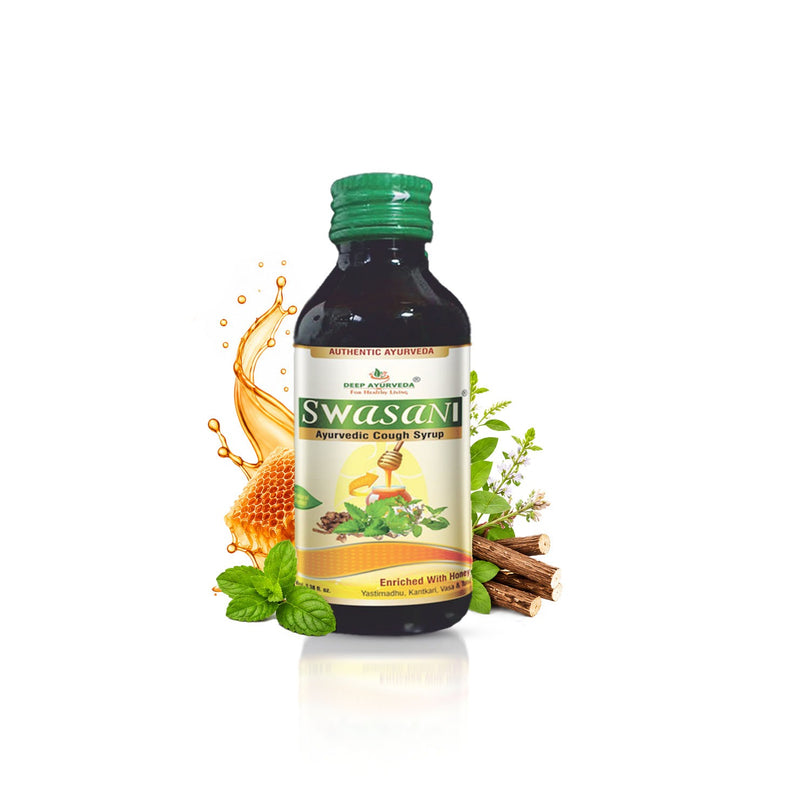
Deep Ayurveda Swasani Ayurvedic Cough Syrup
✅ 100% Organic & Chemical-Free ✅ Helps relieve cough ✅ Reduces chest congestion and mucus ✅Supports easy and clear breathing ✅ Supports lung and overall respiratory health
Coughing is one of the most common symptoms that can affect anyone — children, adults, and seniors alike. Whether it’s a dry tickle that won’t stop or a chesty cough with mucus, finding the best cough syrup can bring quick relief and comfort. But not all cough syrups are the same and picking the right one can make all the difference.

In this comprehensive guide, we’ll walk you through:
How cough syrups work
The most effective ingredients (medicinal & natural)
How to choose the right cough syrup for YOUR symptoms
Safety considerations and lesser‑known expert tips
When NOT to use cough syrup
Let’s get started.
1. How Cough Syrups Work — Not Just Relief, But Targeted Action

Cough syrups are designed to ease coughing, whether caused by a cold, allergies, infection, or irritation. Most formulas fall into these groups:
These syrups reduce the urge to cough by acting on the brain’s cough center.
Common ingredients include dextromethorphan and sometimes diphenhydramine.
Wet (Productive) Cough Expectorants
These help thin and loosen mucus so you can cough it up more effectively.
Typical ingredients are guaifenesin, ambroxol, and bromhexine.
Combination Formulas
Many syrups combine suppressants with expectorants, antihistamines, or decongestants to tackle multiple symptoms at once.
Key Ingredients and What They Do
Here are the most important components you’ll find in cough syrups — and why they matter:
Medicinal Ingredients
-
Dextromethorphan – Cough reflex suppressant. Helpful for dry, irritating coughs.
-
Guaifenesin – Expectorant that thins mucus.
-
Ambroxol & Bromhexine – Mucolytic agents that break down thick phlegm.
-
Antihistamines (e.g., Chlorpheniramine) – Reduce allergic cough symptoms.
- Decongestants (like Phenylephrine) – Reduce nasal congestion linked to coughs.
Natural & Herbal Ingredients — Often Overlooked
Many blogs list conventional drugs, but natural ingredients with proven benefits are often under‑represented. These include:
-
Honey – A natural cough soother, proven to calm throat irritation.
-
Tulsi (Holy Basil) – Anti‑inflammatory and immune‑supportive.
-
Ginger (Sunthi) – Helps reduce inflammation and supports mucus clearance.
-
Licorice (Mulethi) – Soothes throat and supports respiratory comfort.
- Vasaka and Pippali – Traditional Ayurvedic herbs with bronchodilatory and expectorant action.
Benefits of Choosing the Right Cough Syrup
Choosing the right cough syrup doesn’t just stop the cough — it can
1. Reduce throat irritation and pain.
2. Improve sleep by calming nighttime coughs.
3. Help clear mucus and ease breathing.
4. Support faster recovery with immune‑friendly ingredients.
5. Reduce the need for unnecessary antibiotics.
Note: Cough syrups relieve symptoms, not the root cause. Persistent coughs may need medical evaluation, especially if they don’t improve in a few days.
How to Choose the Right Cough Syrup

Step 1: Identify Your Cough Type
Dry, tickly cough? A suppressant is ideal.
Wet, chesty cough? Choose an expectorant or mucolytic.
Cough with allergies? Look for antihistamine components.
Cough with cold or congestion? A combo formulation may help.
Step 2: Consider Age & Health Conditions
Many cough syrups are not recommended for children under a certain age.
Children’s formulas often have different concentrations.
Pregnant or breastfeeding women should consult a professional first.
Step 3: Choose Based on Side‑Effect Profile
Some conventional syrups can cause drowsiness or interact with other medicines — be mindful if you’re driving, working, or taking other meds.
Step 4: Prioritize Safety, Not Just Brand
Recent alerts in India have highlighted quality issues in some cough syrup batches, particularly concerning children’s products — making safety checks and batch verification essential.
5. Ayurvedic & Natural Options to Consider
While conventional cough syrups provide targeted relief, many people today prefer formulations rooted in traditional wellness systems like Ayurveda — especially when symptoms are mild to moderate or when they want gentler, holistic support.
One such option that blends time‑tested herbal wisdom with modern quality standards is Swasani Ayurvedic Cough Syrup from Deep Ayurveda.

Why Swasani Ayurvedic Cough Syrup Stands Out
Made from a thoughtful combination of natural Ayurvedic herbs such as Vasa, Kanthkari, Bharangi, Yashtimadhu (Licorice), Dalchini (Cinnamon), Pippali, Tulsi, and Anantmool, this syrup is traditionally used to support respiratory health and soothe cough discomfort.
These herbs are known in Ayurveda for:
- Clearing mucus and easing chest congestion.
- Calming throat irritation.
- Supporting natural respiratory function.
- Enhancing overall immunity — especially during seasonal changes.
Many users appreciate that it delivers natural relief without synthetic additives, making it a good choice for adults looking for gentler alternatives — though consultation with a qualified health professional is always recommended for children, seniors, or those with pre‑existing conditions.
Natural Home Remedies (Supportive, Not Replacement)
Even the best cough syrups work best when combined with supportive remedies:
-
Warm honey + lemon water — Soothes throat and supports hydration.
-
Steam inhalation — Clears airways and loosens mucus.
-
Salt‑water gargles — Reduces throat irritation.
- Turmeric milk — Anti‑inflammatory and comforting.
These remedies don’t replace medical treatment, but they often boost symptom relief naturally.
Final Thoughts — Smart Choices, Not Just Quick Fixes
The best cough syrup is one that matches your type of cough, age group, safety profile, and overall health needs. Whether you prefer medicinal formulas for faster relief or natural syrups like Swasani Ayurvedic Cough Syrup for gentle, holistic support — understanding ingredients and how they work empowers you to make the right choice.
FAQ
1. What is the best cough syrup for dry cough?
Ans: For dry, tickly coughs, suppressant cough syrups work best. Ingredients like dextromethorphan or herbal options like Swasani Ayurvedic Cough Syrup can soothe throat irritation and reduce coughing.
2. Which cough syrup is best for wet or chesty cough?
Ans: For wet coughs, expectorants and mucolytics like guaifenesin, ambroxol, or bromhexine help loosen mucus and ease chest congestion. Herbal syrups with Vasa and Pippali also support natural mucus clearance.
3. Are Ayurvedic cough syrups effective?
Ans: Yes. Ayurvedic syrups like Swasani Ayurvedic Cough Syrup contain herbs such as Tulsi, Licorice, and Ginger, which naturally soothe throat irritation, support respiratory health, and boost immunity without synthetic additives.
4. Can children use cough syrup safely?
Ans: Children should only use age-appropriate cough syrups. Many conventional syrups are not suitable for kids under 6. Herbal Ayurvedic options can be gentler, but always consult a pediatrician before use.
5. How do I choose the right cough syrup?
Ans: Consider your cough type, age, and health condition. Dry coughs need suppressants, wet coughs need expectorants, and combination formulas help with cold or allergy symptoms. Also, check safety, quality, and natural ingredient options.