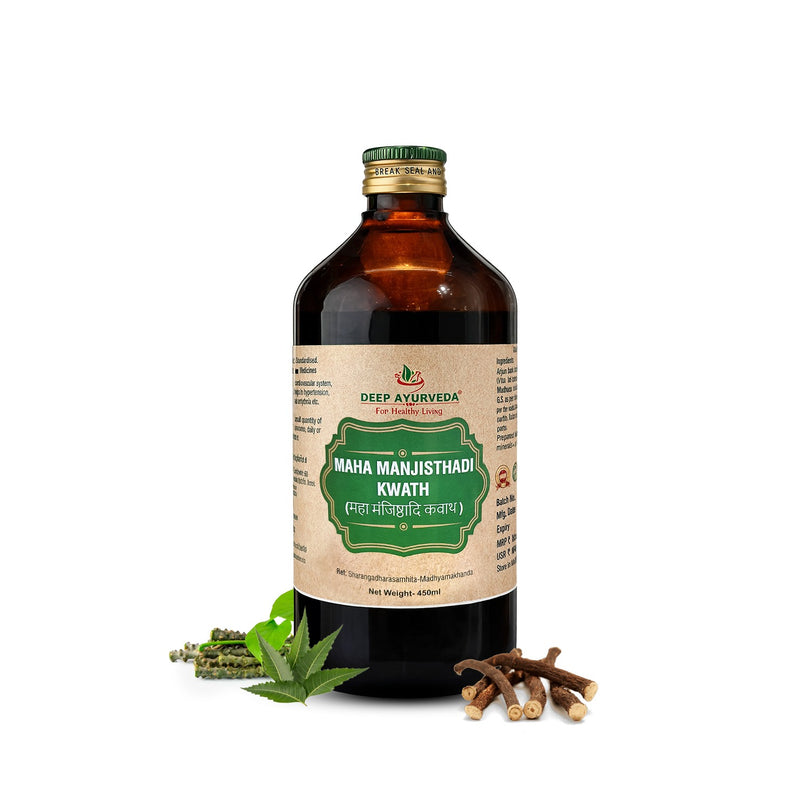
Deep Ayurveda Mahamanjisthadi Kwath
✅Supports Healthy Skin ✅ Purifies the Blood ✅ Promotes Joint Health ✅ Supports Liver Function ✅ Maintains Healthy Digestion ✅ Supports Urinary Health
Mahamanjisthadi Kwath is a classical Ayurvedic herbal formulation traditionally used to support healthy blood (Rakta), maintain skin health, and help balance aggravated Pitta and Kapha doshas. Ayurvedic physicians commonly recommend it as part of a personalized treatment plan for conditions associated with Rakta Dushti (vitiated blood), including certain chronic skin disorders. It contains Manjistha as the principal herb, along with several other botanicals known in Ayurveda for their blood-supportive, detoxifying, and skin-nourishing properties.
Unlike many modern products that focus only on visible skin symptoms, Ayurveda emphasizes addressing the underlying imbalance. Mahamanjisthadi Kwath is traditionally used to support the body's natural cleansing processes, promote healthy skin from within, and maintain overall tissue balance. However, it should always be taken under the guidance of a qualified Ayurvedic physician, as the appropriate dosage and duration depend on an individual's Prakriti (body constitution), Dosha imbalance, age, digestive strength (Agni), and health condition.
In this comprehensive guide, you'll learn about the benefits, traditional uses, ingredients, dosage, possible side effects, precautions, and Ayurvedic perspective of Mahamanjisthadi Kwath. We'll also explain how it works according to Ayurveda, who may benefit from it, when medical advice is necessary, and the diet and lifestyle practices that can help support better results.
Quick Facts About Mahamanjisthadi Kwath
| Parameter | Details |
|---|---|
| Classical Name | Mahamanjisthadi Kwath |
| Type | Classical Ayurvedic herbal decoction (Kwath) |
| Primary Herb | Manjistha (Rubia cordifolia) |
| Main Ayurvedic Action | Supports Rakta Shodhana (blood purification), Rakta Prasadana (healthy blood), and balances aggravated Pitta and Kapha doshas |
| Traditionally Used For | Skin health, Rakta Dushti (vitiated blood), itching, acne, eczema, psoriasis, and other skin-related conditions as advised by an Ayurvedic physician |
| Dosage | As directed by an Ayurvedic doctor; dosage may vary depending on age, health condition, and body constitution |
| Best Time to Take | Usually after meals or as prescribed by your Ayurvedic physician |
| Suitable For | Adults, under professional Ayurvedic guidance |
| Safety | Generally well tolerated when taken in the recommended dose under medical supervision |
| Prescription Required? | It is advisable to consult a qualified Ayurvedic physician before use, especially for long-term use or existing medical conditions. |
What is Mahamanjisthadi Kwath?
Mahamanjisthadi Kwath is a classical Ayurvedic polyherbal formulation described in traditional Ayurvedic texts. It is primarily used to support Rakta Dhatu (blood tissue) and help balance Pitta and Kapha doshas, which are often associated with various skin concerns and inflammatory conditions in Ayurveda.
The name itself reflects its composition. Mahamanjisthadi indicates that Manjistha is the principal ingredient, while Kwath refers to a herbal decoction prepared by boiling selected medicinal herbs in water according to classical Ayurvedic methods. This preparation helps extract the active constituents of the herbs and is traditionally used to deliver their therapeutic properties.
According to Ayurveda, many chronic skin conditions develop due to an imbalance of Rakta (blood), Pitta Dosha, Kapha Dosha, and the accumulation of Ama (metabolic toxins). Rather than focusing only on visible skin symptoms, Mahamanjisthadi Kwath is traditionally used to support the body's natural cleansing mechanisms, promote healthy blood circulation, and maintain balanced skin health from within.
Its therapeutic actions are not limited to the skin alone. Ayurvedic physicians may also recommend Mahamanjisthadi Kwath in specific conditions where Rakta Dushti, chronic inflammation, or excess Pitta plays a role, always after evaluating the patient's overall health, digestive strength (Agni), body constitution (Prakriti), and disease stage.
One of the reasons this formulation has remained relevant in Ayurvedic practice for generations is its multi-herb composition. Each ingredient contributes a unique Ayurvedic action, and together they work synergistically to support healthy blood, maintain tissue balance, and promote overall well-being.
Doctor's Note: Mahamanjisthadi Kwath is not a substitute for medical treatment or a guaranteed cure for any disease. It should be used only under the guidance of a qualified Ayurvedic physician, who can determine whether it is appropriate for your specific condition and recommend the correct dosage and duration.
Classical Ayurvedic Perspective: How Mahamanjisthadi Kwath Works According to Ayurveda
In Ayurveda, the health of the skin is closely connected with the balance of Rakta Dhatu (blood tissue), Pitta Dosha, Kapha Dosha, and Agni (digestive fire). When these become imbalanced, the body may show signs such as recurrent skin problems, itching, redness, inflammation, excessive heat, or slow healing. Classical Ayurvedic management aims to identify and correct these internal imbalances rather than focusing only on the visible symptoms.
Mahamanjisthadi Kwath is traditionally prescribed when an Ayurvedic physician identifies conditions associated with Rakta Dushti (vitiated blood) and aggravated Pitta-Kapha Doshas. Its carefully selected herbs are believed to work together to support healthy blood, maintain skin health, and promote overall tissue balance.
Understanding Rakta Dushti (Vitiated Blood)
According to Ayurveda, Rakta Dhatu nourishes the skin and supports the normal functioning of many body tissues. When Rakta becomes vitiated due to factors such as an unhealthy diet, excessive spicy or oily foods, poor digestion, chronic stress, or seasonal influences, it may contribute to various skin-related concerns.
Some commonly described signs of Rakta Dushti include:
- Frequent acne or pimples
- Itching and skin irritation
- Redness or burning sensation
- Recurrent skin eruptions
- Increased skin sensitivity
- Certain chronic skin disorders, depending on the individual's Dosha imbalance
Mahamanjisthadi Kwath is traditionally used in Ayurveda to support the purification and nourishment of Rakta Dhatu as part of a comprehensive treatment plan.
Balancing Pitta and Kapha Doshas
Many skin disorders are associated with an aggravation of Pitta Dosha, which governs heat, metabolism, and transformation in the body. Excess Pitta may manifest as redness, burning, inflammation, or increased skin sensitivity.
At the same time, Kapha Dosha can contribute to excessive oiliness, thickened skin lesions, congestion, and slow healing when it becomes imbalanced.
According to Ayurvedic principles, Mahamanjisthadi Kwath helps support the natural balance of both Pitta and Kapha, promoting healthier skin and better tissue function.
Supporting Healthy Agni and Reducing Ama
Ayurveda considers Agni (digestive and metabolic fire) to be one of the foundations of good health. When digestion becomes weak, the body may produce Ama, a term used in Ayurveda to describe incompletely processed metabolic waste.
The accumulation of Ama is believed to disturb the balance of Doshas and affect various tissues, including the skin.
As part of an individualized Ayurvedic treatment approach, Mahamanjisthadi Kwath may be recommended alongside dietary and lifestyle modifications to support healthy digestion, reduce Ama formation, and maintain normal metabolic function.
Ayurvedic Actions of Mahamanjisthadi Kwath
Based on traditional Ayurvedic principles, Mahamanjisthadi Kwath is valued for several important actions:
| Ayurvedic Action | Traditional Role |
|---|---|
| Rakta Shodhana | Supports the natural purification and healthy functioning of Rakta Dhatu (blood tissue). |
| Rakta Prasadana | Helps maintain the quality and nourishment of blood according to Ayurvedic principles. |
| Pitta Shamana | Supports the balance of aggravated Pitta associated with heat and inflammation. |
| Kapha Shamana | Helps manage excess Kapha that may contribute to congestion and certain skin concerns. |
| Kandughna | Traditionally used in Ayurveda to help manage itching associated with skin disorders. |
| Kushtaghna | Traditionally indicated in the Ayurvedic management of various skin diseases (Kushta). |
| Shothahara | Supports the body's natural response to swelling and inflammation according to Ayurvedic concepts. |
Why Ayurvedic Doctors Prescribe It as Part of a Complete Treatment Plan
One of the unique strengths of Ayurveda is that it does not rely on a "one medicine for everyone" approach. Before recommending Mahamanjisthadi Kwath, an Ayurvedic physician evaluates factors such as:
- Your Prakriti (body constitution)
- Current Dosha imbalance
- Digestive strength (Agni)
- Presence of Ama
- Stage and severity of the condition
- Age and overall health status
- Existing medications or health conditions
Based on this assessment, Mahamanjisthadi Kwath may be combined with other Ayurvedic formulations, Panchakarma therapies, dietary changes, and lifestyle recommendations to provide a more personalized and holistic treatment approach.
Ayurvedic Doctor's Insight: In Ayurveda, healthy skin is considered a reflection of balanced digestion, pure Rakta Dhatu, and well-regulated Doshas. Mahamanjisthadi Kwath is traditionally valued because it supports these underlying principles rather than addressing only the external appearance of the skin.
Key Ingredients of Mahamanjisthadi Kwath and Their Ayurvedic Benefits
The effectiveness of Mahamanjisthadi Kwath lies in its synergistic combination of multiple Ayurvedic herbs, where each ingredient performs a specific role while complementing the others. Instead of relying on a single herb, Ayurveda combines botanicals with different properties to support balanced healing and improve the overall therapeutic effect.
Although the exact composition may vary slightly between classical references and manufacturers, the formulation is centered around Manjistha (Rubia cordifolia) and several herbs traditionally valued for supporting Rakta Dhatu (blood tissue), skin health, digestion, and Dosha balance.
Below are some of the key herbs commonly associated with Mahamanjisthadi Kwath and their traditional Ayurvedic actions.
| Ingredient | Botanical Name | Traditional Ayurvedic Benefits |
|---|---|---|
| Manjistha | Rubia cordifolia | The principal herb of the formulation. Traditionally used for Rakta Shodhana (blood purification), supporting healthy skin, balancing Pitta, and maintaining normal complexion. |
| Haridra (Turmeric) | Curcuma longa | Traditionally valued for supporting healthy skin, maintaining normal inflammatory balance, and promoting overall wellness. |
| Daruharidra | Berberis aristata | Used in Ayurveda to support skin health, help balance Pitta and Kapha, and maintain healthy blood tissue. |
| Neem (Nimba) | Azadirachta indica | Traditionally used to support skin hygiene, healthy blood, and overall detoxification according to Ayurvedic principles. |
| Guduchi (Giloy) | Tinospora cordifolia | Supports immunity, healthy metabolism, and helps maintain Dosha balance. Considered a rejuvenating herb (Rasayana) in Ayurveda. |
| Triphala | Terminalia chebula, Terminalia bellirica & Emblica officinalis | Supports digestion, natural detoxification, bowel regularity, and healthy tissue nourishment. |
| Vacha | Acorus calamus | Traditionally used to support digestion, reduce Ama, and improve the absorption of herbal formulations. |
| Khadira | Acacia catechu | Commonly used in Ayurveda for maintaining healthy skin and supporting Rakta Dhatu. |
| Patola | Trichosanthes dioica | Traditionally recommended in Ayurveda to help balance Pitta and support skin wellness. |
| Kutki | Picrorhiza kurroa | Supports healthy liver function and digestion according to Ayurvedic principles, contributing to overall metabolic balance. |
Note: The ingredient list may differ slightly depending on the manufacturer and the classical reference followed. Always check the product label or consult your Ayurvedic physician for the exact composition of the formulation you are using.
Why is Manjistha the Main Herb?
Among all the ingredients, Manjistha is considered the cornerstone of Mahamanjisthadi Kwath. In Ayurveda, it is highly regarded for its ability to support Rakta Dhatu, promote healthy skin, and help balance aggravated Pitta Dosha.
Traditionally, Manjistha is used in formulations intended for skin disorders because it is believed to assist the body's natural process of maintaining healthy blood and supporting normal skin function. Its complementary action with herbs such as Neem, Haridra, Guduchi, and Daruharidra creates a well-balanced formulation that addresses multiple Ayurvedic factors involved in skin health.
How These Herbs Work Together
Rather than targeting a single symptom, Mahamanjisthadi Kwath follows the Ayurvedic principle of multi-herb synergy. Each herb contributes a different therapeutic action, creating a balanced formulation that supports the body from multiple angles.
Together, these herbs traditionally help to:
- Support healthy Rakta Dhatu (blood tissue).
- Maintain balanced Pitta and Kapha Doshas.
- Promote healthy digestion and reduce Ama.
- Support the body's natural detoxification processes.
- Help maintain healthy skin and normal complexion.
- Support overall tissue nourishment and well-being.
This holistic approach is one of the reasons Mahamanjisthadi Kwath has remained a trusted classical formulation in Ayurvedic practice for generations.
Ayurvedic Doctor's Insight: In Ayurveda, no single herb is expected to perform every function. Mahamanjisthadi Kwath combines herbs with complementary actions so that digestion, blood health, Dosha balance, and skin wellness are supported together, which is considered more effective than focusing on one symptom alone.
Top Benefits of Mahamanjisthadi Kwath
According to Ayurveda, Mahamanjisthadi Kwath is primarily used to support Rakta Dhatu (blood tissue), maintain healthy skin, and balance aggravated Pitta and Kapha Doshas. Its benefits come from the combined action of multiple herbs rather than a single ingredient. The exact outcome may vary depending on an individual's body constitution (Prakriti), health condition, and adherence to the prescribed diet and lifestyle.
Below are some of the most important traditional benefits of Mahamanjisthadi Kwath.
1. Supports Healthy Blood (Rakta Shodhana)
Mahamanjisthadi Kwath is traditionally used in Ayurveda to support the natural purification and nourishment of Rakta Dhatu (blood tissue). Healthy Rakta is considered essential for maintaining healthy skin and overall tissue balance.
2. Helps Maintain Healthy Skin
One of the primary Ayurvedic uses of Mahamanjisthadi Kwath is to support healthy skin from within. It is traditionally included in treatment plans for various skin conditions associated with Rakta Dushti and aggravated Pitta-Kapha Doshas.
3. Supports the Management of Acne and Pimples
According to Ayurvedic principles, recurrent acne may be linked to aggravated Pitta, Kapha, and impaired Rakta quality. Mahamanjisthadi Kwath is traditionally used as part of a personalized Ayurvedic approach to help maintain clearer and healthier skin.
4. Helps Relieve Itching and Skin Irritation
The formulation contains herbs traditionally described as Kandughna, meaning they are used in Ayurveda to help manage itching and discomfort associated with certain skin disorders.
5. Supports Skin Health in Chronic Skin Disorders
Ayurvedic physicians may recommend Mahamanjisthadi Kwath as part of a comprehensive treatment plan for chronic skin conditions such as eczema, psoriasis, and other disorders after evaluating the individual's Dosha imbalance and overall health.
6. Helps Balance Pitta Dosha
Excess Pitta may contribute to redness, burning sensations, inflammation, and increased skin sensitivity. Mahamanjisthadi Kwath is traditionally used to support the balance of aggravated Pitta and maintain normal skin comfort.
7. Helps Balance Kapha Dosha
When Kapha becomes aggravated, it may contribute to excessive oiliness, congestion, and certain skin concerns. This formulation supports healthy Kapha balance as part of Ayurvedic management.
8. Supports Natural Detoxification
Ayurveda considers healthy digestion and efficient elimination important for overall well-being. Mahamanjisthadi Kwath is traditionally used to support the body's natural cleansing processes alongside an appropriate diet and lifestyle.
9. Promotes Healthy Complexion
By supporting healthy blood and balanced Doshas, Mahamanjisthadi Kwath is traditionally believed to help maintain a clearer and naturally healthy complexion.
10. Supports Healthy Inflammatory Balance
Several herbs in the formulation are traditionally valued for helping maintain the body's normal response to inflammation according to Ayurvedic principles, which may support overall skin wellness.
11. Supports Digestive Health
Healthy digestion (Agni) is considered essential for preventing the formation of Ama. Some ingredients in Mahamanjisthadi Kwath help support digestive function, which Ayurveda regards as an important step toward maintaining healthy skin.
12. Supports Liver Health According to Ayurveda
Certain herbs traditionally used in this formulation are associated with supporting healthy liver function and metabolism in Ayurvedic practice, contributing to overall Rakta health.
13. Helps Maintain Healthy Tissue Nourishment
Ayurveda teaches that properly nourished tissues (Dhatus) are essential for overall health. Mahamanjisthadi Kwath is traditionally used to support healthy tissue metabolism and nourishment.
14. Supports Overall Well-being
By promoting balanced Doshas, healthy digestion, and proper Rakta function, Mahamanjisthadi Kwath contributes to overall wellness as part of a holistic Ayurvedic lifestyle.
15. Complements Personalized Ayurvedic Treatment
Rather than being used as a standalone remedy, Mahamanjisthadi Kwath is often prescribed alongside dietary guidance, lifestyle modifications, and other Ayurvedic therapies to address the root cause of an imbalance.
Important Note About the Benefits
The benefits described above are based on traditional Ayurvedic principles and the classical use of the herbs contained in Mahamanjisthadi Kwath. Individual results can vary depending on factors such as body constitution (Prakriti), Dosha imbalance, age, digestive strength (Agni), overall health, and adherence to the prescribed treatment plan.
Uses of Mahamanjisthadi Kwath in Ayurveda
In Ayurveda, Mahamanjisthadi Kwath is not prescribed based solely on the name of a disease. Instead, an Ayurvedic physician evaluates the patient's Prakriti (body constitution), Vikriti (current imbalance), Dosha status, Agni (digestive fire), Ama (metabolic toxins), and Dhatu involvement before recommending this classical formulation.
Mahamanjisthadi Kwath is traditionally used when the underlying imbalance is associated with Rakta Dushti (vitiated blood), aggravated Pitta, Kapha, or certain skin disorders described in Ayurvedic texts. It is usually prescribed as one part of a broader treatment plan that may also include dietary changes, lifestyle modifications, Panchakarma therapies, or other Ayurvedic medicines.
Common Ayurvedic Uses of Mahamanjisthadi Kwath
| Condition | How Ayurveda Views It | Traditional Role of Mahamanjisthadi Kwath |
|---|---|---|
| Acne (Yauvana Pidika) | Often associated with aggravated Pitta, Kapha, and Rakta Dushti. | Traditionally used to support healthy skin and balanced Rakta as part of a personalized treatment plan. |
| Eczema (Vicharchika) | Commonly linked to Kapha, Pitta, and Rakta imbalance. | Traditionally prescribed to support skin health and help maintain Dosha balance. |
| Psoriasis (Ekakushtha/Kitibha – based on Ayurvedic assessment) | Considered a chronic skin disorder involving multiple Doshas. | May be recommended by an Ayurvedic physician as part of a comprehensive treatment approach. |
| Skin Allergies | May involve Pitta aggravation, Rakta Dushti, or hypersensitivity according to Ayurveda. | Traditionally used to support healthy skin and maintain balanced blood tissue. |
| Itching (Kandu) | Often associated with Kapha and Rakta imbalance. | Herbs with Kandughna properties are traditionally used to help manage itching. |
| Boils and Recurrent Skin Eruptions | May be associated with impaired Rakta quality and excess Pitta. | Traditionally included in Ayurvedic management to support healthy skin from within. |
| Hyperpigmentation and Uneven Skin Tone | Ayurveda emphasizes improving Rakta quality and tissue nourishment. | Traditionally used to promote a healthy complexion and support skin wellness. |
| General Rakta Dushti | Indicates vitiation of Rakta Dhatu due to Dosha imbalance. | Supports Rakta Shodhana and Rakta Prasadana according to Ayurvedic principles. |
Important: The table above reflects traditional Ayurvedic uses and should not be interpreted as evidence that Mahamanjisthadi Kwath cures or replaces medical treatment for these conditions.
Is Mahamanjisthadi Kwath Only Used for Skin Problems?
No.
Although Mahamanjisthadi Kwath is best known for supporting skin health, Ayurvedic physicians may also prescribe it in certain conditions where Rakta Dushti (vitiated blood), aggravated Pitta, chronic inflammation, or impaired tissue metabolism are considered contributing factors.
The decision is always based on the individual's overall Ayurvedic assessment rather than on a diagnosis alone.
Who May Benefit from Mahamanjisthadi Kwath?
After a proper Ayurvedic evaluation, this formulation may be considered for individuals who:
- Experience recurrent acne or pimples.
- Have chronic itching or skin irritation.
- Have Pitta- or Kapha-dominant skin concerns.
- Need support for maintaining healthy Rakta Dhatu.
- Have recurring skin problems associated with Dosha imbalance.
- Are advised by an Ayurvedic physician to include Rakta-supportive formulations in their treatment plan.
When is Mahamanjisthadi Kwath Usually Not the First Choice?
Ayurveda follows a personalized treatment approach. Depending on the patient's condition, Mahamanjisthadi Kwath may not always be the most suitable formulation.
An Ayurvedic physician may recommend a different medicine if:
- The primary imbalance is Vata rather than Pitta or Kapha.
- Digestive weakness (Mandagni) requires correction before addressing Rakta.
- Panchakarma procedures are needed first.
- The symptoms are caused by factors unrelated to Rakta Dushti.
- Another classical formulation is better suited to the individual's Dosha imbalance.
This individualized approach is one of the key principles that distinguishes Ayurveda from a one-size-fits-all treatment model.
Mahamanjisthadi Kwath Dosage: How to Take It Correctly
The correct dosage of Mahamanjisthadi Kwath depends on several individual factors, including your age, body constitution (Prakriti), digestive strength (Agni), Dosha imbalance, health condition, and the severity of symptoms. For this reason, Ayurveda does not recommend a single dosage for everyone.
A qualified Ayurvedic physician determines the appropriate dose after evaluating your overall health and treatment goals.
Important: Never increase the dosage or duration on your own. Taking more than the recommended amount does not necessarily improve results and may not be suitable for every individual.
Recommended Dosage of Mahamanjisthadi Kwath
The dosage may vary slightly depending on whether you are using a classical Kwath (decoction) or a ready-to-use liquid preparation from a manufacturer.
| Form | General Adult Dosage |
|---|---|
| Ready-to-use Mahamanjisthadi Kwath | Generally 15–30 ml, diluted with an equal quantity of lukewarm water, 1–2 times daily, or as directed by an Ayurvedic physician. |
| Freshly Prepared Classical Kwath | Dosage varies depending on the physician's prescription and individual health condition. |
Note: Always follow the dosage instructions provided on the product label or those given by your Ayurvedic doctor.
Best Time to Take Mahamanjisthadi Kwath
In many cases, Ayurvedic physicians recommend taking Mahamanjisthadi Kwath:
- After meals
- With an equal quantity of lukewarm water (if advised)
- At the same time every day for consistency
However, the timing may differ depending on:
- Your digestive strength (Agni)
- The condition being managed
- Other Ayurvedic medicines being taken
- Your physician's treatment plan
Therefore, always follow the schedule recommended by your healthcare provider.
How to Take Mahamanjisthadi Kwath
For the best results, follow these general guidelines:
- Measure the prescribed quantity accurately.
- If using a ready-to-use preparation, dilute it with an equal amount of lukewarm water unless the product label states otherwise.
- Take it after meals if advised by your physician.
- Avoid skipping doses or taking extra doses to compensate for a missed one.
- Continue the course only for the duration recommended by your Ayurvedic doctor.
Maintaining consistency is often more important than increasing the dose.
How Long Should You Take Mahamanjisthadi Kwath?
There is no fixed duration that is suitable for everyone.
The duration depends on:
- The underlying Ayurvedic diagnosis
- Severity and chronicity of the condition
- Dosha imbalance
- Response to treatment
- Associated medicines
- Diet and lifestyle adherence
Some individuals may require only a short course, while others with chronic conditions may need longer treatment under regular medical supervision.
Do not continue long-term use without periodic review by an Ayurvedic physician.
What If You Miss a Dose?
If you miss a dose:
- Take it when you remember, provided it is not close to your next scheduled dose.
- If it is almost time for the next dose, skip the missed dose.
- Continue with your regular schedule.
- Do not take a double dose to make up for the missed one.
Common Mistakes to Avoid While Taking Mahamanjisthadi Kwath
Many people unknowingly reduce the effectiveness of Ayurvedic treatment by making simple mistakes. Avoid the following:
- Taking the medicine without consulting an Ayurvedic physician.
- Changing the dosage on your own.
- Stopping the medicine as soon as symptoms improve.
- Ignoring the recommended diet (Pathya) and lifestyle advice.
- Consuming excessive spicy, oily, fried, or processed foods during treatment.
- Expecting immediate results in long-standing or chronic conditions.
- Taking multiple herbal products together without professional guidance.
Ayurvedic Tips to Support Better Results
Along with Mahamanjisthadi Kwath, Ayurvedic physicians often recommend healthy daily habits such as:
- Eating freshly prepared, balanced meals.
- Drinking adequate water throughout the day.
- Maintaining regular bowel habits.
- Getting sufficient sleep.
- Managing stress through yoga, meditation, or breathing exercises.
- Avoiding foods and habits that aggravate Pitta and Kapha.
These supportive measures help create a favorable environment for overall healing according to Ayurvedic principles.
Ayurvedic Doctor's Advice: Herbal medicines work best when combined with the right diet, lifestyle, and regular follow-up. Mahamanjisthadi Kwath should be viewed as one part of a personalized Ayurvedic treatment plan rather than a standalone solution.
Mahamanjisthadi Kwath Side Effects, Precautions & Safety
When taken in the recommended dosage and under the supervision of a qualified Ayurvedic physician, Mahamanjisthadi Kwath is generally considered well tolerated. It is a classical polyherbal formulation that has been traditionally used in Ayurvedic practice for many years.
However, like any herbal or conventional medicine, it may not be suitable for everyone. Its safety depends on factors such as your age, body constitution (Prakriti), digestive strength (Agni), existing medical conditions, current medications, and the quality of the product being used.
Does Mahamanjisthadi Kwath Have Any Side Effects?
Most people do not experience side effects when the medicine is taken correctly and under medical guidance. However, in some individuals, especially if taken in an inappropriate dose or without proper assessment, mild digestive discomfort may occur.
Possible side effects may include:
- Mild stomach discomfort
- Nausea
- Loose stools in sensitive individuals
- Changes in appetite
- Digestive upset if taken incorrectly
These effects are generally uncommon and may be related to individual sensitivity or inappropriate use rather than the formulation itself.
If you notice persistent discomfort or any unusual symptoms after taking Mahamanjisthadi Kwath, discontinue its use and consult your Ayurvedic physician or healthcare provider.
Who Should Avoid Mahamanjisthadi Kwath?
Although Mahamanjisthadi Kwath is a traditional Ayurvedic formulation, it should not be used without medical advice in the following situations:
1. Pregnant Women
There is limited high-quality clinical evidence regarding the routine use of Mahamanjisthadi Kwath during pregnancy. It should only be used if specifically recommended by a qualified healthcare professional.
2. Breastfeeding Mothers
If you are breastfeeding, consult your Ayurvedic physician or doctor before using this formulation to determine whether it is appropriate for your situation.
3. Children
Mahamanjisthadi Kwath should only be given to children under the supervision of a qualified Ayurvedic pediatric specialist or healthcare professional.
4. People with Chronic Medical Conditions
Individuals with conditions such as:
- Diabetes
- Liver disorders
- Kidney disorders
- Autoimmune diseases
- Serious heart conditions
should seek medical advice before starting any Ayurvedic medicine, including Mahamanjisthadi Kwath.
5. Individuals Taking Prescription Medicines
If you regularly take prescription medications, discuss them with your healthcare provider before starting Mahamanjisthadi Kwath. This helps ensure your overall treatment plan remains appropriate and coordinated.
Precautions Before Taking Mahamanjisthadi Kwath
Keep these important precautions in mind:
- Use only under the guidance of a qualified Ayurvedic physician.
- Follow the prescribed dosage and duration.
- Purchase products from trusted manufacturers that follow quality standards.
- Do not use expired or improperly stored products.
- Inform your doctor about all medicines and supplements you are taking.
- Continue regular follow-up if you are using the medicine for a chronic condition.
Can Mahamanjisthadi Kwath Be Taken for a Long Time?
The answer depends on your individual health condition.
Some people may require only a short course, while others may need longer treatment as part of a physician-supervised Ayurvedic management plan.
Long-term use should always include periodic clinical review to assess:
- Progress of the condition
- Need for dosage adjustment
- Changes in treatment plan
- Overall health status
Avoid self-medicating for prolonged periods without professional guidance.
Can Mahamanjisthadi Kwath Be Taken Along with Other Medicines?
Many patients ask whether Ayurvedic medicines can be taken together with conventional medicines.
The answer varies depending on:
- The medicines being used
- The medical condition
- The timing of administration
- Individual health factors
For safety, always inform both your Ayurvedic physician and your treating doctor about all medicines, herbal products, and dietary supplements you are taking.
When Should You Stop Taking Mahamanjisthadi Kwath and Seek Medical Advice?
Stop using the medicine and consult a healthcare professional if you:
- Develop persistent stomach discomfort.
- Notice any unexpected or worsening symptoms.
- Experience signs of an allergic reaction, such as rash, swelling, or difficulty breathing (seek emergency medical care immediately if severe).
- Feel that your condition is worsening despite treatment.
- Become pregnant while taking the formulation without prior medical advice.
Prompt medical evaluation helps determine whether your symptoms are related to the medicine, your underlying condition, or another cause.
Diet & Lifestyle Recommendations While Taking Mahamanjisthadi Kwath
In Ayurveda, medicine alone is not considered sufficient for long-lasting results. The effectiveness of any herbal formulation, including Mahamanjisthadi Kwath, depends on following the right Pathya (recommended diet) and Vihara (healthy lifestyle).
If foods and habits that aggravate Pitta, Kapha, or Rakta Dushti continue during treatment, the expected benefits of the medicine may be reduced. Therefore, Ayurvedic physicians often prescribe dietary and lifestyle recommendations alongside herbal medicines.
Foods to Include (Pathya)
A balanced, freshly prepared diet supports healthy digestion (Agni) and helps maintain Dosha balance.
Include foods such as:
- Fresh seasonal vegetables.
- Bitter vegetables like bitter gourd and neem leaves (where traditionally appropriate).
- Green leafy vegetables.
- Fresh fruits suitable for your body constitution.
- Whole grains such as barley, old rice, and millet.
- Moong dal and other light-to-digest legumes.
- Homemade soups and light meals.
- Adequate water throughout the day.
- Fresh coconut water (if suitable for your health condition and climate).
These foods help support healthy digestion and overall well-being according to Ayurvedic principles.
Foods to Limit or Avoid (Apathya)
During treatment, Ayurveda generally advises reducing foods that may aggravate Pitta or Kapha.
These include:
- Very spicy foods.
- Deep-fried foods.
- Excessively oily meals.
- Fast food and processed foods.
- Sugary beverages and excessive sweets.
- Bakery products made with refined flour.
- Excessively sour or fermented foods (where not suitable).
- Alcohol and tobacco.
- Reheated or stale food.
Following these dietary recommendations may help support better digestive health and overall treatment outcomes.
Lifestyle Habits That Support Better Results
Simple daily habits can complement Ayurvedic treatment.
Stay Hydrated
Adequate water intake supports normal body functions and overall wellness.
Maintain Good Digestion
Eat meals at regular times and avoid overeating. Ayurveda considers healthy digestion (Agni) essential for maintaining balanced Doshas and healthy tissues.
Get Adequate Sleep
Aim for 7–8 hours of quality sleep each night. Proper rest supports recovery, immunity, and overall health.
Manage Stress
Stress may influence overall well-being and can aggravate Dosha imbalance in some individuals.
Helpful practices include:
- Yoga
- Meditation
- Pranayama (breathing exercises)
- Walking
- Mindfulness practices
Exercise Regularly
Moderate physical activity such as walking, yoga, or cycling helps support healthy circulation, digestion, and metabolism.
Choose an exercise routine appropriate for your age and health status.
Follow Your Doctor's Advice
Do not discontinue the medicine or change the dosage without consulting your Ayurvedic physician, even if your symptoms improve.
Regular follow-up allows your treatment plan to be adjusted according to your progress.
Habits That May Slow Recovery
Some daily habits may interfere with your Ayurvedic treatment plan.
Try to avoid:
- Frequently eating outside.
- Sleeping very late at night.
- Skipping meals.
- Excessive stress.
- Smoking or alcohol consumption.
- Self-medicating with multiple herbal products.
- Ignoring dietary recommendations.
Small lifestyle improvements often make a meaningful difference when combined with Ayurvedic treatment.
Final Ayurvedic Perspective
Mahamanjisthadi Kwath is a trusted classical Ayurvedic formulation traditionally used to support Rakta Dhatu (blood tissue), maintain healthy skin, and help balance Pitta and Kapha Doshas. Rather than focusing only on symptoms, Ayurveda aims to address the underlying imbalance through personalized treatment.
For the best results, Mahamanjisthadi Kwath should be used under the guidance of a qualified Ayurvedic physician, along with a balanced diet, healthy lifestyle, and regular follow-up. Since every individual has a unique body constitution (Prakriti) and health condition, the dosage and duration of treatment should always be personalized.
When used responsibly as part of a holistic Ayurvedic approach, Mahamanjisthadi Kwath can support overall skin health and well-being.
Frequently Asked Questions
1. What is Mahamanjisthadi Kwath used for?
Mahamanjisthadi Kwath is a classical Ayurvedic formulation traditionally used to support Rakta Dhatu (blood tissue), maintain healthy skin, and help balance aggravated Pitta and Kapha Doshas. Ayurvedic physicians may recommend it as part of a personalized treatment plan for certain skin disorders associated with Rakta Dushti.
2. What are the benefits of Mahamanjisthadi Kwath?
According to Ayurveda, Mahamanjisthadi Kwath may help support healthy blood, maintain skin health, balance Pitta and Kapha, promote healthy digestion, and support the body's natural cleansing processes. The benefits depend on an individual's body constitution, health condition, and adherence to the prescribed treatment plan.
3. How should Mahamanjisthadi Kwath be taken?
The dosage should always be decided by a qualified Ayurvedic physician. Many ready-to-use preparations are commonly taken 15–30 ml with an equal quantity of lukewarm water after meals, once or twice daily, or as directed on the product label.
4. Does Mahamanjisthadi Kwath have any side effects?
When taken in the recommended dosage under medical supervision, Mahamanjisthadi Kwath is generally well tolerated. However, some individuals may experience mild digestive discomfort or stomach upset. If you notice persistent or unusual symptoms, consult your healthcare provider.
5. Can Mahamanjisthadi Kwath be used for acne, eczema, or psoriasis?
Ayurvedic physicians may prescribe Mahamanjisthadi Kwath as part of a comprehensive treatment plan for skin conditions such as acne, eczema, or psoriasis when they are associated with Rakta Dushti and Pitta-Kapha imbalance. It should be used under professional guidance and not as a standalone treatment.
6. Who should avoid Mahamanjisthadi Kwath?
Pregnant or breastfeeding women, children, individuals with serious liver or kidney disorders, and people taking prescription medicines should consult a qualified healthcare professional before using Mahamanjisthadi Kwath. It should not be taken without proper medical advice in these situations.
7. Can Mahamanjisthadi Kwath be taken daily?
Yes, it may be taken daily if recommended by an Ayurvedic physician. The dosage and duration vary depending on your body constitution, health condition, and treatment goals. Avoid prolonged self-medication without regular medical follow-up.
8. How long does Mahamanjisthadi Kwath take to show results?
There is no fixed timeline for results. The response depends on factors such as the individual's Dosha imbalance, severity of the condition, digestive strength (Agni), diet, lifestyle, and consistency in following the prescribed Ayurvedic treatment plan.