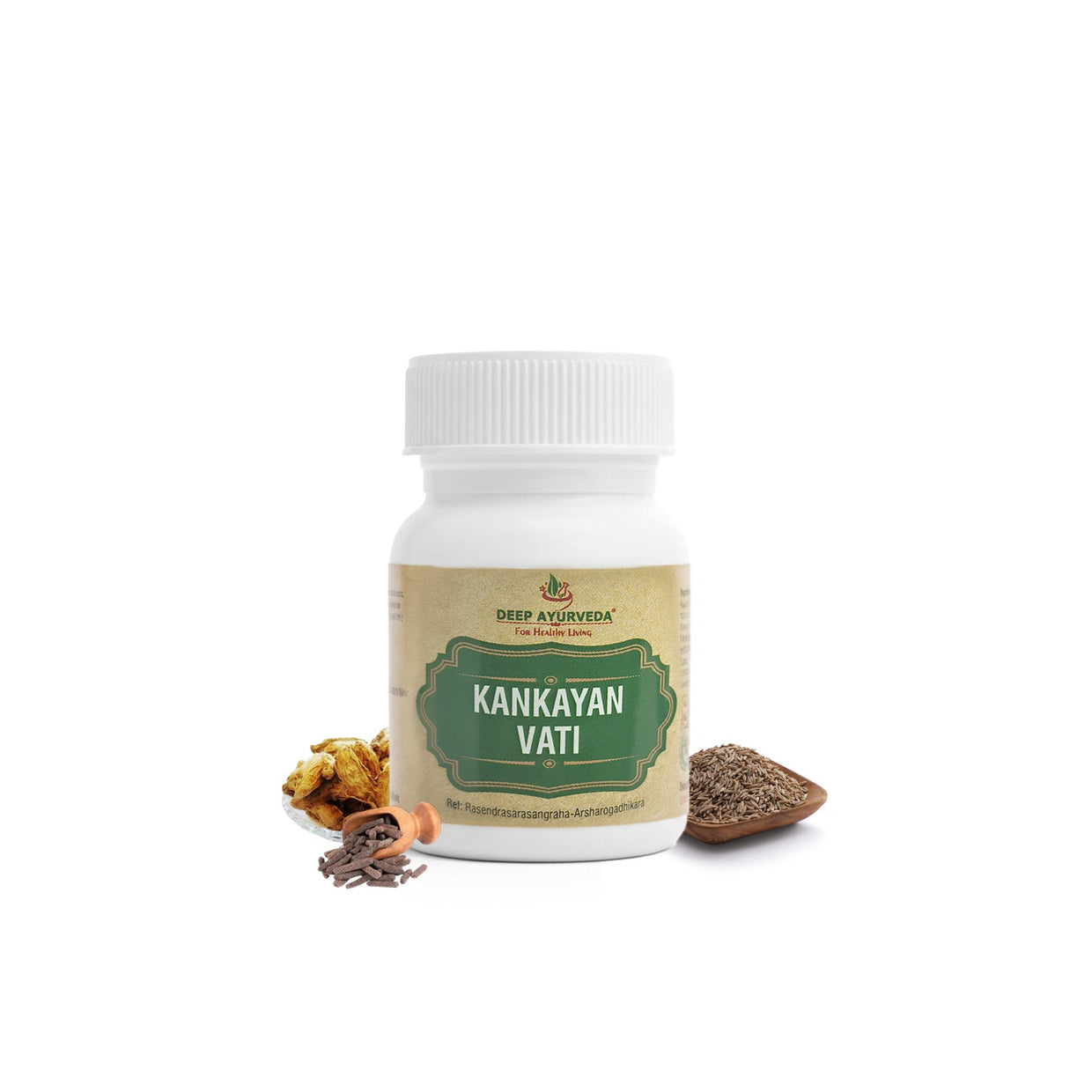
Deep Ayurveda Kankayan Vati
✅ Traditionally Supports Piles (Arsha) Management ✅ Promotes Healthy Digestion ✅ Reduce Gas and Bloating ✅ Supports Overall Digestive Comfort
Kankayan Vati is a classical Ayurvedic formulation traditionally used to support the management of Arsha (piles/hemorrhoids) and associated digestive complaints such as constipation, sluggish digestion, abdominal bloating, and difficult bowel movements. According to Ayurveda, it works by improving Agni (digestive fire), reducing Ama (metabolic toxins), supporting healthy bowel evacuation, and helping maintain balance in aggravated Vata and Kapha doshas. It should be taken under the guidance of a qualified Ayurvedic practitioner, as the appropriate dose and duration vary according to an individual's health condition and constitution.
What is Kankayan Vati?
When someone is diagnosed with piles, the common concern is often the swollen veins themselves. However, Ayurveda looks deeper. It considers piles (Arsha) to be a disorder that usually begins with disturbed digestion. Weak digestive fire (Mandagni) leads to the formation of Ama, which can impair bowel function, contribute to constipation or irregular stools, and increase strain during defecation. Over time, this strain may contribute to the development or worsening of hemorrhoids.
Kankayan Vati is a classical Ayurvedic formulation described for the traditional management of Arsha (piles). Rather than acting only on the hemorrhoids, it is traditionally used to support digestion, promote smoother bowel movements, and address the underlying digestive imbalance that Ayurveda associates with this condition.
Its formulation contains herbs and other traditional ingredients selected for actions such as:
- Supporting healthy digestion.
- Reducing abdominal bloating and gas.
- Promoting regular bowel movements.
- Helping maintain healthy anorectal function.
- Supporting comfort in individuals experiencing piles alongside constipation or sluggish digestion.
This multi-faceted approach is one reason Kankayan Vati has remained part of Ayurvedic practice for many years.
Kankayan Vati at a Glance
| Feature | Details |
|---|---|
| Classical Ayurvedic Name | Kankayan Vati |
| Dosage Form | Tablet (Vati) |
| Traditional Indication | Arsha (Piles/Hemorrhoids) |
| Main Ayurvedic Action | Deepana, Pachana, Anulomana, Vata-Kapha balancing |
| Supports | Digestive health, bowel regularity, abdominal comfort |
| Best Taken | As advised by an Ayurvedic practitioner |
| Suitable For | Adults, unless otherwise directed by a qualified practitioner |
Why Do Ayurvedic Doctors Recommend Kankayan Vati?
Many readers believe that piles are only a local problem around the anal region. In Ayurveda, this is only part of the picture.
An Ayurvedic practitioner also evaluates:
- How strong is your digestion (Agni)?
- Is there a tendency toward constipation or incomplete bowel evacuation?
- Is excess gas or bloating present?
- Which doshas are predominantly involved?
- What are your daily eating and bowel habits?
Kankayan Vati is traditionally selected when the overall clinical picture suggests that improving digestive function and bowel regularity may help support the management of piles. Depending on the individual's condition, it may be prescribed alongside dietary modifications, lifestyle changes, and other Ayurvedic formulations.
This holistic approach aims to address contributing factors rather than focusing solely on local symptoms.
How Kankayan Vati Works
In Ayurveda, Arsha (piles) is not considered only a disease of the anal region. Classical Ayurvedic texts explain that it often develops due to long-term digestive imbalance. When digestive fire (Agni) becomes weak, food is not digested properly, leading to the formation of Ama (metabolic waste). Over time, this imbalance can disturb Apana Vata, affect normal bowel movements, and increase strain during defecation. This repeated strain, along with unhealthy dietary and lifestyle habits, is considered one of the contributing factors in the development of piles.
Instead of focusing only on local symptoms, Kankayan Vati is traditionally used to support the underlying digestive processes that Ayurveda associates with this condition. It aims to improve digestion, promote healthy bowel function, and support overall anorectal health as part of a comprehensive Ayurvedic approach.
According to Ayurveda, the development of Arsha (Piles) may involve the following sequence:
- Irregular eating habits and an unhealthy lifestyle can weaken Agni (digestive fire), reducing the body's ability to digest food efficiently and maintain healthy digestive function over time.
- When digestion remains weak for a prolonged period, Ama (metabolic waste) may accumulate in the body, which Ayurveda considers a contributing factor to digestive discomfort and impaired bowel function.
- The accumulation of Ama, along with disturbed digestion, can aggravate Vata Dosha, particularly Apana Vata, resulting in hard stools, constipation, dryness, and difficulty during bowel evacuation.
- Frequent straining while passing stools increases pressure on the anal region, which may contribute to the development or worsening of hemorrhoidal swelling and associated discomfort.
- If these underlying factors are not addressed, the condition may gradually progress over time, leading to recurring symptoms that require a holistic approach rather than only symptomatic management.
From an Ayurvedic perspective, Kankayan Vati is traditionally used to support this process by:
- Supporting healthy Agni (digestive fire), which helps improve the digestion of food and promotes better nutrient assimilation while reducing the likelihood of digestive stagnation.
- Helping reduce the formation and accumulation of Ama through improved digestive function, thereby supporting a healthier digestive environment according to Ayurvedic principles.
- Promoting the balanced movement of Apana Vata, which plays an important role in maintaining regular bowel movements and supporting comfortable stool evacuation.
- Encouraging smoother and more regular bowel habits, which may help reduce excessive straining and support overall anorectal comfort as part of a broader Ayurvedic management plan.
Rather than being viewed as an instant remedy, Kankayan Vati is traditionally considered a formulation that supports digestive balance and healthy bowel function, addressing the factors that Ayurveda associates with the development of Arsha (piles). For the best results, it is generally recommended to use it under the guidance of a qualified Ayurvedic practitioner, along with appropriate dietary and lifestyle modifications.
Classical Ayurvedic Reference of Kankayan Vati
Kankayan Vati is a classical Ayurvedic formulation traditionally described for the management of Arsha (hemorrhoids/piles). In Ayurveda, Arsha is not viewed as only a disease of the anal region. Classical texts explain that impaired digestion (Mandagni), accumulation of Ama, disturbed Apana Vata, and unhealthy dietary habits together contribute to its development.
The formulation is traditionally included in Ayurvedic practice because it is designed to address multiple aspects of this imbalance. Rather than focusing only on the local symptoms, it is intended to support digestive function, regulate bowel movements, and promote balance in the doshas involved in Arsha.
In clinical Ayurvedic practice, Kankayan Vati is usually prescribed after assessing the patient's Prakriti (constitution), Vikriti (current imbalance), digestive strength (Agni), bowel habits, and associated symptoms. For this reason, the same medicine may not be suitable for every person experiencing piles or digestive discomfort.
Practitioner's Note: Classical Ayurvedic formulations are traditionally selected based on an individual's overall health assessment, not solely on a disease name. Self-medication may not provide the desired results, especially in chronic or recurrent conditions.
Kankayan Vati Ingredients
The exact ingredient list may vary slightly depending on the manufacturer. However, classical formulations generally contain herbs and mineral ingredients that are traditionally valued for their Deepana (improving digestive fire), Pachana (supporting digestion), Anulomana (promoting proper bowel movement), and Vata-Kapha balancing properties.
Major Ingredients in Kankayan Vati and Their Ayurvedic Actions
| Ingredient | Ayurvedic Properties | Traditional Role in the Formulation |
|---|---|---|
| Haritaki (Terminalia chebula) | Anulomana, Deepana | Supports healthy bowel movements and digestion. |
| Pippali (Piper longum) | Deepana, Pachana | Helps stimulate digestive fire and supports nutrient absorption. |
| Maricha (Piper nigrum) | Kapha-Vata balancing | Traditionally used to improve digestion and reduce bloating. |
| Shunthi (Zingiber officinale) | Deepana, Pachana | Supports digestion and helps reduce abdominal discomfort. |
| Chitraka (Plumbago zeylanica) | Agni Deepana | Traditionally used to improve sluggish digestion. |
| Vidanga (Embelia ribes) | Krimighna, Pachana | Supports digestive health and helps maintain intestinal balance. |
| Danti (Baliospermum montanum) (in some formulations) | Bhedana | Traditionally included to support bowel cleansing under professional supervision. |
| Trivrit (Operculina turpethum) (in some formulations) | Rechana | Traditionally used to promote bowel evacuation in selected cases. |
Note: Because formulations can differ, always check the ingredient list on the product label or consult the manufacturer.
Understanding the Ayurvedic Role of Each Ingredient
A unique feature of Kankayan Vati is that each ingredient has a specific purpose, and together they are intended to support digestion and bowel function rather than acting through a single mechanism.
Haritaki – The Herb for Healthy Bowel Function
Haritaki is one of Ayurveda's most respected herbs for maintaining digestive health. It is traditionally used to support regular bowel movements without encouraging dependency when used appropriately.
From an Ayurvedic perspective, Haritaki helps regulate Apana Vata, which governs the downward movement of stools and waste. When bowel movements become regular, excessive straining during defecation may also reduce, which is an important consideration in people with piles.
Pippali – Supporting Digestive Fire
Pippali is known for its Deepana (kindling digestive fire) and Pachana (enhancing digestion) properties.
In many individuals with piles, symptoms such as loss of appetite, heaviness after meals, and incomplete digestion are commonly observed. Pippali is traditionally included to support digestive efficiency, helping the body process food more effectively according to Ayurvedic principles.
Shunthi – Maintaining Digestive Comfort
Shunthi (dry ginger) is widely used in Ayurveda to support digestion and reduce the feeling of heaviness after meals.
It is traditionally valued for helping balance Vata and Kapha, supporting comfortable digestion, and reducing gas and abdominal bloating that may accompany sluggish bowel function.
Maricha – Supporting Proper Digestion
Maricha complements Pippali and Shunthi in many Ayurvedic formulations.
Together, these three herbs are often referred to as Trikatu, a classical combination traditionally used to support digestion, improve the assimilation of nutrients, and reduce Ama. In Kankayan Vati, this combination contributes to the formulation's focus on digestive health.
Chitraka – Traditionally Used for Sluggish Digestion
Chitraka is regarded in Ayurveda as a potent Agni Deepana herb. It is traditionally used when digestion is weak and food is not being processed efficiently.
By supporting digestive fire, Chitraka is intended to help address one of the underlying imbalances that Ayurveda associates with chronic constipation and piles.
Vidanga – Supporting Intestinal Health
Vidanga is traditionally used to maintain intestinal health and support proper digestive function. Ayurveda also describes it as Krimighna, meaning it is traditionally used in conditions associated with intestinal parasites.
In Kankayan Vati, its role extends beyond this, contributing to the overall digestive balance promoted by the formulation.
Why Are These Herbs Combined Instead of Using a Single Herb?
One of the strengths of classical Ayurvedic formulations lies in synergy. Rather than relying on a single ingredient, multiple herbs are combined so that they complement one another.
In Kankayan Vati:
- Some herbs are included to kindle digestive fire (Deepana).
- Others help digest Ama (Pachana).
- Certain ingredients support smoother bowel evacuation (Anulomana/Rechana, where appropriate).
- Others help maintain balance in aggravated Vata and Kapha doshas.
This multi-dimensional formulation reflects Ayurveda's holistic approach, where digestive health, bowel habits, and overall balance are considered interconnected.
Practitioner's Insight: In Ayurvedic practice, Kankayan Vati is often not used in isolation. Depending on the patient's presentation, it may be combined with dietary guidance and other formulations selected by the physician. The goal is to support the individual's underlying imbalance rather than relying on one medicine alone.
Ayurvedic Pharmacodynamic Profile of Kankayan Vati
Although the exact profile varies according to the ingredients used by different manufacturers, the formulation is traditionally understood to exhibit the following Ayurvedic characteristics:
| Ayurvedic Parameter | Traditional Description |
|---|---|
| Rasa (Taste) | Predominantly Katu (Pungent), Tikta (Bitter), and Kashaya (Astringent) |
| Guna (Qualities) | Laghu (Light), Tikshna (Sharp), Ruksha (Dry) |
| Virya (Potency) | Primarily Ushna (Heating) |
| Vipaka (Post-digestive Effect) | Mainly Katu (Pungent) |
| Dosha Influence | Traditionally supports balancing aggravated Vata and Kapha while improving digestive function. Individual suitability depends on the person's constitution and health status. |
From a practitioner's perspective, Kankayan Vati is not simply a "piles tablet." Its traditional role is broader: it aims to support healthy digestion, bowel regularity, and dosha balance, which Ayurveda considers important in the management of Arsha. Because individual constitutions and disease patterns differ, an Ayurvedic physician may adjust the treatment plan rather than relying on a standard prescription for every patient.
Benefits of Kankayan Vati According to Ayurveda
Kankayan Vati is a classical Ayurvedic formulation traditionally used to support digestive health and the management of Arsha (hemorrhoids/piles). Rather than acting on a single symptom, Ayurveda views this formulation as supporting multiple factors involved in digestive imbalance, bowel health, and dosha balance.
It is important to understand that the benefits described below are based on traditional Ayurvedic principles. The response to any Ayurvedic medicine varies depending on the individual's constitution (Prakriti), current imbalance (Vikriti), diet, lifestyle, and overall health.
1. Traditionally Used to Support the Management of Piles (Arsha)
One of the primary traditional uses of Kankayan Vati is in the Ayurvedic management of Arsha, commonly known as piles or hemorrhoids. According to Ayurveda, piles develop gradually due to long-term digestive disturbances rather than occurring suddenly. Therefore, treatment focuses not only on the symptoms but also on correcting the underlying imbalance.
According to Ayurvedic principles, piles are often associated with:
Weak digestive fire (Mandagni): When digestion becomes sluggish, food is not completely digested, leading to the formation of Ama (metabolic toxins). This digestive imbalance is considered one of the important contributing factors in the development of piles.
Chronic constipation: Hard stools and infrequent bowel movements increase pressure on the anal region, causing repeated strain during defecation. Over time, this may contribute to the development or worsening of hemorrhoids.
Irregular eating habits: Frequently skipping meals, overeating, consuming processed foods, or eating at inconsistent times may weaken digestive function and disturb the balance of the doshas.
Excessive straining during bowel movements: Habitual straining places continuous pressure on the veins around the anal canal, which may aggravate existing piles and increase discomfort.
Aggravated Apana Vata: According to Ayurveda, disturbed Apana Vata can affect the normal downward movement of stools, leading to constipation, incomplete evacuation, and repeated straining.
Kankayan Vati is traditionally used to support digestive function and promote healthier bowel movements, which Ayurveda considers important in the holistic management of piles. It is generally prescribed as part of a comprehensive treatment plan that may also include dietary modifications, lifestyle changes, and other Ayurvedic therapies based on the individual's condition.
Ayurvedic physicians rarely prescribe the same medicine for every patient with piles. Before selecting Kankayan Vati, they assess the type of Arsha (Vataja, Pittaja, Kaphaja, or Raktaja), digestive strength (Agni), bowel habits, and the patient's overall constitution to create a personalized treatment plan.
2. Supports Healthy Digestion (Agni)
In Ayurveda, Agni (digestive fire) is considered the cornerstone of good health. When digestion functions efficiently, the body is believed to absorb nutrients properly and eliminate waste effectively.
When digestive fire becomes weak, a person may experience:
Heaviness after meals: Food may remain in the digestive system longer than normal, creating a persistent feeling of fullness and discomfort.
Loss of appetite: Weak digestion often reduces the natural desire to eat, making it difficult to maintain regular and balanced meals.
Indigestion: Incomplete digestion can lead to symptoms such as acidity, discomfort after eating, or a sensation that food is not being digested properly.
Excessive gas: Poor digestion may increase the formation of intestinal gas, resulting in bloating, flatulence, and abdominal discomfort.
Abdominal discomfort: Sluggish digestion can contribute to mild abdominal uneasiness, cramps, or a feeling of digestive sluggishness after meals.
The herbs in Kankayan Vati are traditionally selected for their Deepana (kindling digestive fire) and Pachana (supporting digestion) properties. According to Ayurveda, improving digestive efficiency helps reduce the accumulation of Ama and supports overall gastrointestinal health.
3. Helps Promote Regular Bowel Movements
Constipation is one of the most common factors associated with the development and recurrence of piles. Passing hard stools repeatedly can increase pressure on the veins in the anal region, making bowel movements uncomfortable.
People experiencing constipation may commonly notice:
Hard or dry stools: Dry stools are often more difficult to pass and may increase the need for straining during defecation.
Infrequent bowel movements: Going several days without passing stools may contribute to digestive discomfort and worsen constipation over time.
Incomplete bowel evacuation: A persistent feeling that the bowels have not emptied completely can lead to repeated attempts at defecation and additional strain.
Excessive straining: Continuous force during bowel movements may place extra pressure on the anal veins and contribute to hemorrhoidal symptoms.
Kankayan Vati contains herbs that are traditionally used to support healthy bowel function and encourage smoother evacuation according to Ayurvedic principles. Improving bowel regularity may help reduce excessive straining in suitable individuals.
However, persistent constipation should always be evaluated by a healthcare professional, particularly if it is accompanied by severe pain, rectal bleeding, unexplained weight loss, or a sudden change in bowel habits.
4. May Help Reduce Abdominal Bloating and Gas
Digestive imbalance often presents with symptoms that affect day-to-day comfort and quality of life. Ayurveda associates these symptoms with impaired digestion and the accumulation of Ama.
Common digestive complaints include:
Abdominal bloating: A sensation of fullness or tightness in the abdomen that often becomes more noticeable after meals.
Flatulence: Increased formation of intestinal gas, which may occur due to incomplete digestion of food.
Heaviness after eating: Even a normal-sized meal may leave the person feeling overly full or sluggish for an extended period.
Frequent burping: Repeated belching may occur when digestion is not functioning efficiently according to Ayurvedic principles.
Several herbs in Kankayan Vati are traditionally used to support digestive health and improve digestive efficiency. By promoting healthier digestion, the formulation may help reduce these symptoms in individuals whose digestive discomfort is associated with impaired digestive function.
5. Supports Healthy Function of Apana Vata
Among the five subdivisions of Vata Dosha, Apana Vata governs the downward movement of the body, including bowel movements, urination, and reproductive functions.
When Apana Vata becomes imbalanced, a person may experience:
Constipation: Difficulty passing stools because of reduced bowel movement or excessive dryness.
Difficulty during defecation: Increased effort may be required to pass stools, especially when bowel movements are irregular.
Incomplete evacuation: Even after passing stools, a person may continue to feel that the bowel has not emptied fully.
Repeated straining: Continuous straining can place additional pressure on the anorectal region and may aggravate piles.
Ayurvedic practitioners often focus on restoring the healthy function of Apana Vata while managing anorectal disorders. Kankayan Vati is traditionally used as part of this holistic approach to support comfortable and regular bowel movements.
6. Traditionally Used in Digestive Disorders Associated with Sluggish Metabolism
According to Ayurveda, impaired digestion can influence many aspects of health beyond the digestive system. A weak digestive fire may gradually affect appetite, energy levels, and digestive comfort.
Individuals with sluggish digestion commonly report:
Poor appetite: Reduced hunger or unwillingness to eat regular meals due to impaired digestive function.
Feeling full quickly: A sensation of fullness after eating only a small amount of food, even when nutritional needs have not been met.
Slow digestion: Meals may take longer to digest, often leaving the individual feeling uncomfortable or heavy after eating.
Fatigue after meals: Some people experience tiredness or lethargy following food because digestion is considered inefficient.
By supporting digestive fire according to Ayurvedic principles, Kankayan Vati is traditionally used in individuals with sluggish digestion, particularly when these symptoms coexist with constipation or piles.
7. Supports Overall Gastrointestinal Wellness
Ayurveda considers digestive health to be one of the most important pillars of overall well-being. A balanced digestive system supports the body's ability to process food efficiently and eliminate waste naturally.
Healthy digestion contributes to:
Better nutrient assimilation: Efficient digestion helps the body utilize nutrients obtained from a balanced diet more effectively.
Efficient elimination of waste: Regular bowel movements support the natural removal of waste products from the body.
Balanced doshas: According to Ayurveda, healthy digestion plays an important role in maintaining the natural balance of Vata, Pitta, and Kapha.
Improved digestive comfort: Good digestive function may help reduce common concerns such as bloating, heaviness, and irregular bowel habits.
For this reason, Kankayan Vati is traditionally viewed as a formulation that supports digestive balance rather than addressing a single symptom in isolation. This holistic approach reflects one of the core principles of Ayurveda, where improving the root cause of imbalance is considered just as important as managing the symptoms.
Common Uses of Kankayan Vati
An Ayurvedic practitioner may consider Kankayan Vati in suitable individuals presenting with the following conditions, after a proper clinical assessment:
| Traditional Ayurvedic Use | Why It May Be Considered |
|---|---|
| Arsha (Piles/Hemorrhoids) | To support digestive balance and bowel regularity as part of a comprehensive management plan. |
| Constipation Associated with Piles | To help reduce straining by supporting smoother bowel movements. |
| Weak Digestive Fire (Mandagni) | To enhance digestive function according to Ayurvedic principles. |
| Abdominal Gas and Bloating | To support digestion and reduce symptoms associated with impaired digestion. |
| Incomplete Bowel Evacuation | To encourage healthier bowel habits when related to digestive imbalance. |
Important: The suitability of Kankayan Vati depends on the individual's condition. It should not be used as a substitute for medical evaluation, especially if symptoms such as persistent rectal bleeding, severe pain, unexplained weight loss, anemia, or changes in bowel habits are present.
Who May Benefit the Most?
Kankayan Vati is not considered a one-size-fits-all formulation in Ayurveda. Before recommending any medicine, an Ayurvedic practitioner evaluates the individual's body constitution (Prakriti), current health condition (Vikriti), digestive strength (Agni), bowel habits, and the underlying dosha imbalance. This personalized approach helps determine whether Kankayan Vati is an appropriate choice for the patient's condition.
Based on traditional Ayurvedic principles, an Ayurvedic practitioner may consider Kankayan Vati for individuals with the following concerns:
Chronic constipation associated with digestive weakness: Individuals who frequently experience hard stools, incomplete bowel evacuation, or constipation due to weak digestive fire (Mandagni) may be assessed for Kankayan Vati as part of a broader Ayurvedic management plan.
Recurrent piles accompanied by irregular bowel movements: When piles are associated with long-standing constipation, excessive straining, or irregular bowel habits, Kankayan Vati may be traditionally considered to support digestive balance and healthier bowel function.
A tendency toward abdominal bloating and gas after meals: People who regularly feel abdominal heaviness, bloating, excessive flatulence, or discomfort after eating may benefit from an Ayurvedic evaluation to determine whether impaired digestion (Ama formation) is contributing to their symptoms.
Sluggish digestion with a feeling of heaviness: Individuals who often experience poor appetite, slow digestion, or a persistent feeling of heaviness after meals may be evaluated for digestive support through appropriate Ayurvedic formulations, including Kankayan Vati when clinically suitable.
Symptoms suggesting aggravated Vata and Kapha affecting the digestive system: Ayurveda may consider Kankayan Vati in individuals whose symptoms indicate an imbalance of Vata and Kapha doshas, particularly when digestive weakness and bowel irregularity are prominent features.
What Does an Ayurvedic Practitioner Assess Before Prescribing Kankayan Vati?
An experienced Ayurvedic physician does not prescribe Kankayan Vati solely based on the presence of piles or constipation. Instead, a comprehensive assessment is performed to understand the root cause of the problem and select the most appropriate treatment.
The practitioner generally evaluates the following factors:
Prakriti (Body Constitution): Every individual has a unique body constitution, and understanding whether a person is predominantly Vata, Pitta, or Kapha helps guide the selection of medicines and dietary recommendations.
Current Dosha Imbalance (Vikriti): The physician identifies which doshas are currently aggravated and whether they are contributing to digestive disturbances, constipation, or hemorrhoidal symptoms.
Digestive Strength (Agni): Since healthy digestion is central to Ayurveda, assessing the strength of Agni helps determine whether digestive-supportive medicines like Kankayan Vati are appropriate.
Presence of Ama (Metabolic Toxins): Signs of incomplete digestion, coated tongue, heaviness, bloating, or poor appetite may indicate the presence of Ama, which influences the overall treatment strategy.
Age and Overall Health Status: The patient's age, physical strength, existing illnesses, and general health are carefully considered before deciding the dosage and duration of treatment.
Existing Medical Conditions and Current Medications: Individuals with chronic medical conditions or those taking prescription medicines may require additional evaluation to ensure that Ayurvedic treatment is suitable and safely integrated into their overall healthcare plan.
This individualized assessment is one of the fundamental principles of Ayurveda and explains why the same medicine may not be recommended for every person with similar symptoms.
Can Kankayan Vati Cure Piles?
This is one of the most commonly searched questions by people looking for Ayurvedic solutions for piles.
From a scientific and evidence-based perspective, no Ayurvedic medicine should be described as a guaranteed cure for piles in every individual. The severity of the condition, underlying cause, lifestyle, bowel habits, and overall health all influence treatment outcomes.
According to Ayurvedic principles, Kankayan Vati is traditionally used to support the management of Arsha (piles) by addressing contributing factors such as impaired digestion (Mandagni), constipation, accumulation of Ama, and disturbed Apana Vata. Rather than focusing only on the swollen veins, Ayurveda aims to improve digestive health and bowel function, which are considered important in the long-term management of the condition.
The overall outcome depends on several factors, including:
The severity and stage of piles: Early-stage piles often require a different management approach than advanced or prolapsing hemorrhoids. An Ayurvedic practitioner selects treatment after evaluating the extent of the condition.
Digestive health and bowel habits: Persistent constipation, frequent straining, or irregular bowel movements can continue to aggravate piles if these underlying issues are not addressed alongside treatment.
Dietary and lifestyle practices: Following appropriate Pathya (recommended diet and lifestyle) while avoiding Apathya (unwholesome habits) plays an important role in supporting Ayurvedic management.
Regular use as advised by the practitioner: The dosage, duration, and combination with other Ayurvedic medicines vary from person to person. Taking the medicine exactly as directed is important for achieving the desired therapeutic outcome.
Timely medical evaluation when required: Symptoms such as persistent rectal bleeding, severe pain, fever, unexplained weight loss, or prolapsing hemorrhoids require prompt evaluation by a qualified healthcare professional, as they may indicate conditions that need further investigation.
Practitioner's Pearl: Why Some People Don't Get the Expected Results with Kankayan Vati
One of the most common misconceptions is that taking Kankayan Vati alone is enough to manage piles. In actual Ayurvedic clinical practice, medicines are only one part of the treatment plan. Long-term improvement usually depends on correcting the underlying digestive imbalance and making sustainable dietary and lifestyle changes.
An Ayurvedic physician generally advises patients to focus on the following:
Correcting meal timings and food choices: Eating freshly prepared, easily digestible meals at regular times helps support healthy digestion and reduces the chances of aggravating Ama and digestive disturbances.
Increasing fiber and fluid intake where appropriate: A balanced diet containing adequate fiber along with sufficient water intake helps maintain softer stools and may reduce excessive straining during bowel movements.
Avoiding prolonged sitting and unnecessary straining: Sitting for long hours, delaying the urge to pass stools, or excessive straining can increase pressure on the anal veins and may worsen hemorrhoidal symptoms over time.
Including regular physical activity in the daily routine: Walking, yoga, and other moderate forms of exercise support healthy digestion, improve bowel regularity, and contribute to overall gastrointestinal wellness.
Managing constipation effectively: Since constipation is one of the major contributing factors in many cases of piles, addressing it through appropriate dietary measures, lifestyle modifications, and individualized treatment is an important part of Ayurvedic care.
Using additional Ayurvedic formulations when clinically indicated: Depending on the patient's symptoms and dosha imbalance, an Ayurvedic practitioner may recommend other classical formulations or Panchakarma therapies alongside Kankayan Vati as part of a personalized treatment plan.
This holistic and individualized approach is one of the defining strengths of Ayurveda. Instead of treating only the visible symptoms, it focuses on identifying and addressing the underlying factors that may contribute to the condition, helping support long-term digestive health and overall well-being.
How Long Should Kankayan Vati Be Taken?
The duration of Kankayan Vati depends on the individual's health condition, the severity of symptoms, and the overall treatment plan recommended by an Ayurvedic physician. Ayurveda does not follow a "one-duration-fits-all" approach because every person's Prakriti (body constitution), digestive strength (Agni), and disease stage are different.
Several factors influence how long Kankayan Vati may be recommended:
Whether the condition is acute or chronic: People experiencing recent digestive discomfort or mild piles may require the formulation for a shorter duration, whereas chronic or recurrent conditions often need longer-term management under medical supervision.
The severity of piles or digestive symptoms: The treatment duration may vary depending on the grade of hemorrhoids, the presence of constipation, bleeding, pain, or other associated digestive complaints.
The patient's response to treatment: Ayurvedic physicians regularly assess how the body is responding to the medicine. If symptoms improve and digestion becomes balanced, the dosage or duration may be modified accordingly.
Dietary and lifestyle habits: Following a fibre-rich diet, maintaining adequate hydration, and avoiding prolonged straining during bowel movements may support better outcomes and influence the overall treatment period.
Other medicines being taken: Individuals taking medicines for chronic health conditions may require a personalized treatment plan to ensure the safe and appropriate use of Kankayan Vati.
Some individuals may use Kankayan Vati for a short period, while others may require a longer course as part of a comprehensive Ayurvedic treatment plan.
Practitioner's Advice: Do not continue Kankayan Vati for an extended period without periodic follow-up with a qualified Ayurvedic physician. Regular assessment helps determine whether the medicine should be continued, modified, or discontinued based on your progress.
What If You Miss a Dose?
Missing an occasional dose is generally not a cause for concern. However, taking the medicine consistently as prescribed helps maintain the intended therapeutic approach.
If you miss a dose:
Take it as soon as you remember: If there is sufficient time before your next scheduled dose, you can take the missed dose when you remember.
Skip it if the next dose is near: If it is almost time for your next scheduled dose, simply skip the missed dose and continue with your regular dosing schedule.
Avoid taking a double dose: Taking two doses together to compensate for a missed dose is not recommended, as it may increase the likelihood of unwanted digestive discomfort.
If you frequently forget to take your medicine, consider setting a reminder or consult your healthcare provider for practical ways to improve treatment adherence.
Can Diabetic Patients Take Kankayan Vati?
People living with diabetes should always consult their healthcare provider before starting any Ayurvedic medicine, including Kankayan Vati. This helps ensure that the formulation is appropriate for their overall health condition and current treatment plan.
Before taking Kankayan Vati, diabetic individuals should consider the following:
Review all current medications: Share a complete list of your prescription medicines, over-the-counter drugs, and Ayurvedic supplements with your physician to help avoid unnecessary risks.
Consider possible herb-drug interactions: Although interactions may not occur in every case, your healthcare provider should evaluate whether the formulation is suitable alongside your existing diabetes medications.
Monitor blood glucose regularly: Continue checking your blood sugar levels as advised by your treating physician, especially if any new medicine is introduced into your treatment plan.
A personalized medical assessment is the safest way to determine whether Kankayan Vati is appropriate for someone with diabetes.
Can Kankayan Vati Be Taken Along With Allopathic Medicines?
Some Ayurvedic formulations may be used alongside conventional medicines, but this decision should always be made under the guidance of a qualified healthcare professional. Proper evaluation helps ensure that the medicines complement each other safely.
Inform your doctor or Ayurvedic physician if you are taking:
Blood thinners: Medicines that reduce blood clotting require careful medical supervision before adding any herbal formulation.
Medicines for diabetes: Your physician can determine whether any adjustments or additional monitoring may be required when combining treatments.
Blood pressure medications: Individuals taking medicines for hypertension should discuss all herbal supplements with their healthcare provider before use.
Medicines for inflammatory bowel disease: Digestive disorders such as ulcerative colitis or Crohn's disease require individualized treatment, making professional guidance especially important.
Any long-term prescription medicines: If you are receiving ongoing treatment for chronic medical conditions, always inform your healthcare provider before starting Kankayan Vati.
In many cases, appropriate timing between Ayurvedic and allopathic medicines may be advised by your physician to support safe and effective use.
Precautions Before Taking Kankayan Vati
Using Kankayan Vati responsibly is just as important as selecting the right medicine. Following these precautions may help support safe and appropriate use.
Take the medicine only in the recommended dose: Avoid increasing or decreasing the dosage on your own, as the appropriate dose depends on your individual health condition and the advice of your Ayurvedic physician.
Follow the dietary advice provided by your physician: Ayurveda places equal importance on diet and medicine. Following the recommended eating habits may help support digestion and bowel regularity.
Stay well hydrated unless medically restricted: Drinking adequate fluids may help maintain healthy bowel movements and reduce excessive straining, unless your doctor has advised fluid restriction for another medical condition.
Do not ignore persistent rectal bleeding: While piles are a common cause of rectal bleeding, ongoing or recurrent bleeding should always be evaluated by a healthcare professional to rule out other conditions.
Avoid self-treatment if your symptoms are severe or worsening: Increasing pain, excessive bleeding, or persistent digestive symptoms require proper medical assessment rather than relying solely on self-medication.
Inform your healthcare provider about all medicines and supplements you are taking: Sharing your complete medication history helps your physician evaluate whether Kankayan Vati is suitable alongside your existing treatments.
Purchase the medicine from a trusted manufacturer: Choosing products from reputable Ayurvedic companies helps ensure quality, authenticity, and compliance with manufacturing standards.
Signs That Require Immediate Medical Attention
Although piles are a common condition, not every episode of rectal bleeding is caused by hemorrhoids. Certain symptoms require prompt medical evaluation because they may indicate another underlying health condition.
Seek immediate medical attention if you experience:
Heavy or persistent rectal bleeding: Ongoing or excessive bleeding should never be ignored, as it may require urgent medical investigation and treatment.
Black or tarry stools: Dark-colored stools may indicate bleeding from the upper digestive tract and should be assessed by a healthcare professional without delay.
Severe abdominal pain: Intense or persistent abdominal pain is not a typical symptom of uncomplicated piles and warrants immediate medical evaluation.
Fever along with rectal pain: The combination of fever and rectal pain may suggest an infection or another condition requiring prompt medical care.
Unexplained weight loss: Significant weight loss without an obvious reason should always be investigated, particularly when accompanied by digestive symptoms.
Persistent anemia: Ongoing blood loss can contribute to anemia, making medical assessment important to identify and treat the underlying cause.
A sudden change in bowel habits lasting more than a few weeks: Persistent constipation, diarrhea, or changes in stool pattern should be evaluated by a healthcare professional, especially in adults over the age of 45 or those with additional risk factors.
Clinical Reminder: Do not assume that every case of rectal bleeding is caused by piles. Early medical evaluation can help identify other gastrointestinal conditions and ensure timely treatment when needed.
Foods to Eat While Taking Kankayan Vati
The purpose of a Pathya diet is to maintain healthy digestion, support regular bowel movements, and reduce excessive strain during stool passage. Along with Kankayan Vati, these dietary choices may help promote better digestive comfort and overall gut health.
1. Fresh Fruits Rich in Natural Fiber
Fresh fruits are naturally rich in dietary fiber, vitamins, minerals, and water, making them a valuable addition to the diet of individuals dealing with constipation or digestive discomfort. Including seasonal fruits regularly may help soften stools and support healthy bowel movements.
Recommended fruits include:
Papaya: Papaya is one of the most commonly recommended fruits for digestive health. It contains natural enzymes and dietary fiber that may help support comfortable bowel movements and improve digestive function.
Ripe Banana: A well-ripened banana provides soluble fiber and may help maintain normal bowel function in many individuals. However, people who notice worsening constipation after eating bananas should discuss suitable alternatives with their physician.
Pear: Pears contain both soluble and insoluble fiber, which may help improve stool consistency and support regular bowel habits when consumed as part of a balanced diet.
Apple (with skin): Apples are a good source of fiber, especially when eaten with the peel. They may contribute to digestive health and support normal bowel movements.
Ripe Guava: Guava provides dietary fiber along with vitamin C and other nutrients. When fully ripe, it can be a healthy addition to a fiber-rich diet.
Soaked Raisins: Traditionally, soaked raisins are often included in Ayurvedic dietary advice for individuals with mild constipation. Their natural fiber and water content may help promote smoother bowel movements.
Stewed Prunes: Prunes are widely recognized for supporting bowel regularity due to their fiber and naturally occurring compounds. They may be particularly useful for individuals experiencing occasional constipation.
Practitioner's Tip: Instead of consuming fruit juices, choose whole fruits whenever possible. Whole fruits contain more fiber, which plays an important role in maintaining healthy bowel function.
2. Freshly Cooked Green Vegetables
Vegetables provide essential nutrients along with dietary fiber that supports digestive health. In Ayurveda, freshly prepared meals are generally preferred over stale or heavily processed foods because they are considered easier to digest.
Some suitable vegetables include:
Bottle Gourd (Lauki): Bottle gourd is light, easy to digest, and contains a high percentage of water. It is commonly included in Ayurvedic diets for individuals with digestive complaints.
Ridge Gourd (Turai): Ridge gourd is another easily digestible vegetable that provides fiber while being gentle on the digestive system.
Pumpkin: Pumpkin offers both soluble fiber and important micronutrients. It may help support digestive comfort while adding variety to the diet.
Spinach: Spinach is rich in dietary fiber, iron, and antioxidants. When cooked properly, it can contribute to overall digestive wellness.
Fenugreek Leaves (Methi): Fresh methi leaves provide fiber along with naturally occurring plant compounds that support a balanced diet.
Carrot: Carrots supply fiber and beta-carotene while being easy to incorporate into cooked meals and soups.
Beetroot: Beetroot provides fiber and several beneficial nutrients that support overall digestive health when eaten as part of a balanced diet.
Practitioner's Tip: Lightly cooked vegetables are generally easier to digest than deep-fried or heavily spiced preparations. Steaming or sautéing with moderate spices is often preferred in Ayurvedic dietary practice.
3. Whole Grains
Whole grains are an important source of complex carbohydrates and dietary fiber. Replacing refined grains with whole grains may help improve stool bulk and support healthy bowel function over time.
Some good options include:
Whole Wheat: Whole wheat flour contains more fiber than refined flour, making it a better choice for maintaining digestive health.
Oats: Oats are rich in soluble fiber, which may help improve stool consistency and support regular bowel movements.
Barley (Yava): Ayurveda traditionally considers barley a wholesome grain that supports digestive health and helps maintain balance in certain individuals.
Brown Rice: Brown rice retains its natural fiber and nutrients, making it a healthier alternative to highly polished rice for many people.
Millets: Depending on an individual's constitution and digestive capacity, millets such as jowar, bajra, or ragi can be included as part of a balanced diet.
Important: If you are increasing your fiber intake, do so gradually and drink sufficient water throughout the day. A sudden increase in fiber without adequate hydration may worsen constipation in some individuals.
4. Drink Enough Water Throughout the Day
Adequate hydration is one of the simplest yet most important aspects of maintaining healthy bowel movements. Water helps soften stools and allows dietary fiber to function effectively within the digestive system.
To stay properly hydrated:
Drink water at regular intervals: Instead of drinking large quantities at once, sip water throughout the day to maintain consistent hydration.
Increase fluid intake during hot weather or physical activity: People who sweat more may require additional fluids unless their doctor has advised otherwise due to a medical condition.
Limit sugary drinks: Soft drinks and sugar-sweetened beverages do not replace the benefits of plain water and should not be relied upon for hydration.
Practitioner's Tip: Hydration needs vary depending on age, weather, physical activity, and existing medical conditions. Follow your healthcare provider's advice if you have kidney disease, heart disease, or fluid restrictions.
5. Takra (Buttermilk): A Traditional Ayurvedic Digestive Drink
In Ayurveda, Takra (buttermilk) is traditionally regarded as a wholesome digestive drink that may help support healthy digestion when consumed appropriately. It is often recommended after meals because it is considered lighter than milk and easier to digest for many individuals.
If advised by your Ayurvedic physician, plain buttermilk prepared with roasted cumin powder and a small quantity of rock salt may be included as part of your daily diet. This traditional combination is commonly used to promote digestive comfort and reduce the feeling of heaviness after meals.
However, buttermilk is not suitable for everyone. Individuals with lactose intolerance, certain gastrointestinal conditions, or specific dietary restrictions should consult their healthcare provider before including it regularly.
Scientific Research on Kankayan Vati: What Does the Evidence Say?
Many people searching for Kankayan Vati often want to know whether it has scientific backing or if its benefits are based only on traditional Ayurvedic knowledge. This is a valid question, especially when choosing any healthcare product.
While Ayurveda has used Kankayan Vati for generations in the traditional management of Arsha (hemorrhoids) and digestive disorders, modern scientific research follows a different approach. Understanding what is currently known—and what still requires further study—helps readers make informed healthcare decisions.
What We Know So Far
Kankayan Vati is a classical Ayurvedic formulation that has been traditionally prescribed to support the management of Arsha (hemorrhoids), constipation associated with piles, and digestive imbalances. Its use is well documented in Ayurvedic practice, where treatment is individualized according to the patient's constitution, digestive strength, and overall health.
Researchers have also studied several herbs commonly used in Kankayan Vati to better understand their pharmacological properties. Although these studies provide useful insights, they should not be interpreted as direct evidence for the complete formulation.
Haritaki has been investigated in laboratory and preclinical studies for its antioxidant properties and its traditional role in supporting healthy digestion and bowel regularity. However, more human clinical studies are needed to confirm these effects in specific medical conditions.
Pippali has been studied for its potential to support digestive function and improve the bioavailability of certain compounds. In Ayurveda, it is traditionally valued for enhancing Agni (digestive fire) and supporting efficient digestion.
Shunthi (Dry Ginger) has been widely researched for its digestive-supportive and anti-inflammatory properties. Modern studies suggest it may help support normal gastrointestinal function, while Ayurveda has long used it to improve digestion and reduce abdominal discomfort.
Maricha (Black Pepper) contains the naturally occurring compound piperine, which has been studied for its role in enhancing nutrient absorption and supporting digestive health. It is traditionally included in Ayurvedic formulations to complement the actions of other herbs.
Chitraka has attracted research interest because of its traditional use in stimulating digestion. Although preliminary studies have explored its biological activity, larger clinical trials are required before firm conclusions can be drawn regarding its therapeutic effectiveness.
Although research on these individual herbs continues to grow, high-quality clinical trials evaluating Kankayan Vati as a complete Ayurvedic formulation are still limited. Therefore, its traditional use is supported primarily by classical Ayurvedic knowledge and long-standing clinical practice rather than extensive modern clinical evidence.
Traditional Knowledge vs Modern Clinical Evidence
Understanding the difference between traditional Ayurvedic knowledge and modern scientific evidence is important when evaluating any Ayurvedic medicine.
| Traditional Ayurvedic Knowledge | Modern Scientific Evidence |
|---|---|
| Developed through centuries of Ayurvedic clinical practice and documented in classical texts, where medicines are selected according to an individual's constitution and disease pattern. | Generated through laboratory research, observational studies, and controlled clinical trials that evaluate safety and effectiveness using standardized scientific methods. |
| Focuses on restoring the balance of Doshas, improving Agni (digestive fire), reducing Ama, and supporting the body's natural healing processes. | Focuses on measurable biological outcomes, symptom improvement, safety profiles, and statistical evidence collected during research studies. |
| Treatment is personalized, meaning two patients with the same condition may receive different medicines based on their Prakriti, digestive strength, and associated symptoms. | Clinical research generally evaluates the same intervention in larger groups of participants under standardized conditions to measure average outcomes. |
Both perspectives offer valuable insights into health and disease. Ayurvedic knowledge is based on centuries of traditional practice, while modern clinical research provides scientific methods to evaluate safety and effectiveness. Because these systems use different approaches, traditional use should not automatically be interpreted as conclusive scientific proof, and ongoing research continues to improve our understanding of classical Ayurvedic formulations.
Is Kankayan Vati Safe for Long-Term Use?
One of the most frequently asked questions by patients is whether Kankayan Vati can be taken for a long period.
The answer is not the same for everyone. In Ayurvedic practice, the duration of treatment depends on the individual's health condition, the severity of symptoms, digestive strength, and the treatment goals determined by the physician.
Before recommending long-term use, an Ayurvedic practitioner generally considers several important factors:
Your overall health condition plays an important role in deciding whether Kankayan Vati is appropriate and how long it should be continued. People with multiple medical conditions may require closer monitoring during treatment.
The reason for taking Kankayan Vati also influences the duration of therapy. A person using it for temporary digestive imbalance may need a different treatment plan than someone with long-standing or recurrent piles.
The formulation and manufacturer should always be considered because ingredient quality, manufacturing standards, and composition may vary between brands. Choosing products from reputable manufacturers helps ensure better quality and consistency.
The dosage prescribed by your Ayurvedic physician should be followed carefully. Taking higher doses or extending treatment without professional advice may not improve results and could increase the likelihood of unwanted effects.
Regular medical follow-up allows your Ayurvedic physician to monitor your progress, evaluate symptom improvement, and decide whether the medicine should be continued, modified, or discontinued.
Some individuals may require only a short treatment course, while others may benefit from longer use under professional supervision. Self-medicating for extended periods without regular medical review is not recommended, particularly if symptoms persist, worsen, or new symptoms develop.
This balanced approach reflects both Ayurvedic principles and modern healthcare practices, helping ensure that treatment remains appropriate, safe, and individualized.
Common Myths and Facts About Kankayan Vati
| Myth | Fact |
|---|---|
| Kankayan Vati is only a pain-relief tablet. | Traditionally, it is used to support digestive health and bowel function as part of managing Arsha. |
| Once symptoms improve, treatment can always be stopped immediately. | The duration of treatment should be decided by your Ayurvedic physician based on your response. |
| It works the same way for everyone. | Ayurveda individualizes treatment according to the person's constitution and health condition. |
| Diet doesn't matter if you're taking Kankayan Vati. | Ayurveda considers diet and lifestyle essential components of successful management. |
| Every rectal bleeding episode is caused by piles. | Rectal bleeding can have many causes and should be medically evaluated, especially if persistent or severe. |
Final Thoughts
Kankayan Vati is a classical Ayurvedic formulation traditionally used to support the management of Arsha (piles) and associated digestive imbalances. According to Ayurveda, its role extends beyond symptom management by supporting Agni (digestive fire), promoting healthy bowel movements, and helping maintain the balance of Vata and Kapha doshas.
However, the best results are achieved when Kankayan Vati is used under the guidance of a qualified Ayurvedic practitioner and combined with a balanced diet, healthy lifestyle, and appropriate bowel habits. If you experience persistent rectal bleeding, severe pain, or worsening symptoms, seek prompt medical evaluation to identify the underlying cause and receive appropriate care.
Frequently Asked Questions
1. What is Kankayan Vati mainly used for?
Kankayan Vati is a classical Ayurvedic formulation traditionally used to support the management of Arsha (piles/hemorrhoids) and digestive complaints such as constipation, sluggish digestion, abdominal bloating, and irregular bowel movements. It is generally used as part of a broader Ayurvedic treatment plan.
2. Can Kankayan Vati cure piles permanently?
No medicine can be guaranteed to permanently cure piles in every individual.
According to Ayurveda, long-term improvement depends on correcting contributing factors such as constipation, weak digestion, diet, lifestyle, and bowel habits in addition to using appropriate medicines.
3. Can I take Kankayan Vati without consulting an Ayurvedic doctor?
It is advisable to consult a qualified Ayurvedic physician before starting Kankayan Vati.
Symptoms such as rectal bleeding, pain during bowel movements, or constipation may have causes other than piles and require proper diagnosis.
4. Can Kankayan Vati be taken with Triphala?
Some Ayurvedic physicians may prescribe Kankayan Vati together with Triphala in selected cases, depending on the individual's condition and bowel habits.
However, the combination should only be used under professional guidance, as not every patient requires both formulations.
5. Is Kankayan Vati useful for constipation?
Kankayan Vati is traditionally used in individuals who have constipation associated with digestive imbalance and piles. It is not intended as a universal treatment for every cause of constipation.
Persistent constipation should be medically evaluated to identify the underlying cause.
6. Can Kankayan Vati be taken on an empty stomach?
The timing of administration depends on the physician's recommendation and the individual's digestive condition.
Many practitioners advise taking it after meals, but the appropriate timing may vary.
7. Does Kankayan Vati have side effects?
When used appropriately under professional guidance, Kankayan Vati is generally well tolerated by many individuals.
However, some people may experience digestive discomfort or changes in bowel habits depending on their constitution, dosage, and the specific formulation used.
8. Can diabetic patients take Kankayan Vati?
People with diabetes should consult their physician before starting any Ayurvedic medicine to ensure it fits safely into their overall treatment plan.
9. Is Kankayan Vati suitable for everyone with piles?
No.
Ayurvedic treatment is individualized. The suitability of Kankayan Vati depends on factors such as the type of piles, digestive strength, body constitution, associated diseases, and current medications.