
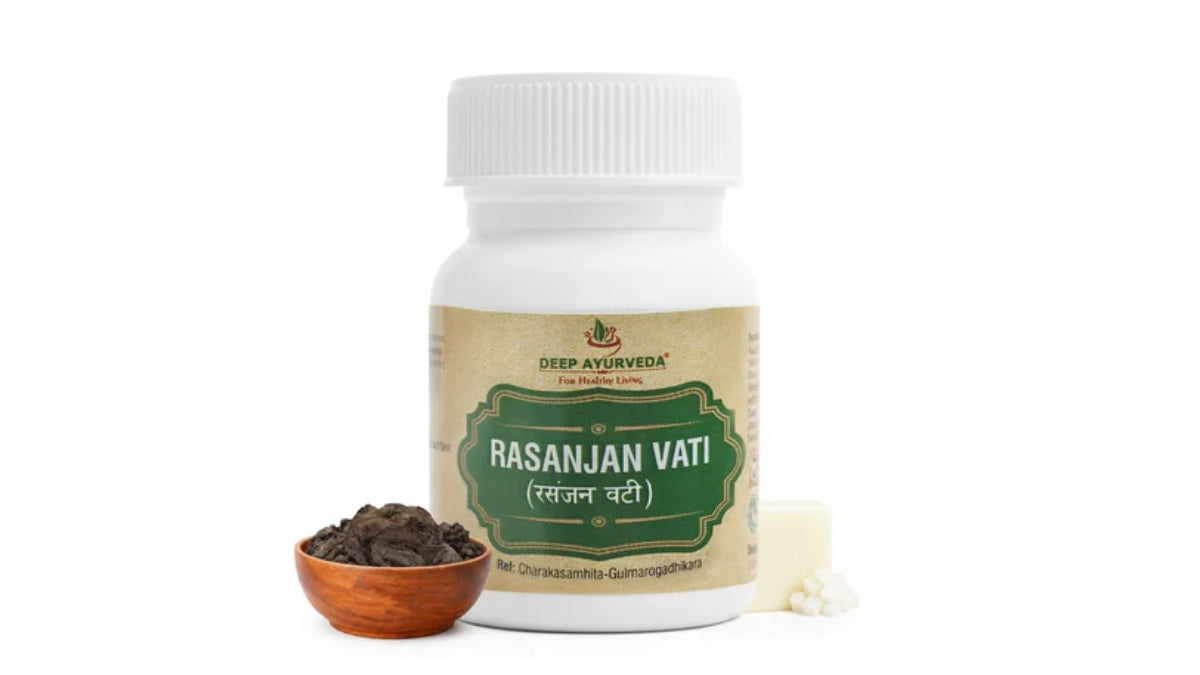
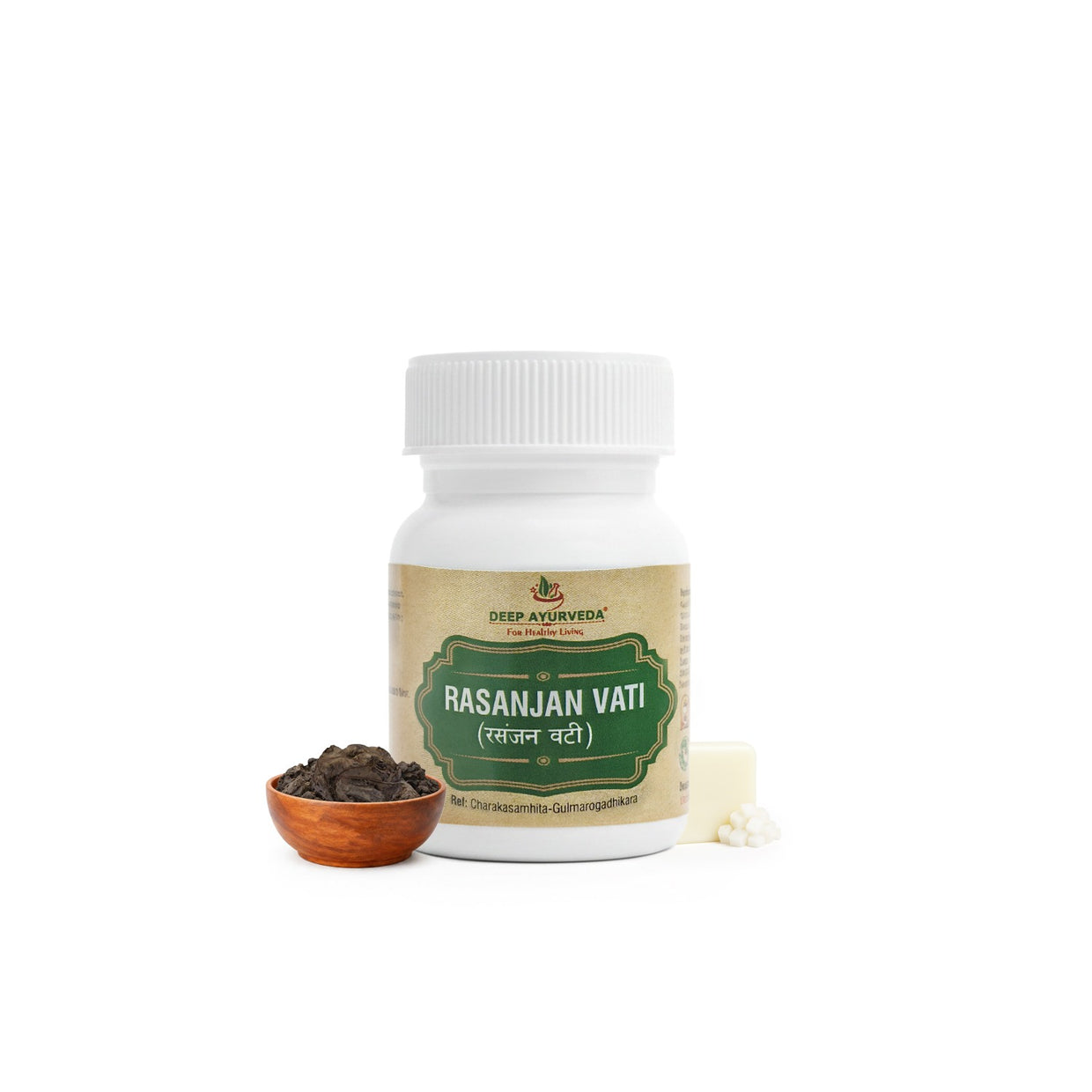
Deep Ayurveda Rasanjan Vati
✅ Supports Healthy Skin✅ Promotes Blood Purification✅ Aids Natural Detoxification✅ May Help Reduce Inflammation ✅Supports Immune Function ✅ Supports Overall Wellness
Rasanjan Vati is an Ayurvedic herbal-mineral formulation traditionally used to support the management of certain digestive and anorectal conditions, particularly those involving bleeding, inflammation, or aggravated Pitta dosha. Depending on the manufacturer and classical reference, its composition may vary slightly. It should always be taken according to the advice of a qualified Ayurvedic practitioner, who can determine whether it is appropriate based on an individual's constitution (Prakriti), imbalance (Vikriti), age, and medical history.
Ayurveda has preserved hundreds of classical formulations that are still valued for supporting health when prescribed appropriately. Among these formulations, Rasanjan Vati is traditionally used in Ayurvedic practice for specific conditions related to digestion, bleeding disorders, and certain inflammatory conditions. However, many people searching online only find short product descriptions or incomplete information that does not explain why this medicine is used, how it works according to Ayurveda, or who should and should not take it.
This comprehensive guide is written from an Ayurvedic practitioner's perspective to help readers understand Rasanjan Vati in a balanced, evidence-aware manner. Instead of making exaggerated claims, we'll explore the formulation through classical Ayurvedic principles, available modern research, and practical clinical considerations.
Whether you are a patient trying to understand a prescription or simply curious about this traditional medicine, this guide aims to provide reliable, easy-to-understand information.
Important: Rasanjan Vati is an Ayurvedic medicine and should be used only under the guidance of a qualified Ayurvedic physician. Self-medication, especially for prolonged periods or serious health conditions, is not recommended.
Quick Facts About Rasanjan Vati
| Feature | Details |
|---|---|
| Medicine Type | Ayurvedic tablet (Vati) |
| System of Medicine | Ayurveda |
| Dosha Focus | Traditionally associated with balancing aggravated Pitta and supporting Rakta health (may vary by formulation) |
| Common Ayurvedic Uses | Traditionally used for specific digestive and anorectal conditions under medical supervision |
| Available Forms | Tablet (Vati) |
| Route of Administration | Oral |
| Best Taken | As advised by an Ayurvedic physician |
| Suitable For | Adults unless otherwise prescribed |
| Pregnancy & Breastfeeding | Only under medical supervision |
| Self-Medication | Not recommended |
What is Rasanjan Vati?
Rasanjan Vati is a traditional Ayurvedic tablet prepared using carefully selected herbal and, in some formulations, purified mineral ingredients. The medicine is traditionally prescribed for conditions associated with Pitta aggravation, Rakta Dushti (vitiation of blood), and certain disorders affecting the digestive and anorectal systems.
Unlike modern medicines that are usually designed around a single active ingredient, Ayurvedic formulations are developed using the principle of synergy. Each ingredient contributes a specific therapeutic action while also helping balance the effects of the others. This holistic approach is one of the defining characteristics of Ayurvedic pharmaceutics.
The name itself offers insight into the formulation:
Rasanjan refers to a concentrated extract traditionally prepared from Daruharidra (Berberis aristata). In Ayurveda, Rasanjan is valued for its Tikta (bitter) taste and is traditionally described as having properties that support healthy skin, eyes, and tissues affected by excess Pitta and Rakta imbalance.
Vati simply means a tablet or pill prepared according to Ayurvedic pharmaceutical methods.
Although Rasanjan is the key ingredient that gives the formulation its name, the complete composition of Rasanjan Vati may differ between manufacturers. Therefore, it is always advisable to read the ingredient list on the product label and consult an Ayurvedic physician before use.
Why is Rasanjan Vati Used in Ayurveda?
One of the common misconceptions about Ayurvedic medicines is that they are prescribed only based on the disease name. In reality, Ayurvedic practitioners select medicines after evaluating several factors, including:
The patient's Prakriti (natural constitution).
The current Dosha imbalance.
The affected Dhatus (body tissues).
The involved Srotas (body channels).
Digestive strength (Agni).
Overall health status and associated conditions.
From this perspective, Rasanjan Vati is not considered a "one medicine for one disease." Instead, it is traditionally chosen when its qualities align with the patient's underlying imbalance.
For example, in clinical Ayurvedic practice, a practitioner may consider Rasanjan Vati when there are signs of aggravated Pitta associated with inflammation, bleeding, or tissue irritation—provided the overall clinical picture supports its use. The decision is individualized rather than based solely on symptoms.
This personalized approach is one of Ayurveda's core principles and helps explain why two people with similar symptoms may receive different formulations.
Understanding the Role of Rasanjan
To understand why Rasanjan Vati is valued, it is helpful to look at the Ayurvedic properties traditionally associated with Rasanjan.
Rasa (Taste)
Rasanjan is predominantly described as having a Tikta (bitter) taste.
In Ayurveda, bitter substances are traditionally believed to support the reduction of aggravated Pitta and Kapha while helping maintain the purity of bodily tissues.
Guna (Qualities)
Classical texts describe Rasanjan as possessing qualities that help address excess moisture, heaviness, and inflammatory tendencies associated with certain Pitta-Kapha conditions.
Virya (Potency)
It is generally regarded as having a cooling influence, which is one reason it is traditionally considered in conditions where excess heat is believed to play a role.
Vipaka (Post-Digestive Effect)
Its post-digestive effect contributes to its overall balancing action within Ayurvedic theory.
Karma (Traditional Actions)
Depending on the formulation and clinical context, Rasanjan-containing preparations are traditionally described as supporting:
Healthy digestive function.
Balance of aggravated Pitta.
Healthy Rakta (blood) tissues.
Tissue healing and repair.
Normal inflammatory responses.
Overall gastrointestinal well-being.
These descriptions come from Ayurvedic principles and should not be interpreted as proof of clinical efficacy for any specific disease.
Rasanjan Vati Ingredients
One of the biggest misconceptions about Rasanjan Vati is that every manufacturer uses the same ingredient list. In reality, Ayurvedic pharmaceutical companies may prepare this medicine using slightly different formulations while following the same therapeutic principles.
This is why you may notice differences between the ingredient list printed on products from different Ayurvedic brands.
However, one ingredient remains central to almost every formulation—Rasanjan, which gives this medicine its name.
Rather than simply listing ingredients, let's understand why each ingredient is used in Ayurveda and how it contributes to the formulation.
Understanding the Philosophy Behind Rasanjan Vati
Ayurvedic formulations are never created by randomly mixing herbs.
Each ingredient is carefully selected based on its:
Rasa (Taste)
Guna (Qualities)
Virya (Potency)
Vipaka (Post-digestive effect)
Prabhava (Unique action)
Dosha balancing properties
The objective is to create a formulation where every ingredient complements the others.
As an Ayurvedic practitioner, we don't ask,
Which ingredient is the strongest?
Instead, we ask,
How do these ingredients work together to restore balance?
That holistic philosophy is what makes Ayurvedic formulations unique.
Primary Ingredient: Rasanjan (Daruharidra Extract)
Botanical Name
Berberis aristata DC.
Common Names
Rasanjan
Daruharidra
Indian Barberry
Tree Turmeric
Rasanjan is a concentrated extract prepared from the stem and root of Daruharidra, a medicinal plant highly respected in Ayurveda.
Unlike ordinary herbal powder, Rasanjan is prepared through a traditional extraction process that concentrates the active principles of the herb.
Because of this concentration, Rasanjan is considered significantly more potent than crude Daruharidra powder.
Ayurvedic Properties of Rasanjan
| Property | Description |
|---|---|
| Rasa | Tikta (Bitter), Kashaya (Astringent) |
| Guna | Laghu (Light), Ruksha (Dry) |
| Virya | Sheeta (Cooling) |
| Vipaka | Katu |
| Dosha Action | Primarily balances Pitta and Kapha |
| Traditional Karma | Rakta Prasadana, Pittahara, Krimighna, Vranaropana |
Why is Rasanjan Included in Rasanjan Vati?
According to Ayurveda, aggravated Pitta Dosha often manifests as:
Burning sensation
Redness
Heat
Bleeding tendency
Inflammation
Irritation
Because Rasanjan possesses naturally cooling and bitter qualities, it is traditionally selected in formulations intended to support the balance of aggravated Pitta.
Ayurvedic practitioners also value Rasanjan for its traditional role in supporting healthy Rakta (blood), skin, digestive tissues, and mucosal integrity.
What Modern Research Suggests
Modern phytochemical studies have identified berberine as one of the important naturally occurring alkaloids present in Berberis aristata.
Researchers have explored berberine for its potential:
Antioxidant properties
Antimicrobial activity
Anti-inflammatory effects
Support for glucose metabolism
Gastrointestinal health
However, it is important to understand that research on isolated berberine cannot automatically be applied to Rasanjan Vati as a complete Ayurvedic formulation. The formulation contains multiple ingredients that work together, and more clinical studies are needed to evaluate the finished product.
Purified Sulphur (Shuddha Gandhak) (Present in Some Formulations)
Another ingredient commonly found in certain Rasanjan Vati formulations is Shuddha Gandhak, or purified sulphur.
Before being used medicinally, Gandhak undergoes a traditional purification process known as Shodhana, which aims to enhance its suitability for therapeutic use according to Ayurvedic principles.
Ayurvedic Properties
| Property | Description |
| Rasa | Madhura, Katu |
| Guna | Snigdha |
| Virya | Ushna |
| Vipaka | Madhura |
Why is Gandhak Added?
In Ayurveda, purified Gandhak is traditionally valued for supporting:
Tissue repair
Skin health
Digestive balance
Normal inflammatory response
When combined with cooling herbs like Rasanjan, the formulation seeks to maintain therapeutic balance rather than relying on a single action.
Camphor (Karpura) (Present in Selected Preparations)
Some manufacturers include natural camphor in their proprietary formulations.
Traditionally, Karpura is described as possessing:
Cooling properties
Aromatic qualities
Kapha-Pitta balancing actions
Its inclusion depends on the therapeutic objective of the manufacturer.
Other Supporting Ingredients
Depending on the manufacturer, Rasanjan Vati may also contain additional herbs or purified ingredients that complement the primary formulation.
These ingredients are generally included to support one or more of the following Ayurvedic objectives:
Improving digestion (Deepana)
Enhancing metabolism (Pachana)
Supporting healthy bowel function
Maintaining tissue integrity
Balancing aggravated Doshas
Improving the stability of the tablet
Always refer to the product label because ingredient lists differ among manufacturers.
Why Do Different Brands Use Different Ingredients?
This is one of the most frequently asked questions by patients.
The answer lies in the distinction between classical formulations and proprietary Ayurvedic medicines.
Classical Formulations
These follow compositions described in authoritative Ayurvedic texts.
Manufacturers generally prepare them according to the traditional recipe with only minor pharmaceutical differences.
Proprietary Formulations
These are developed by Ayurvedic pharmaceutical companies using traditional Ayurvedic principles but may include additional herbs or modified proportions to achieve specific therapeutic goals.
As a result, two Rasanjan Vati products may have slightly different ingredient lists while still being marketed under the same name.
How Ayurvedic Practitioners Evaluate the Ingredients
An experienced Ayurvedic physician rarely chooses a medicine based on a single ingredient.
Instead, they evaluate:
Overall Dosha imbalance.
Nature of symptoms.
Digestive strength (Agni).
Bowel habits.
Duration of illness.
Age.
Associated diseases.
Current medications.
Lifestyle and dietary habits.
Only after assessing these factors is a formulation like Rasanjan Vati selected.
This individualized approach is one of the defining features of Ayurvedic medicine and explains why the same formulation may be appropriate for one patient but not another.
Why Rasanjan Vati Is More Than the Sum of Its Parts
One of the core principles of Ayurveda is Yogavahi—the idea that ingredients in a formulation work together to enhance therapeutic harmony.
Instead of relying on a single "active compound," Rasanjan Vati is designed so that:
The primary herb provides the central therapeutic action.
Supporting ingredients help balance potency.
Additional herbs improve digestion and absorption.
Certain ingredients reduce the likelihood of unwanted effects.
The overall formulation targets the underlying Dosha imbalance rather than isolated symptoms.
This systems-based approach differs significantly from modern pharmacology and is one reason why Ayurvedic medicines should always be interpreted within the framework of Ayurveda rather than by examining one ingredient alone.
How Rasanjan Vati Works According to Ayurveda
One of the most common questions patients ask is:
How does Rasanjan Vati actually work inside the body?
Unlike modern medicine, Ayurveda does not evaluate a medicine solely by its chemical constituents. Instead, it explains the action of a formulation through the interaction of Doshas (functional energies), Agni (digestive fire), Dhatus (body tissues), Srotas (body channels), and Mala (waste products).
This holistic understanding helps Ayurvedic physicians select the right medicine for the right patient rather than prescribing the same treatment to everyone with similar symptoms.
Let's understand Rasanjan Vati from this classical perspective.
Step 1: Balancing Aggravated Pitta Dosha
According to Ayurveda, many conditions involving burning sensation, inflammation, redness, excessive heat, irritation, or bleeding are associated with an aggravated Pitta Dosha.
Some common signs of increased Pitta include:
Burning sensation in the body
Excessive body heat
Redness around affected tissues
Bleeding tendency
Increased irritability
Sour belching
Loose bowel movements
Excessive thirst
Because the primary ingredient, Rasanjan (Daruharidra extract), possesses Tikta (bitter) and Kashaya (astringent) properties along with a cooling nature (Sheeta Virya), Ayurvedic practitioners traditionally consider it when there are signs of excess Pitta.
Rather than suppressing symptoms alone, Ayurveda aims to restore the natural equilibrium of the Doshas.
Step 2: Supporting Healthy Rakta Dhatu
In Ayurveda, Rakta Dhatu is much more than circulating blood. It is regarded as a vital tissue responsible for nourishment, complexion, vitality, and healthy tissue function.
When Rakta becomes vitiated (Rakta Dushti), classical texts describe symptoms such as:
Inflammatory changes
Burning sensation
Redness
Local irritation
Bleeding tendencies
Certain skin disorders
The traditional properties of Rasanjan are believed to help support the balance and purity of Rakta Dhatu.
This is one reason Rasanjan-containing formulations have historically been considered in conditions associated with excessive Pitta and Rakta imbalance.
Step 3: Supporting Healthy Digestive Fire
Ayurveda considers Agni to be the foundation of health.
When digestion weakens or becomes irregular, improperly digested food can contribute to the formation of Ama—a concept referring to incompletely processed metabolic waste.
Ama is traditionally believed to:
Disturb normal digestion
Obstruct body channels (Srotas)
Affect nutrient absorption
Contribute to Dosha imbalance
Although Rasanjan Vati is not primarily classified as a digestive stimulant, Ayurvedic practitioners may prescribe it alongside Deepana (appetite-enhancing) and Pachana (digestive-supporting) medicines when digestive imbalance is part of the clinical picture.
This reflects an important Ayurvedic principle:
Treat the underlying imbalance—not just the visible symptoms.
Step 4: Maintaining Healthy Srotas
According to Ayurveda, the body contains numerous Srotas, or physiological channels, through which nutrients, wastes, and biological substances circulate.
When these channels become disturbed, symptoms may develop depending on the affected tissue or organ system.
The ingredients in Rasanjan Vati are traditionally selected to support the normal functioning of specific Srotas, particularly those associated with:
Digestive health
Nutrient transport
Waste elimination
Rakta (blood) circulation
Maintaining healthy Srotas is considered essential for restoring overall physiological balance.
Step 5: Supporting Tissue Healing
One traditional Ayurvedic property associated with Rasanjan is Vranaropana, which refers to supporting the body's natural tissue healing processes.
From an Ayurvedic perspective, healthy tissue repair depends on:
Balanced Doshas
Proper circulation of nutrients
Strong digestive function
Healthy Rakta Dhatu
Efficient waste elimination
Rather than acting on a single pathway, Ayurvedic formulations aim to create conditions that support the body's own healing mechanisms.
Step 6: Why Ayurveda Focuses on the Root Cause
One of the greatest differences between Ayurveda and conventional symptom-based approaches is the emphasis on identifying the root cause (Nidana).
Instead of asking only,
"What disease does the patient have?"
An Ayurvedic physician also evaluates:
Which Dosha is aggravated?
Which Dhatu is affected?
Which Srotas are involved?
Is Agni weak, irregular, or excessive?
Is Ama present?
What dietary or lifestyle habits contributed to the imbalance?
Only after answering these questions is a medicine such as Rasanjan Vati considered appropriate.
This individualized assessment is one reason why the same formulation may not be suitable for every person with similar symptoms.
Ayurvedic Mechanism at a Glance
| Ayurvedic Concept | Traditional Role of Rasanjan Vati |
|---|---|
| Pitta Dosha | Traditionally supports balance of aggravated Pitta |
| Kapha Dosha | May help reduce excess Kapha in certain clinical situations |
| Rakta Dhatu | Traditionally supports healthy blood tissue |
| Agni | Used as part of a broader strategy when digestive imbalance is present |
| Srotas | Helps maintain normal functioning of relevant body channels |
| Ama | May be combined with other formulations to address Ama under physician guidance |
Modern Scientific Perspective
Modern biomedical science explains medicines through mechanisms such as receptor interactions, enzymes, and biochemical pathways.
Ayurveda, however, uses a functional systems-based model centered on balance rather than isolated molecular targets.
Research on Berberis aristata, the source of Rasanjan, suggests that it contains naturally occurring compounds such as berberine, which have been investigated for antioxidant, antimicrobial, and anti-inflammatory properties in laboratory and clinical studies.
However, it's important to distinguish between:
Research on isolated compounds like berberine.
Research on the whole herb.
Research on the complete Rasanjan Vati formulation.
The available evidence on the finished formulation remains limited, and more high-quality clinical trials are needed before definitive conclusions can be drawn regarding its effectiveness for specific medical conditions.
Why This Holistic Approach Matters
Imagine two individuals both experiencing similar anorectal discomfort.
From a modern perspective, they may receive the same diagnosis.
From an Ayurvedic perspective, however, the underlying causes may differ significantly:
One may have aggravated Pitta.
Another may have Vata-related dryness.
A third may have Kapha-associated sluggish digestion.
Someone else may have symptoms influenced by weak Agni and Ama accumulation.
Because the underlying imbalance differs, the most appropriate Ayurvedic treatment may also differ.
This is why Rasanjan Vati is never viewed as a universal remedy. Instead, it is one therapeutic option selected when its properties match the patient's constitution, Dosha imbalance, and stage of disease.
Rasanjan Vati Uses & Benefits
If you've searched online for "Rasanjan Vati uses", you've probably come across short product descriptions claiming that it is used for several conditions. While these summaries may be helpful, they rarely explain why Ayurvedic physicians prescribe this formulation or how it fits into a patient's overall treatment plan.
In Ayurveda, a medicine is selected based on the patient's Dosha imbalance, digestive strength (Agni), tissue involvement (Dhatu), and stage of disease—not simply on the name of the condition. Therefore, Rasanjan Vati is not considered a universal remedy. It is prescribed only when its properties match the patient's clinical presentation.
Below are some of the traditional applications of Rasanjan Vati, along with the Ayurvedic rationale and what current scientific evidence suggests.
1. Traditionally Used in the Ayurvedic Management of Arsha (Piles)
One of the most recognized traditional uses of Rasanjan Vati is in the management of Arsha, known as hemorrhoids or piles in modern medicine.
According to Ayurveda, piles may develop due to factors such as:
Impaired digestive fire (Mandagni): When digestion becomes weak, food is not processed efficiently. Over time, this imbalance may contribute to constipation and increase pressure on the anorectal region according to Ayurvedic principles.
Chronic constipation: Passing hard stools repeatedly can strain the anal tissues and is considered one of the common contributing factors in the development of Arsha.
Irregular eating habits: Frequently skipping meals, overeating, eating at inconsistent times, or consuming heavy foods late at night can disturb Agni and aggravate Dosha imbalance.
Excessive intake of spicy, oily, or incompatible foods: Such dietary habits are traditionally believed to aggravate Pitta Dosha, leading to symptoms like burning sensation, irritation, and discomfort.
Prolonged sitting: A sedentary lifestyle and sitting for long hours may impair normal circulation in the anorectal area and can contribute to digestive sluggishness.
Suppression of natural urges: Ayurveda advises against suppressing urges such as defecation because doing so may disturb Vata Dosha and interfere with normal bowel function.
Aggravated Vata and Pitta Dosha: While Vata may contribute to dryness and constipation, aggravated Pitta is often associated with inflammation, burning sensation, and bleeding.
When Pitta predominates, symptoms may include:
Burning sensation: Patients may experience a persistent feeling of heat or irritation around the anal region, especially after bowel movements.
Bleeding during bowel movements: Fresh bleeding may occur due to irritation or inflamed tissues. Persistent or heavy bleeding should always be evaluated by a qualified healthcare professional.
Local inflammation: Swelling, redness, and tenderness may indicate inflammatory changes that are traditionally associated with aggravated Pitta.
Pain and discomfort: Sitting, walking, or passing stools may become uncomfortable depending on the severity of the condition.
Because Rasanjan possesses cooling (Sheeta), bitter (Tikta), and astringent (Kashaya) properties, Ayurvedic practitioners may consider Rasanjan Vati as part of a broader treatment plan for patients with Pitta-dominant anorectal conditions.
However, treatment usually also includes:
Dietary modifications: Increasing fibre intake, staying well hydrated, and avoiding foods that aggravate Pitta are often recommended alongside Ayurvedic medicines.
Bowel regulation: Maintaining soft and regular bowel movements helps reduce strain during defecation and supports the overall treatment approach.
Lifestyle correction: Regular physical activity, proper sleep, stress management, and avoiding prolonged sitting play an important role in long-term digestive health.
Other supportive Ayurvedic medicines when required: Depending on the patient's constitution and symptoms, the physician may combine Rasanjan Vati with additional formulations to achieve better therapeutic balance.
What Modern Medicine Says
Scientific studies have explored ingredients such as Berberis aristata for their anti-inflammatory and antioxidant properties, but there is currently insufficient high-quality clinical evidence to conclude that Rasanjan Vati alone is an effective treatment for hemorrhoids. It should not replace medical evaluation, especially if bleeding is persistent or severe.
2. Traditionally Used to Support Healthy Digestion
Ayurveda considers healthy digestion to be the cornerstone of overall wellness.
When digestion weakens, food may not be processed efficiently, leading to the accumulation of Ama, a concept describing incompletely digested metabolic waste.
Symptoms associated with digestive imbalance may include:
Loss of appetite: A reduced desire to eat may indicate weakened digestive fire, making it difficult for the body to process and assimilate nutrients effectively.
Heaviness after meals: Feeling unusually heavy or sluggish after eating is traditionally considered a sign that digestion is not functioning optimally.
Irregular bowel movements: Alternating constipation, incomplete evacuation, or inconsistent bowel habits may reflect underlying digestive imbalance.
Gas and bloating: Excessive gas formation, abdominal fullness, and bloating may occur when food remains improperly digested in the gastrointestinal tract.
General lethargy: Persistent tiredness and lack of enthusiasm are sometimes associated with poor digestion and Ama accumulation in Ayurvedic practice.
Although Rasanjan Vati is not primarily classified as a digestive stimulant, Ayurvedic physicians may prescribe it alongside Deepana and Pachana formulations when digestive imbalance contributes to the patient's condition.
The goal is not simply to relieve symptoms but to restore healthy digestive function.
3. Traditionally Used in Conditions Associated with Excess Pitta
One of the defining qualities of Rasanjan is its traditional role in helping balance aggravated Pitta Dosha.
People with increased Pitta may experience symptoms such as:
Excess body heat: Individuals may frequently feel warmer than usual, even in moderate weather conditions.
Burning sensation: Heat-related discomfort can affect different parts of the body depending on the underlying imbalance.
Irritability: Ayurveda associates aggravated Pitta not only with physical heat but also with increased emotional intensity and irritability.
Sour belching: Acidic burping or sour regurgitation may indicate excessive Pitta affecting digestion.
Increased thirst: Feeling thirsty more often than usual is another classical sign of aggravated Pitta.
Redness and inflammation: Inflamed tissues with redness and warmth are commonly described features of Pitta predominance.
Due to its cooling nature, Rasanjan-containing formulations have traditionally been used when these qualities are prominent, always after assessing the individual's overall constitution and health status.
4. Traditionally Used to Support Healthy Rakta (Blood) Tissue
Ayurveda describes Rakta Dhatu as a vital tissue involved in nourishment, vitality, and healthy tissue function.
When Rakta is affected by aggravated Pitta, classical texts describe symptoms such as:
Redness: Excessive redness of tissues may indicate Rakta-Pitta imbalance according to Ayurvedic principles.
Heat: Local or generalized heat sensations are often associated with aggravated Pitta affecting Rakta Dhatu.
Irritation: Persistent irritation or discomfort may occur when inflammatory changes are present.
Certain inflammatory skin manifestations: Some skin conditions characterized by redness and irritation are traditionally linked with Rakta Dushti.
Bleeding tendencies: Increased susceptibility to bleeding is described in Ayurveda as one possible manifestation of disturbed Rakta and Pitta.
Rasanjan is traditionally regarded as a Rakta Prasadana herb, meaning it is believed to support the healthy functioning and balance of Rakta Dhatu.
It is important to understand that this Ayurvedic concept is not directly equivalent to "blood purification" in modern biomedical terms.
(Continue the remaining headings with the same style.)
5. Traditionally Used to Support Healthy Tissue Repair
Ayurvedic literature describes Rasanjan as having Vranaropana properties, a term that refers to supporting the body's natural tissue repair processes. Rather than acting like a modern wound-healing medicine, Ayurveda views tissue recovery as the result of balanced Doshas, healthy digestion, proper nourishment, and efficient circulation.
Healthy tissue repair in Ayurveda depends on several interconnected factors:
Balanced Doshas: When Vata, Pitta, and Kapha remain in harmony, the body's natural repair mechanisms are believed to function more efficiently. Persistent Dosha imbalance may slow tissue recovery according to Ayurvedic principles.
Healthy digestion (Agni): Ayurveda teaches that proper tissue formation begins with efficient digestion. A strong Agni helps convert food into nourishment for all body tissues, including those involved in repair and regeneration.
Proper nutrient assimilation: Even a nutritious diet may not provide optimal benefits if nutrients are not absorbed effectively. Healthy assimilation ensures that tissues receive the nourishment required for maintenance and recovery.
Adequate circulation of Rakta Dhatu: Rakta Dhatu is considered responsible for transporting nourishment throughout the body. Healthy circulation supports the delivery of nutrients to tissues that require repair.
Efficient elimination of waste products: Ayurveda emphasizes the importance of removing metabolic waste efficiently. Proper elimination helps maintain internal balance and creates a healthier environment for tissue healing.
Rather than acting like a topical wound-healing agent, Rasanjan Vati is traditionally used to support the body's internal balance, which may contribute to healthy tissue maintenance under the guidance of an Ayurvedic physician.
6. Traditionally Used for Certain Inflammatory Conditions
Inflammation is interpreted differently in Ayurveda than in modern medicine. Instead of focusing only on inflammation itself, Ayurvedic practitioners assess which Dosha is responsible, the stage of the imbalance, and the tissues involved before selecting a treatment.
Because Rasanjan possesses cooling and Pitta-balancing qualities, it may traditionally be considered in selected conditions where excess heat and inflammation are prominent.
Ayurvedic practitioners generally look for signs such as:
Persistent burning sensation: Continuous heat or burning in a particular area may indicate aggravated Pitta and help guide the selection of appropriate Ayurvedic formulations.
Localized redness: Redness accompanied by warmth is traditionally viewed as a sign of increased Pitta activity affecting the tissues.
Swelling with heat: When swelling is associated with a feeling of warmth rather than coldness, Ayurveda may interpret this as a Pitta-dominant presentation.
Irritated or sensitive tissues: Increased sensitivity, discomfort, or irritation may suggest inflammatory changes that require careful assessment before treatment.
Symptoms aggravated by spicy foods or hot weather: Many Pitta-related conditions worsen with heat-producing foods, excessive sun exposure, or high environmental temperatures.
The exact treatment plan always depends on the individual's constitution, severity of symptoms, and associated health conditions. Rasanjan Vati is typically prescribed as one part of a comprehensive Ayurvedic approach rather than as a standalone solution.
7. Traditionally Used as Part of a Comprehensive Ayurvedic Treatment Plan
One of the most important principles of Ayurveda is that medicine alone is rarely enough to restore health. Successful treatment usually combines appropriate herbal formulations with dietary guidance, lifestyle modifications, and regular follow-up.
For this reason, Ayurvedic physicians often prescribe Rasanjan Vati alongside other therapeutic measures.
A comprehensive treatment plan may include:
Personalized dietary recommendations (Pathya): Patients are usually advised to follow foods that support digestion and help balance the aggravated Dosha while avoiding foods that may worsen the underlying condition.
Lifestyle modifications (Vihara): Maintaining regular sleep, engaging in moderate physical activity, managing stress, and avoiding prolonged sitting are often recommended to complement Ayurvedic treatment.
Additional herbal formulations: Depending on the patient's symptoms and constitution, Rasanjan Vati may be combined with other Ayurvedic medicines that support digestion, bowel regulation, or Dosha balance.
Panchakarma procedures when indicated: In selected cases, cleansing therapies may be recommended by an Ayurvedic physician to help address the root imbalance before or alongside herbal treatment.
Regular clinical follow-up: Ayurveda emphasizes monitoring the patient's response to treatment and adjusting medicines, dosage, or lifestyle recommendations as the condition improves.
This individualized approach aims to correct the underlying imbalance rather than simply providing temporary relief from symptoms.
Who Should Consider Rasanjan Vati?
One of the most common misconceptions about Ayurvedic medicine is that if a formulation is traditionally used for a particular condition, anyone with similar symptoms can take it.
In clinical Ayurvedic practice, this is not how medicines are selected.
An experienced Ayurvedic physician first evaluates the patient's Prakriti (natural constitution), Vikriti (current Dosha imbalance), Agni (digestive strength), Dhatu involvement, lifestyle, dietary habits, and associated medical conditions before deciding whether Rasanjan Vati is appropriate.
This personalized approach is one of the reasons Ayurveda focuses on treating the individual rather than simply treating a disease.
Below are some situations where an Ayurvedic physician may consider Rasanjan Vati as part of a broader treatment plan.
Individuals with Signs of Aggravated Pitta Dosha
Rasanjan Vati is traditionally regarded as a Pitta-balancing formulation. Therefore, it may be considered when a patient shows signs that are commonly associated with excess Pitta.
Some of these signs include:
Frequent burning sensation: A persistent feeling of internal or localized heat, especially after meals or during bowel movements, may indicate aggravated Pitta according to Ayurvedic principles.
Redness and warmth: Inflamed tissues that appear red and feel warm are often evaluated as signs of increased Pitta activity.
Excessive body heat: People who frequently feel overheated or are uncomfortable even in moderate temperatures may be assessed for Pitta predominance.
Acidity or sour belching: Recurrent sour burps or a sensation of excess acidity may suggest a digestive imbalance where Pitta plays a significant role.
Symptoms that worsen in hot weather: If discomfort consistently increases during summer or after consuming heat-producing foods, it may indicate that Pitta aggravation is contributing to the problem.
The presence of these symptoms alone does not mean Rasanjan Vati is the correct choice, but they may prompt an Ayurvedic physician to evaluate whether this formulation is suitable.
Individuals with Pitta-Dominant Anorectal Complaints
Not all anorectal conditions have the same underlying cause.
For example, one person may experience constipation because of Vata imbalance, while another may have burning, irritation, and bleeding due to aggravated Pitta.
An Ayurvedic physician may consider Rasanjan Vati when the clinical picture includes:
Burning discomfort during bowel movements: This type of discomfort is traditionally associated with increased Pitta rather than dryness alone.
Mild bleeding associated with Pitta aggravation: Fresh bleeding accompanied by heat and irritation may require evaluation from both an Ayurvedic physician and, where appropriate, a modern medical professional.
Redness and inflammation around the affected area: Local inflammatory changes may suggest a Pitta-dominant presentation that requires individualized treatment.
Symptoms aggravated by spicy or oily foods: When discomfort consistently worsens after consuming foods known to increase Pitta, dietary correction becomes an important part of the management plan.
Persistent rectal bleeding, severe pain, unexplained weight loss, or changes in bowel habits should never be self-treated. These symptoms require prompt medical evaluation to rule out other underlying conditions.
Individuals with Digestive Imbalance
Ayurveda places great emphasis on digestion because healthy tissue formation begins with proper digestion and nutrient absorption.
Rasanjan Vati may be considered when digestive imbalance is believed to contribute to the patient's overall condition.
An Ayurvedic assessment may include symptoms such as:
Poor digestive efficiency: Feeling that food is not digested properly despite eating a balanced diet may indicate weakened Agni.
Heaviness after meals: A persistent sensation of fullness or sluggishness after eating can suggest impaired digestion.
Irregular bowel habits: Constipation, incomplete evacuation, or inconsistent bowel movements may be evaluated alongside other symptoms rather than in isolation.
Reduced appetite: A gradual loss of appetite may indicate that digestive function requires attention before addressing other health concerns.
Because digestive health influences many physiological processes in Ayurveda, physicians often address Agni alongside the primary complaint rather than treating symptoms independently.
Individuals Following a Physician-Supervised Ayurvedic Treatment Plan
Rasanjan Vati is rarely prescribed as the only medicine.
It is commonly used as one component of a personalized treatment plan that may also include:
Dietary modifications (Pathya): Choosing foods that support digestion and help maintain Dosha balance can significantly influence treatment outcomes.
Lifestyle recommendations (Vihara): Daily routines, sleep quality, physical activity, and stress management are considered essential parts of Ayurvedic care.
Additional herbal formulations: Depending on the individual's constitution, the physician may combine Rasanjan Vati with other Ayurvedic medicines to address multiple aspects of the imbalance.
Regular follow-up: Ayurveda emphasizes periodic reassessment because the medicine or dosage may change as the patient's condition improves.
Who May Need Extra Medical Advice Before Taking Rasanjan Vati?
Although Rasanjan Vati is an Ayurvedic formulation, it is not suitable for everyone.
Before using it, additional medical guidance is recommended if you:
Are pregnant or planning pregnancy: The safety of many Ayurvedic formulations has not been adequately established during pregnancy, so professional guidance is essential.
Are breastfeeding: A qualified physician can determine whether the formulation is appropriate based on the mother's and infant's health.
Have chronic liver or kidney disease: Existing medical conditions may influence the suitability of herbal or herbo-mineral formulations.
Take prescription medicines regularly: Some herbal ingredients may interact with prescription medications or influence their effects.
Have unexplained rectal bleeding or severe abdominal pain: These symptoms require prompt medical evaluation before considering self-treatment.
Are treating a child or an older adult: Dosage and formulation selection often require additional caution in these age groups.
When Rasanjan Vati May Not Be the First Choice
One of the strengths of Ayurveda is that it recognizes different causes behind similar symptoms.
For example:
A person with severe constipation caused mainly by Vata imbalance may require a different therapeutic approach.
Someone with predominant Kapha-related sluggish digestion may benefit from formulations with different Ayurvedic properties.
Patients with acute infections, severe gastrointestinal disease, or medical emergencies require appropriate diagnosis and treatment before considering supportive Ayurvedic care.
This is why experienced Ayurvedic physicians do not prescribe medicines solely based on disease names or internet searches.
Rasanjan Vati Dosage: How to Take It Safely According to Ayurveda
One of the most frequently searched questions is:
What is the correct dosage of Rasanjan Vati?"
The answer is there is no single dosage that is suitable for everyone.
Unlike conventional medicines, Ayurvedic formulations are prescribed after evaluating the individual's age, body constitution (Prakriti), current Dosha imbalance (Vikriti), digestive strength (Agni), severity of symptoms, associated medical conditions, and overall treatment plan.
For this reason, the dosage recommended by an Ayurvedic physician may differ from the general directions printed on the product label.
General Adult Dosage
Although the exact dosage should always be determined by a qualified Ayurvedic practitioner, many manufacturers generally recommend:
| Patient Group | Commonly Suggested Dosage* |
|---|---|
| Adults | 1–2 tablets, once or twice daily |
| Children | Only if prescribed by a qualified Ayurvedic physician |
| Elderly | Dosage may be adjusted depending on overall health and digestive capacity |
Note: The above dosage is a general reference based on commonly available products. The appropriate dose may vary depending on the formulation, manufacturer, and the patient's individual health condition.
Best Time to Take Rasanjan Vati
The timing of Ayurvedic medicines often depends on the condition being treated.
Your Ayurvedic physician may recommend taking Rasanjan Vati:
After meals: Taking the tablet after food may help improve tolerance in individuals with sensitive digestion and is commonly advised in many clinical situations.
With the prescribed Anupan (vehicle): Ayurveda often combines medicines with a suitable liquid, known as Anupan, to support absorption and enhance the therapeutic effect according to the patient's Dosha imbalance.
At the same time each day: Maintaining a consistent schedule helps improve adherence to the treatment plan and reduces the chance of missing doses.
Instead of choosing the timing yourself, it is best to follow the instructions provided by your Ayurvedic physician or those mentioned on the product label.
What is Anupan? Why Is It Important?
One of the unique features of Ayurveda is the concept of Anupan, which refers to the liquid or substance taken along with a medicine.
Anupan is selected carefully because it is traditionally believed to influence how the medicine is absorbed, tolerated, and directed within the body.
Depending on the individual's condition, an Ayurvedic physician may recommend:
Lukewarm water: Often advised when a simple and neutral vehicle is appropriate for the patient's treatment plan.
Honey: In selected situations, honey may be used as an Anupan because Ayurveda describes it as having unique Yogavahi (carrier) properties. However, it should never be heated and may not be suitable for everyone.
Other physician-recommended liquids: Depending on the Dosha imbalance and the therapeutic goal, different Anupans may be selected to complement the medicine.
The choice of Anupan is individualized, which is why patients with similar symptoms may receive different instructions.
How Long Should Rasanjan Vati Be Taken?
Another common question is:
For how many days should I continue Rasanjan Vati?
There is no fixed duration that applies to every individual.
The duration depends on several clinical factors, including:
The underlying condition: Acute complaints may require a shorter course, while long-standing imbalances may need longer monitoring under medical supervision.
Severity of symptoms: Mild symptoms may respond differently from chronic or recurrent conditions.
The patient's response to treatment: Ayurvedic physicians regularly reassess progress and may adjust the medicine or dosage based on improvement.
Associated lifestyle and dietary changes: Following the recommended Pathya (diet) and lifestyle advice can influence the overall treatment plan.
Long-term self-medication without professional supervision is not recommended.
What If You Miss a Dose?
Missing an occasional dose is usually not a reason to panic.
If you forget to take Rasanjan Vati:
Take it when you remember: If the next scheduled dose is still some time away, you may take the missed dose according to your physician's advice.
Skip it if the next dose is due soon: If it is almost time for your next scheduled dose, simply continue with the regular schedule.
Do not take a double dose: Taking extra tablets to compensate for a missed dose is generally not recommended unless specifically advised by your healthcare provider.
If you frequently miss doses, consider setting a daily reminder or linking the medicine with a regular routine, such as after breakfast or dinner.
Can Rasanjan Vati Be Taken with Other Ayurvedic Medicines?
Yes, in many cases Ayurvedic physicians prescribe Rasanjan Vati along with other formulations.
This is because Ayurveda often treats multiple aspects of an imbalance simultaneously.
Depending on the clinical assessment, Rasanjan Vati may be combined with medicines that:
Support healthy digestion: Formulations may be selected to strengthen Agni before or alongside the primary medicine.
Help regulate bowel movements: In patients with constipation, additional medicines may be prescribed to promote comfortable bowel habits.
Balance multiple Doshas: Some individuals present with combined Vata-Pitta or Pitta-Kapha imbalance, requiring more than one formulation.
Provide condition-specific support: The overall prescription is individualized based on the patient's symptoms, constitution, and stage of disease.
Patients should avoid combining Ayurvedic medicines on their own without professional guidance, as the choice of formulation and dosage is based on a comprehensive assessment.
Practical Tips for Safe Use
Following a few simple precautions can help you use Rasanjan Vati more safely and effectively.
Follow the prescribed dosage: Taking more tablets than recommended does not necessarily improve results and may increase the likelihood of unwanted effects.
Maintain consistency: Taking the medicine at the same time each day supports adherence and helps your physician evaluate your response accurately.
Follow the recommended diet: Ayurvedic medicines often work best when combined with appropriate dietary and lifestyle modifications rather than relying on medicines alone.
Store the tablets correctly: Keep the medicine in a cool, dry place away from direct sunlight and moisture. Always keep it out of reach of children.
Attend follow-up consultations: Regular review allows your Ayurvedic physician to decide whether the dosage should be continued, reduced, changed, or stopped.
Rasanjan Vati Side Effects, Safety & Precautions
One of the questions patients ask most often is:
Does Rasanjan Vati have any side effects?"
The answer depends on several factors, including the quality of the formulation, the dosage, the duration of use, the individual's body constitution (Prakriti), existing medical conditions, and whether the medicine is taken under professional supervision.
When prescribed appropriately by a qualified Ayurvedic physician and taken according to the recommended dosage, Rasanjan Vati is generally considered well tolerated by many individuals. However, like any medicinal formulation—whether Ayurvedic or modern—it may not be suitable for everyone, and unwanted effects are possible in some situations.
Understanding these precautions helps ensure that the medicine is used safely and responsibly.
Is Rasanjan Vati Safe for Everyone?
No medicine can be considered universally safe for every individual.
Ayurveda emphasizes that the suitability of a formulation depends on the patient's overall health rather than the disease name alone.
Before prescribing Rasanjan Vati, an Ayurvedic physician usually evaluates:
Body constitution (Prakriti): Your natural Dosha predominance influences how your body responds to different medicines and treatment approaches.
Current Dosha imbalance (Vikriti): The formulation is selected only when its properties match the patient's present physiological imbalance.
Digestive strength (Agni): Efficient digestion is considered essential for the proper utilization of Ayurvedic medicines.
Associated medical conditions: Existing liver, kidney, gastrointestinal, or other chronic illnesses may influence the choice of medicine or dosage.
Current medications: Herbal formulations may require careful consideration when a patient is already taking prescription medicines or multiple supplements.
For these reasons, self-prescribing Rasanjan Vati based only on internet information is not advisable.
Possible Side Effects
There are no well-documented large-scale clinical studies describing the side-effect profile of Rasanjan Vati as a finished formulation.
However, as with many Ayurvedic medicines, some individuals may experience unwanted effects if the medicine is taken inappropriately, in excessive quantities, or without considering their individual constitution.
Possible concerns may include:
Digestive discomfort: Some people may notice mild stomach discomfort, nausea, or changes in bowel habits if the formulation does not suit their digestive capacity or is taken incorrectly.
Individual intolerance: Although uncommon, certain individuals may be sensitive to one or more ingredients present in a particular manufacturer's formulation.
Aggravation of existing imbalance: Ayurveda recognizes that using a medicine that does not match the patient's Dosha imbalance may not provide the desired benefit and, in some cases, may worsen existing symptoms.
Effects related to prolonged self-medication: Taking any Ayurvedic medicine for extended periods without professional review may increase the likelihood of inappropriate treatment or delayed diagnosis of an underlying medical condition.
If you notice persistent or worsening symptoms after starting Rasanjan Vati, discontinue self-medication and seek advice from a qualified healthcare professional.
Who Should Avoid Self-Medicating with Rasanjan Vati?
Although Rasanjan Vati is a traditional Ayurvedic formulation, certain individuals should avoid taking it without professional guidance.
This includes people who:
Are pregnant: The safety of many Ayurvedic formulations during pregnancy has not been established through high-quality clinical studies. Treatment decisions should always be made by a qualified physician.
Are breastfeeding: The potential effects on nursing infants have not been adequately studied, making professional supervision important.
Have chronic liver or kidney disease: Existing organ disorders may influence how medicines are processed and whether a particular formulation is appropriate.
Take multiple prescription medicines: Herbal ingredients may influence the effects of certain medicines or require dosage adjustments.
Have unexplained rectal bleeding or severe abdominal pain: These symptoms may indicate conditions that require prompt medical evaluation rather than self-treatment.
Have a known allergy to any ingredient: Individuals with hypersensitivity to any component of the formulation should avoid using it unless advised otherwise by their physician.
Can Rasanjan Vati Be Taken During Pregnancy?
Pregnancy is a period when even commonly used herbal medicines should be approached with caution.
Although Rasanjan Vati has a long history of traditional use in Ayurveda, there is insufficient high-quality clinical evidence to confirm its safety during pregnancy.
For this reason:
Do not start Rasanjan Vati on your own during pregnancy: Even traditional medicines should only be used when the potential benefits outweigh the risks and after professional assessment.
Inform your physician about your pregnancy: If you become pregnant while taking the medicine, discuss your treatment plan with both your obstetrician and Ayurvedic physician.
Never rely on online recommendations alone: Every pregnancy is different, and individualized medical advice is essential.
Is Rasanjan Vati Safe During Breastfeeding?
Scientific evidence regarding the use of Rasanjan Vati during breastfeeding remains limited.
If you are nursing your baby:
Consult your healthcare provider before use: Your physician can assess whether the formulation is appropriate based on your health and your infant's age.
Monitor for unexpected changes: If any unusual symptoms occur in either the mother or infant after starting a medicine, seek medical advice promptly.
Because evidence is limited, professional guidance remains the safest approach.
Can Children Take Rasanjan Vati?
Children should not receive Rasanjan Vati without the advice of a qualified Ayurvedic physician.
Important considerations include:
Dosage differs from adults: Children's metabolism and body weight require individualized dosing rather than simply reducing the adult dose.
The underlying condition must be assessed carefully: Symptoms that appear minor may have different causes in children and require a different treatment approach.
Not every Ayurvedic formulation is suitable for pediatric use: The physician will determine whether another medicine would be more appropriate based on the child's age and clinical condition.
Can Older Adults Take Rasanjan Vati?
Older adults often have multiple health conditions and may already be taking several prescription medicines.
Before using Rasanjan Vati, an Ayurvedic physician may evaluate:
Digestive capacity: Agni often changes with age, which may influence medicine selection and dosage.
Existing medical conditions: Diabetes, hypertension, kidney disease, and other chronic illnesses should be considered before starting any new medicine.
Concurrent medications: Reviewing current prescriptions helps reduce the possibility of unwanted interactions or overlapping therapies.
An individualized treatment plan is especially important in elderly patients.
Can Rasanjan Vati Interact with Other Medicines?
Research specifically evaluating drug interactions with Rasanjan Vati is currently limited.
However, because herbal formulations contain biologically active compounds, it is sensible to exercise caution.
Before starting Rasanjan Vati, tell your healthcare provider if you take:
Prescription medicines: Sharing a complete medication list allows your physician to assess whether any adjustments or monitoring may be needed.
Other Ayurvedic medicines: Combining multiple formulations without guidance may not always be appropriate, especially if they have overlapping actions.
Nutritional supplements: Vitamins, minerals, and herbal supplements should also be discussed to ensure your treatment plan remains balanced.
Never stop or replace prescribed medicines without consulting the healthcare professional managing your condition.
What Should You Do If You Experience Unusual Symptoms?
If you notice unexpected symptoms after starting Rasanjan Vati:
Stop self-medication until you receive medical advice: Continuing a medicine despite worsening symptoms may delay the correct diagnosis or treatment.
Contact your healthcare provider: Explain when the symptoms started, the dosage you were taking, and any other medicines or supplements you are using.
Seek urgent medical attention when necessary: Severe allergic reactions, persistent bleeding, severe abdominal pain, or other serious symptoms should never be ignored.
Prompt medical evaluation helps determine whether the symptoms are related to the medicine or another underlying condition.
Practical Safety Tips
Following a few simple precautions can help reduce unnecessary risks while using Ayurvedic medicines.
Purchase products from reputable manufacturers: Quality assurance and proper manufacturing practices are important for the safety and consistency of herbal formulations.
Avoid exceeding the recommended dosage: More medicine does not necessarily lead to faster or better results and may increase the risk of unwanted effects.
Follow dietary and lifestyle advice: Ayurveda considers medicines only one part of treatment. Pathya (appropriate diet) and healthy daily habits often play an equally important role.
Store the medicine correctly: Keep the tablets in their original container, protected from moisture, heat, and direct sunlight.
Attend follow-up appointments: Periodic review allows your physician to monitor progress and adjust treatment whenever necessary.
Diet & Lifestyle (Pathya-Apathya) While Taking Rasanjan Vati
In Ayurveda, medicines are rarely expected to work in isolation. A formulation like Rasanjan Vati is traditionally prescribed alongside appropriate dietary habits (Pathya) and healthy lifestyle practices (Vihara) to support the body's natural healing processes.
This approach recognizes that daily food choices, digestion, sleep, physical activity, and stress levels all influence the balance of the Doshas and the overall effectiveness of treatment.
If these factors are ignored, even a well-selected Ayurvedic medicine may not provide the desired results.
Below are some general Ayurvedic recommendations that are commonly advised when managing Pitta-dominant digestive or anorectal conditions. These suggestions should always be adapted to the individual's constitution and the advice of their healthcare provider.
Foods That Are Traditionally Considered Beneficial (Pathya)
Ayurveda generally recommends foods that are easy to digest, nourishing, and less likely to aggravate Pitta or interfere with healthy digestion.
Some commonly advised dietary practices include:
Eat freshly prepared meals: Freshly cooked food is traditionally considered easier to digest than food that has been stored for long periods or reheated multiple times. Preparing meals in appropriate portions also helps maintain digestive strength.
Include fibre-rich foods: Whole grains, seasonal vegetables, fruits, and other natural sources of dietary fibre may help support comfortable bowel movements and reduce unnecessary straining during defecation.
Stay adequately hydrated: Drinking sufficient water throughout the day supports normal digestion and healthy bowel habits. Adequate hydration is particularly important for individuals prone to constipation.
Choose cooling and balanced foods: Foods such as bottle gourd, ridge gourd, pumpkin, cucumber, ash gourd, and other seasonal vegetables are traditionally considered suitable for individuals with aggravated Pitta.
Consume buttermilk when appropriate: In Ayurveda, properly prepared buttermilk is traditionally used in selected digestive conditions. However, its suitability depends on the individual's Dosha balance and should follow professional guidance.
Maintain regular meal timings: Eating meals at consistent times each day supports healthy digestive rhythms and may help maintain balanced Agni.
Foods That May Be Best Limited or Avoided (Apathya)
Certain foods are traditionally believed to aggravate Pitta, impair digestion, or contribute to bowel irregularities. Depending on the individual's condition, an Ayurvedic physician may recommend limiting them during treatment.
Examples include:
Very spicy foods: Excessively spicy meals may increase internal heat and contribute to burning sensations in susceptible individuals.
Deep-fried and oily foods: Foods prepared with large amounts of oil may become difficult to digest and can increase digestive discomfort in some people.
Highly processed foods: Packaged snacks, fast foods, and heavily processed meals often provide fewer nutrients and may not support healthy digestion.
Excessively sour or fermented foods: Some individuals with aggravated Pitta may find that very sour foods worsen acidity or digestive irritation.
Alcoholic beverages: Alcohol is traditionally regarded as heat-producing and may aggravate Pitta while also affecting overall digestive health.
Irregular eating habits: Frequently skipping meals, overeating, or eating late at night may disturb Agni and interfere with the body's natural digestive rhythm.
Lifestyle Practices That Complement Ayurvedic Treatment
Diet is only one part of Ayurvedic care. Daily habits also influence digestion, metabolism, and Dosha balance.
Some healthy lifestyle practices include:
Stay physically active: Regular walking or other moderate physical activity helps support healthy digestion, circulation, and bowel function without placing excessive strain on the body.
Avoid prolonged sitting: Sitting continuously for long periods may contribute to digestive sluggishness and increase pressure around the anorectal region. Taking short walking breaks throughout the day can be beneficial.
Develop regular bowel habits: Responding promptly to the natural urge for bowel movements and avoiding unnecessary straining supports healthy elimination according to Ayurvedic principles.
Get adequate sleep: Consistent and restorative sleep allows the body to recover and supports many physiological processes involved in maintaining overall health.
Manage stress effectively: Ayurveda recognizes that emotional stress can influence digestion and Dosha balance. Relaxation techniques, mindfulness, or gentle breathing exercises may help support overall well-being.
Yoga and Gentle Physical Activity
Although Rasanjan Vati is a medicinal formulation, combining treatment with appropriate physical activity may help support digestive health and general wellness.
Depending on your health status, suitable activities may include:
Daily walking: A gentle walk after meals may support digestion and encourage regular bowel function without excessive exertion.
Gentle yoga practice: Simple stretching and beginner-friendly yoga postures may improve flexibility, posture, and overall physical well-being when practiced correctly.
Breathing exercises (Pranayama): Controlled breathing techniques are traditionally recommended to promote relaxation and support the balance between body and mind.
Pelvic floor awareness: Individuals recovering from anorectal discomfort may benefit from physician-approved exercises that avoid unnecessary strain while encouraging healthy muscle function.
People experiencing severe pain, active bleeding, or recent surgery should consult their healthcare provider before beginning any exercise program.
Daily Habits That May Support Better Results
Small lifestyle changes often make a meaningful difference when followed consistently.
Some practical habits include:
Take your medicine as prescribed: Following the recommended dosage and schedule helps maintain consistency throughout the treatment period.
Do not ignore digestive symptoms: Persistent constipation, bleeding, severe pain, or unexplained weight loss should always be evaluated by a qualified healthcare professional rather than managed through self-medication alone.
Maintain good personal hygiene: Keeping the affected area clean and dry supports comfort and reduces local irritation, especially in individuals with anorectal complaints.
Avoid unnecessary self-treatment: Frequently changing medicines or combining multiple herbal products without professional advice may make it difficult to assess what is actually helping.
Attend regular follow-up visits: Periodic review allows your Ayurvedic physician to monitor progress and modify the treatment plan whenever necessary.
Lifestyle Habits That May Delay Recovery
Along with following Pathya, Ayurveda also emphasizes avoiding habits that may interfere with healing.
Examples include:
Frequently eating outside: Restaurant and fast foods often contain excessive oil, salt, and spices, which may not support digestive balance.
Staying awake late at night: Inadequate sleep may affect digestion, energy levels, and the body's natural recovery processes.
Remaining physically inactive: A sedentary lifestyle may contribute to sluggish digestion and irregular bowel movements.
Ignoring chronic constipation: Delaying treatment for constipation may place additional strain on the anorectal region and worsen existing symptoms.
Taking medicines inconsistently: Skipping doses or stopping treatment as soon as symptoms improve may reduce the effectiveness of the overall treatment plan.
Conclusion
Rasanjan Vati is a well-known Ayurvedic formulation that is traditionally used to support digestive health, balance aggravated Pitta, and manage certain anorectal conditions as part of a personalized treatment plan. However, its suitability, dosage, and duration of use should always be determined by a qualified Ayurvedic physician based on the individual's health condition and Dosha imbalance.
Frequently Asked Questions
1. Can Rasanjan Vati be taken daily?
Rasanjan Vati should only be taken daily if it has been recommended by a qualified Ayurvedic physician. The dosage and duration depend on your health condition, body constitution, and the purpose for which the medicine has been prescribed.
2. How long does Rasanjan Vati take to show results?
The time required to notice improvement varies from person to person. It depends on factors such as the underlying condition, severity of symptoms, digestive strength, diet, lifestyle, and whether the medicine is taken consistently as part of a complete Ayurvedic treatment plan.
3. Can Rasanjan Vati be taken with allopathic medicines?
In many cases, Ayurvedic and allopathic medicines can be used together under medical supervision. However, because potential interactions have not been extensively studied, it is advisable to inform both your Ayurvedic physician and your treating doctor about all the medicines and supplements you are taking.
4. Is Rasanjan Vati safe for long-term use?
Long-term use of Rasanjan Vati should only be continued under the guidance of a qualified Ayurvedic practitioner. Regular follow-up helps ensure that the medicine remains appropriate for your condition and allows the dosage or treatment plan to be adjusted when necessary.
5. Can I stop taking Rasanjan Vati once my symptoms improve?
You should avoid stopping the medicine on your own, even if your symptoms improve. Your Ayurvedic physician will decide whether the treatment should be continued, gradually reduced, or discontinued based on your overall progress and underlying health condition.
6. Is Rasanjan Vati suitable for everyone?
No. Although Rasanjan Vati is a traditional Ayurvedic formulation, it may not be appropriate for every individual. People who are pregnant, breastfeeding, have chronic medical conditions, or are taking prescription medicines should consult a qualified healthcare professional before using it.


2 Comments
I suffered from what they called peripheral artery disease (PAD). I have been suffering for years, Me and my wife searched for a medical cure, and then we came across a testimony of a man who suffered the same and was cured by Dr Agbomian Sunday. So my wife and I contacted Doc via an email and thank God he replied. I explained what was wrong and he sent me herbal medicines that helped heal me completely. I am happy to say that herbal medicine is the ultimate and Dr Agbomian Sunday I am grateful. You can contact him on his email: Dragbomianherbalcured77@gmail.com or whatsapp: +2349153314157, Facebook page: https://www.facebook.com/Dragbomainsundayherbalmedicine/ Dr Agbomian Sunday said that he also specializes in the following diseases: LUPUS, ALS, CANCER, HPV, HERPES, DIABETES, COPD, HEPATITIS B, HIV AIDS, And more.
I’m 40 years old female I tested genital herpes (HSV1-2) positive in 2020. I was having bad outbreaks. EXTREMELY PAINFUL. I have try different kinds of drugs and treatment by the medical doctors all to know was avail. Six months ago I was desperately online searching for a helpful remedies for genital herpes (HSV1-2) cure, which I come across some helpful remedies on how DR OYAGU have help so many people in curing genital herpes (HSV1-2) with the help of herbal treatment because I too believe there is someone somewhere in the world who can cure herpes completely. At of the past 2 months, however, I’ve been following his herpes protocol Via oyaguherbalhome@gmail.com or +2348101755322 and it stopped all outbreaks completely! To my greatest surprise I was cured completely by following the protocol of his herbal medicine. Don’t be discouraged by the medical doctors. There is a cure for HSV with the help of herbs and roots by a herbalist Dr call DR OYAGU he is so kind and truthful with his herbal treatment, kindly contact him for more information Via oyaguherbalhome@gmail.com or WhatsApp DR on +2348101755322 you will be lucky as I am today