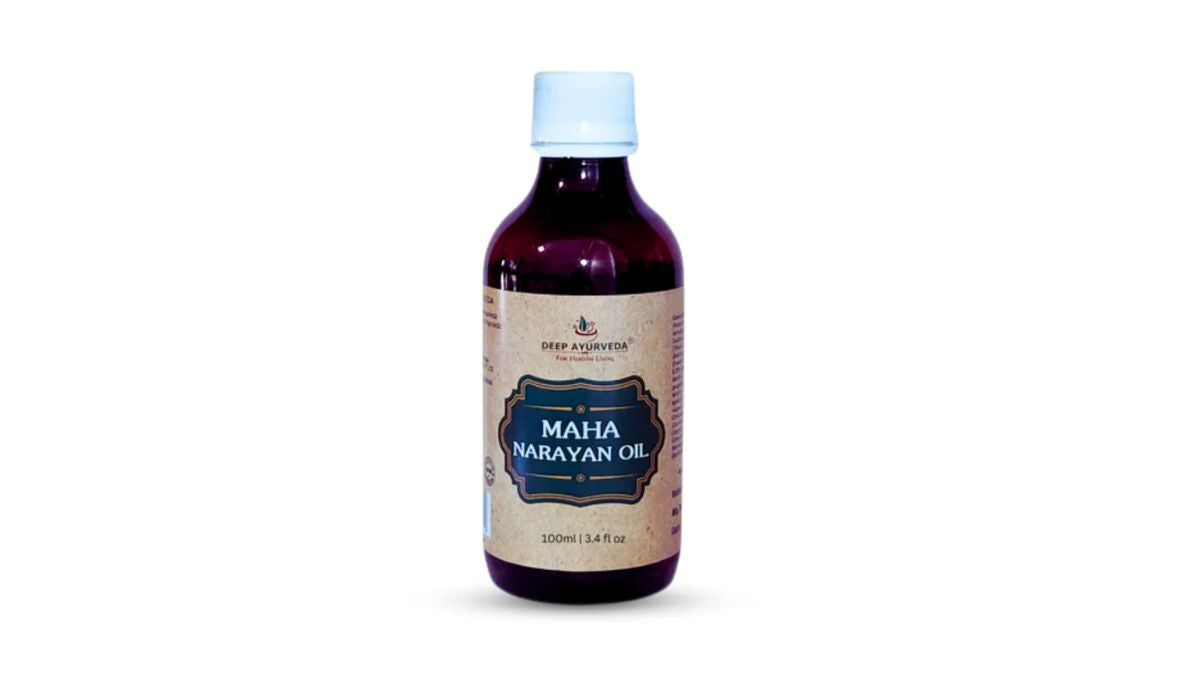
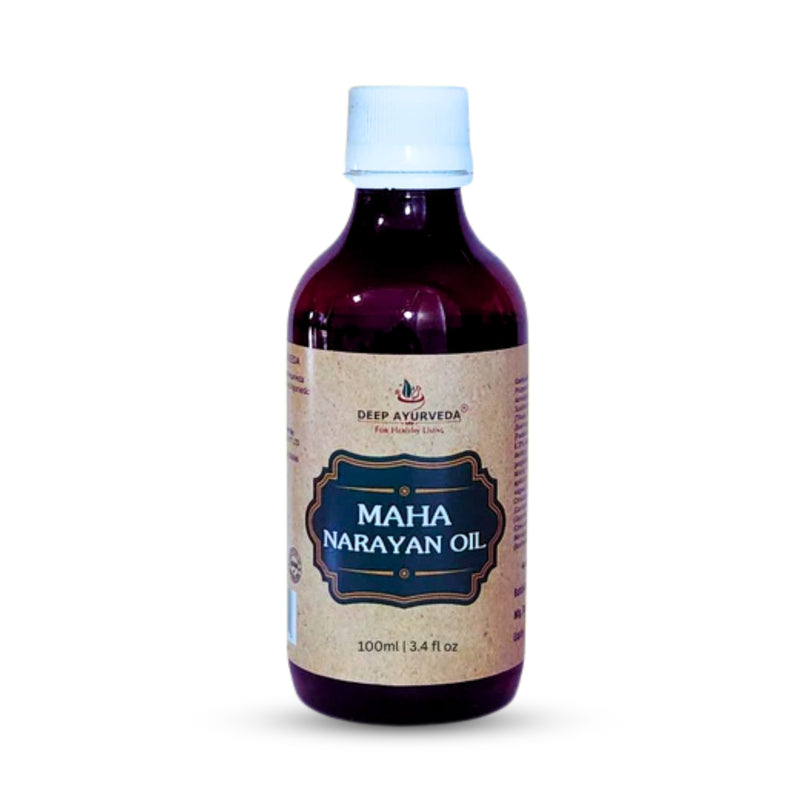
Deep Ayurveda Mahanarayan Oil
✅ 100% Ayurvedic & Safe ✅ Supports joint and muscle comfort ✅ Helps reduce stiffness and body discomfort ✅ Supports flexibility and easy movement ✅ Helps relax tired and sore muscles
Mahanarayan Oil, also known as Mahanarayan Tailam, is one of Ayurveda’s most respected medicated oils traditionally used for joint pain, muscle stiffness, nerve weakness, and Vata-related disorders. Prepared using sesame oil, milk, and dozens of Ayurvedic herbs, this classical formulation has been used for centuries in Abhyanga (Ayurvedic massage therapy) to support mobility, flexibility, and muscular strength.
In today’s lifestyle, where long sitting hours, stress, poor posture, gym strain, and lack of movement are increasing problems like cervical pain, knee stiffness, sciatica, and backache, Mahanarayan Oil has become more relevant than ever.
Unlike ordinary pain relief oils that mainly create a heating sensation, Mahanarayan Tailam works differently according to Ayurveda. It is designed to nourish tissues, calm aggravated Vata Dosha, improve lubrication in joints, and support natural recovery of muscles and nerves.
From an Ayurvedic practitioner’s perspective, this oil is especially useful in conditions where dryness, cracking joints, stiffness, weakness, or restricted movement are present.
Why is Mahanarayan Oil So Popular in Ayurveda?
The word Maha means great, while Narayan is associated with strength, healing, and restoration in Ayurvedic tradition. This classical oil earned its reputation because it has been widely used for centuries in conditions related to joints, muscles, nerves, and aggravated Vata Dosha.
According to Ayurveda, Vata is naturally dry, cold, rough, and mobile. When Vata becomes imbalanced due to aging, stress, excessive travel, poor sleep, or an irregular lifestyle, the body may start showing symptoms such as joint cracking, stiffness, muscle tightness, dryness, and restricted movement.
People who experience knee stiffness while climbing stairs, neck tightness after long sitting hours, or lower back discomfort during cold weather are often showing signs of aggravated Vata according to Ayurvedic principles.
Mahanarayan Oil is traditionally valued because it supports multiple aspects of Vata management at the same time. Its oil-based formulation helps reduce dryness in the tissues, while the warming herbs may support muscle relaxation and joint comfort during massage therapy.
Another reason this oil became popular in Ayurvedic practice is its nourishing nature. Unlike ordinary pain oils that mainly create a temporary hot or cold sensation, Mahanarayan Tailam is traditionally used with the intention of supporting deeper tissue nourishment and flexibility over time.
In Ayurvedic massage therapy (Abhyanga), warm Mahanarayan Oil is often applied to stiff muscles and joints to help improve comfort, support circulation, and promote easier body movement, especially in people with Vata-dominant symptoms.
Ayurvedic Perspective: How Mahanarayan Oil Works
According to Ayurveda, every type of pain is not linked only with inflammation. In many long-term joint and muscle conditions, excessive dryness, tissue weakness, and aggravated Vata Dosha are also considered important factors.
This is one reason why Mahanarayan Oil is traditionally used in Ayurvedic massage therapies.
How Mahanarayan Oil May Support the Body
Reducing dryness in tissues
Ayurveda considers dryness a major cause behind stiffness and cracking joints. The oil-based formulation helps provide external nourishment and softness to tissues.
Supporting joint lubrication
Regular massage with warm Mahanarayan Oil may help improve flexibility and ease stiffness in dry joints, especially in Vata-dominant conditions.
Relaxing stiff muscles
The warming and grounding nature of the oil is traditionally used to relax tight muscles and reduce body stiffness caused by overexertion or inactivity.
Calming aggravated Vata
In Ayurveda, Vata imbalance is commonly associated with pain, dryness, tightness, and restricted movement. Oil massage is one of the classical therapies used to balance Vata.
Improving local circulation
Gentle massage may support healthy blood flow around muscles and joints, which can improve comfort and relaxation in some individuals.
Supporting recovery after physical strain
People with physically demanding routines or prolonged sitting often use this oil to reduce post-activity stiffness and muscular fatigue.
Who May Benefit More from Mahanarayan Oil?
Elderly individuals with dry joints
Age-related dryness and stiffness are commonly associated with increased Vata in Ayurveda, where oil massage is traditionally recommended.
People who travel frequently
Excessive travel, irregular routines, and long sitting hours may aggravate Vata, sometimes leading to body stiffness and fatigue.
Desk workers with neck and back tightness
Individuals working long hours on computers often experience muscle tightness due to poor posture and reduced movement.
Gym-goers with muscle stiffness
After intense workouts, some people use warm oil massage to relax tight muscles and support recovery.
People exposed to cold weather
Cold and dry climates may worsen Vata-related stiffness in sensitive individuals.
Individuals with Vata-dominant body type
People naturally prone to dryness, cracking joints, cold sensitivity, and irregularity may respond better to regular Abhyanga practices.
It is important to understand that Mahanarayan Oil is not intended to work as an instant cure. In Ayurvedic practice, results often depend on multiple factors, including regular usage, diet, sleep quality, daily routine, and the underlying nature of the condition.
People with chronic stiffness generally experience better outcomes when oil massage is combined with proper lifestyle management rather than relying only on temporary symptom relief.
Key Ingredients in Mahanarayan Oil
One reason behind the popularity of Mahanarayan Tailam is its rich combination of herbs. Different manufacturers may slightly vary the ingredient list, but classical formulations commonly include:
1. Ashwagandha
Known in Ayurveda for supporting strength, muscle recovery, and nervous system balance.
2. Bala
Traditionally used to improve tissue nourishment and support muscle weakness.
3. Dashmool
A famous Ayurvedic group of ten roots often used for Vata disorders and stiffness.
4. Shatavari
Supports nourishment and helps reduce dryness in tissues.
5. Rasna
Traditionally valued in Ayurveda for joint discomfort and mobility support.
6. Gokshura
Used to support muscle strength and tissue rejuvenation.
7. Sesame Oil (Til Taila)
Acts as the base oil because Ayurveda considers sesame oil one of the best oils for calming Vata Dosha.
Why Sesame Oil is Used as the Base
Most articles only mention sesame oil as an ingredient, but in Ayurveda, its role is much more important.
Penetrates Deeply Into Tissues
Sesame oil has a naturally heavy and penetrating quality. This is why Ayurvedic practitioners traditionally prefer it for massage therapies involving stiff muscles and dry joints.
Provides Natural Warmth
Unlike lighter oils, sesame oil gives a gentle warming effect after application. Warmth is often considered helpful in Vata-related stiffness and discomfort.
Helps Reduce Dryness
According to Ayurveda, excessive dryness can aggravate Vata Dosha. Sesame oil is traditionally used to provide lubrication and nourishment to dry tissues and joints.
Supports Better Flexibility
Regular oil massage may help reduce the feeling of tightness in muscles and joints. Many people use warm sesame-based oils to support easier body movement and flexibility.
Improves Herbal Absorption
Sesame oil is commonly used as a carrier oil in Ayurvedic formulations because it helps deliver herbal properties deeper into the tissues during massage.
Naturally Pacifies Vata Dosha
Ayurveda considers sesame oil one of the best oils for calming aggravated Vata due to its warm, grounding, and nourishing qualities.
This is one reason why warm Mahanarayan Oil massage often feels deeply relaxing for stiff muscles, tired joints, and body fatigue.
Top Benefits of Mahanarayan Oil
1. May Help Relieve Joint Stiffness
Mahanarayan Oil is traditionally used in Ayurveda for stiffness in the knees, shoulders, fingers, and other joints. Regular warm oil massage may help improve flexibility and ease movement, especially in dryness-related Vata conditions.
2. Useful for Back Pain & Cervical Stiffness
Long sitting hours, poor posture, and desk work often lead to neck and back tightness. Applying warm Mahanarayan Oil may help relax stiff muscles and support mobility in the cervical and lower back area.
3. Supports Sciatica Management
In Ayurveda, sciatica-like symptoms are linked with a condition called Gridhrasi. Mahanarayan Tailam is commonly used with heat therapy, stretching, and lifestyle correction to support comfort in the lower back and legs.
4. Helpful in Muscle Recovery
People who experience muscle tightness after physical activity or workouts sometimes use Mahanarayan Oil for massage. Its warming nature may help reduce stiffness and support muscle relaxation after strain.
5. Supports Nervous System Relaxation
Traditional Ayurvedic Abhyanga with warm Mahanarayan Oil is also valued for its calming effect on the body. Many people use it to reduce fatigue, relax body tension, and support restful sleep.
When I Usually Recommend Mahanarayan Oil
In my Ayurvedic practice, I usually see better results with Mahanarayan Oil in people who experience dryness and stiffness in the joints rather than intense inflammatory pain. Many patients describe a feeling of tightness or discomfort that becomes worse in cold weather or after long hours of inactivity.
People who notice cracking sounds in the knees, shoulders, or fingers during movement may also benefit from regular warm oil massage, especially when the discomfort is linked with dryness and reduced flexibility.
I often recommend it to individuals who feel stiff after waking up in the morning or after sitting continuously for long periods. This pattern is commonly seen in desk workers, elderly individuals, and people with Vata-dominant body types.
In some cases, patients also report muscle weakness or body fatigue after overexertion, excessive travel, gym strain, or irregular routines. Warm Mahanarayan Oil massage may help relax the muscles and support recovery in such situations.
However, I use more caution in conditions where the joints appear red, hot, severely swollen, or highly inflamed. In cases involving acute injury, burning sensation, or active inflammation, this oil may not always be the first choice without proper Ayurvedic assessment.
This distinction is important because not every type of pain is caused by the same underlying imbalance. In Ayurveda, understanding whether the condition is primarily Vata-related or inflammation-dominant plays a major role in selecting the right therapy.
How to Use Mahanarayan Oil Correctly
One of the biggest reasons people fail to get proper results from Mahanarayan Oil is incorrect usage.
In Ayurveda, how you apply the oil matters almost as much as the oil itself.
Simply rubbing it for a few seconds is very different from proper Ayurvedic Abhyanga.
Best Way to Apply Mahanarayan Oil
Mahanarayan Oil works best when applied correctly and consistently. In Ayurveda, the method of application plays an important role in supporting muscle relaxation, joint comfort, and Vata balance. Using the oil in the right way may help improve absorption and overall effectiveness.
Step 1: Slightly Warm the Oil
Mahanarayan Oil is generally considered more effective when applied lukewarm, especially in Vata-related stiffness and dryness. Mild warmth helps the oil spread easily over the skin and may support better relaxation of tight muscles and joints.
However, the oil should never be overheated. Excessively hot oil may irritate sensitive skin and reduce comfort during massage.
Safe Method:
Instead of heating the oil directly on flame, place the bottle in a bowl of warm water for 2–3 minutes. This helps maintain a safe and comfortable temperature.
Step 2: Apply with Gentle Pressure
Take a small amount of oil and massage slowly using gentle circular movements around the joints and long strokes over the muscles. Areas such as the knees, lower back, neck, shoulders, ankles, and sciatic region are commonly targeted during application.
In most cases, a massage duration of around 10–20 minutes is sufficient for daily use. Very aggressive pressure should be avoided, especially over painful or sensitive joints.
Step 3: Leave the Oil for Some Time
After massage, allow the oil to remain on the body for approximately 20–40 minutes before bathing. This resting period is traditionally believed to support better absorption and relaxation.
A warm water bath is usually preferred afterward, as it helps remove excess oil comfortably while maintaining body warmth.
Step 4: Use Regularly for Better Results
According to Ayurvedic practice, consistency is often more important than occasional intensive application. Regular use over time may provide better support for chronic stiffness, dryness, and Vata-related discomfort.
People dealing with long-term joint tightness or muscular stiffness often notice gradual improvement when massage is combined with proper lifestyle habits and regular routine.
How to Use Mahanarayan Oil for Different Conditions
1. For Knee Pain & Joint Stiffness
If you experience stiffness in the knees, slightly warm the oil before applying it around the joint area. A gentle 10-minute massage may help improve comfort and flexibility, especially in age-related dryness and mild stiffness.
After massage, some people feel better with mild heat application. However, avoid deep pressure if the knee is swollen or painful during flare-ups.
2. For Cervical Pain & Neck Tightness
People who spend long hours on laptops or mobile phones often develop tightness in the neck and shoulder region. In such cases, warm Mahanarayan Oil can be massaged gently around the neck muscles to help reduce stiffness.
Avoid applying strong pressure directly over the spine. In clinical practice, better results are usually seen when massage is combined with stretching and posture correction.
3. For Sciatica (Gridhrasi)
In Ayurveda, sciatica-like symptoms are commonly associated with aggravated Vata affecting the lower back and legs. The oil is usually applied over the lower back, buttocks, thighs, and calf muscles using slow massage movements.
Chronic sciatica generally requires consistency, proper movement, and lifestyle correction. Expecting overnight relief may lead to disappointment.
4. For Full Body Abhyanga
Mahanarayan Oil is also used for full body Ayurvedic massage, especially in people with dryness, body fatigue, muscle tightness, or Vata imbalance. Slightly warm oil is traditionally preferred for Abhyanga because it feels more soothing to stiff muscles and joints.
Morning massage before bath is commonly practiced, while evening application may feel relaxing during colder weather or after physical exhaustion.
Best Time to Apply Mahanarayan Oil
The ideal time to apply Mahanarayan Oil can vary depending on your body type, lifestyle, and the type of discomfort you are experiencing.
Morning Application
Applying warm Mahanarayan Oil in the morning is often helpful for people who wake up with joint stiffness or body tightness. A gentle massage before bath may support better flexibility and make body movements feel more comfortable during the day.
It is commonly preferred by individuals dealing with:
- Knee stiffness after waking up
- Neck tightness from long sitting hours
- Mild muscle rigidity
- Reduced mobility in cold weather
Evening Application
Evening massage is usually more relaxing for people who experience body fatigue after work or physical activity. Warm oil application at night may help calm muscular tension and promote a sense of physical relaxation.
Many people prefer evening use when dealing with:
- Stress-related body tightness
- Muscle fatigue after gym or travel
- Lower back discomfort after prolonged sitting
- General body exhaustion and dryness
Can Mahanarayan Oil Be Used Daily?
In Ayurveda, Mahanarayan Oil is often used regularly in people dealing with dryness, stiffness, and Vata-related discomfort. Many individuals use it daily as part of their self-care or Abhyanga routine, especially during colder months or periods of increased body stiffness.
However, daily usage is not suitable for everyone. The ideal frequency depends on several factors.
Body Constitution
People with a naturally dry and Vata-dominant body type may tolerate regular oil massage better than those with oily or heat-sensitive skin.
Weather Conditions
The oil is generally more comfortable during cold and dry weather. In extremely hot climates, some individuals may prefer less frequent application.
Severity of Symptoms
People experiencing chronic stiffness or long-term joint dryness may benefit from more consistent use compared to mild occasional discomfort.
Skin Sensitivity
If someone has sensitive skin, irritation, or a tendency toward rashes, it is better to start slowly and observe how the skin responds.
Presence of Inflammation
During episodes of severe swelling, redness, or heat in the joints, daily oil massage may not always be appropriate without professional guidance.
Common Ayurvedic Practice
For general maintenance, many people apply Mahanarayan Oil around 3–5 times per week. In dry Vata conditions, some individuals may use it daily if it suits their body and symptoms.
Common Mistakes While Using Mahanarayan Oil
1. Using Cold Oil Directly
Many people apply the oil straight from the bottle, but slightly warm oil is usually more comfortable for stiff muscles and joints.
2. Applying During Acute Swelling
If the joint feels hot, red, or heavily swollen, strong oil massage may sometimes increase discomfort instead of helping.
3. Expecting Instant Results
Mahanarayan Oil is traditionally used for gradual support. Chronic stiffness often needs regular application and lifestyle correction.
4. Ignoring Lifestyle Factors
Late nights, stress, dry food, and long sitting hours can continuously aggravate Vata, which may reduce the effectiveness of the oil.
5. Using Excessive Pressure During Massage
Painful areas do not always respond better to hard massage. Gentle and consistent application is generally preferred in Ayurveda.
Who Should Avoid Mahanarayan Oil?
Mahanarayan Oil is generally used safely for external massage, but it may not suit every condition. In some situations, using heavy medicated oil without proper guidance can increase discomfort instead of helping.
Open Wounds
Avoid applying the oil on cuts, wounds, or broken skin. The herbs and oil base may irritate sensitive tissue and delay proper healing.
Skin Infections
If you have fungal infections, bacterial infections, or active skin irritation, it is better to avoid oil massage until the skin recovers properly.
Severe Rashes
People with severe itching, allergic rashes, or highly sensitive skin should use caution, as certain herbs may trigger irritation in some individuals.
Burning Sensation in Joints
When joints feel hot, burning, or inflamed, heavy warm oils may sometimes aggravate symptoms instead of calming them.
High Pitta Body Type with Heat Symptoms
Individuals who already experience excessive body heat, acidity, redness, or heat-related skin sensitivity may need professional Ayurvedic guidance before regular use.
Acute Inflammatory Arthritis Flare
During sudden swelling, redness, or severe inflammatory flare-ups, strong oil massage is usually not recommended immediately.
Fever
Ayurveda generally avoids heavy oil massage during fever because the body is already under stress and digestion may be weak at that time.
Fresh Injury or Fracture
Recently injured areas should not be massaged aggressively. Proper medical evaluation is important before using any medicated oil.
Pregnancy
Pregnant women should use Mahanarayan Oil only after consulting a qualified healthcare professional or Ayurvedic practitioner.
Possible Side Effects of Mahanarayan Oil
Side effects are uncommon when the oil is used correctly, but some people may still notice mild reactions depending on their skin type and body condition.
Mild Skin Irritation
A few individuals may experience redness, itching, or irritation, especially if they have sensitive skin or herbal allergies.
Temporary Heaviness
After full-body massage, some people may feel temporary heaviness or sluggishness, particularly if the oil is overused.
Heat Sensation
Since the oil is usually applied warm, certain individuals may notice mild warmth or heat after application.
Allergic Reaction to Herbs
The formulation contains multiple Ayurvedic herbs, so rare allergic reactions are possible in sensitive individuals.
Increased Discomfort During Acute Inflammation
If the joint is already swollen, red, and inflamed, applying warm oil aggressively may sometimes worsen discomfort.
Safety Tip
Before using the oil for the first time, apply a small amount on one area of skin and wait for a few hours to check for irritation.
Signs That Mahanarayan Oil May Be Working Well for You
People who respond positively to the oil often notice gradual improvement rather than sudden dramatic relief.
Reduced Stiffness
Many individuals feel that morning stiffness and tightness reduce slowly with regular massage.
Better Flexibility
Some users notice easier movement in joints and muscles after consistent use.
Improved Comfort During Movement
Walking, bending, or changing posture may start feeling slightly more comfortable over time.
Relaxed Muscles
Warm oil massage often creates a relaxing effect on tight or overworked muscles.
Better Sleep After Massage
Some people experience deeper relaxation and improved sleep quality after evening application.
Results can vary depending on the individual’s body type, lifestyle, and underlying condition.
Diet Tips to Improve Results
In Ayurveda, external oil application works better when supported by proper daily habits and diet.
Drink Warm Water
Warm water is traditionally preferred in Vata imbalance because it supports digestion and reduces internal dryness.
Reduce Excessively Dry and Cold Foods
Too much packaged food, cold drinks, dry snacks, and irregular eating may aggravate Vata symptoms like stiffness and cracking joints.
Avoid Late-Night Sleeping
Poor sleep and late-night habits are considered major contributors to Vata imbalance in Ayurveda.
Include Ghee in Moderation
Small amounts of ghee are traditionally used to support lubrication and nourishment in the body.
Prefer Freshly Cooked Warm Meals
Fresh warm meals are generally considered easier to digest and more supportive for long-term Vata balance.
These lifestyle adjustments may help improve the overall effectiveness of Ayurvedic therapies over time.
Mahanarayan Oil vs Dhanwantharam Tailam
This comparison is rarely explained properly online.
| Feature | Mahanarayan Oil | Dhanwantharam Tailam |
|---|
| Primary Focus | Joint & muscle stiffness | Nervous system & postnatal care |
| Common Usage | Arthritis, cervical pain, sciatica | Weakness, recovery, Vata disorders |
| Nature | More musculoskeletal focused | More rejuvenative |
| Common Users | Elderly, stiffness cases | Recovery and nourishment therapies |
Both oils have Ayurvedic importance, but selection depends on the patient’s condition and Dosha assessment.
Final Verdict
Mahanarayan Oil is a trusted Ayurvedic formulation traditionally used for joint stiffness, muscle tightness, back pain, and Vata-related discomfort. When used correctly and consistently, it may help improve flexibility, relaxation, and overall mobility. However, best results usually come with proper lifestyle, diet, and regular Ayurvedic care rather than relying on oil alone.
Frequently Asked Questions
Can Mahanarayan Oil cure arthritis permanently?
No Ayurvedic oil should be presented as a guaranteed permanent cure.
However, regular use along with proper lifestyle management may help improve comfort, stiffness, and mobility in some individuals.
Can Mahanarayan Oil be used for knee pain?
Yes, it is traditionally used for knee stiffness and Vata-related joint discomfort.
Is Mahanarayan Oil good for back pain?
It is commonly used in Ayurveda for lower back stiffness, especially when dryness and muscular tightness are involved.
Can diabetics use Mahanarayan Oil?
Generally, external application is commonly used, but individuals with neuropathy or skin sensitivity should consult a healthcare professional first.
Can it help with slipped disc?
It may provide supportive relief in some cases involving muscular stiffness and Vata aggravation, but severe spinal conditions require professional evaluation.